

What do you think?

Ellery Queen Detective #24
The Scarlet Letters
Ellery had a simple case. A few days of discreet snooping, some choice advice, and the inimitable sleuth would blithely restore domestic harmony to the millionaire couple Dirk and Martha Lawrence. And then came the scarlet letters. And finally the cryptic clue...scrawled in a murdered man's blood. A simple case? Unless Ellery did some super-fast sleuthing, he'd have nothing to show but a very scarlet face.
Paperback
First published January 1, 1953
About the author
Ellery Queen
1,776 books510 followersaka Barnaby Ross.
(Pseudonym of Frederic Dannay and Manfred Bennington Lee)
"Ellery Queen" was a pen name created and shared by two cousins, Frederic Dannay (1905-1982) and Manfred B. Lee (1905-1971), as well as the name of their most famous detective. Born in Brooklyn, they spent forty two years writing, editing, and anthologizing under the name, gaining a reputation as the foremost American authors of the Golden Age "fair play" mystery.
Although eventually famous on television and radio, Queen's first appearance came in 1928 when the cousins won a mystery-writing contest with the book that would eventually be published as The Roman Hat Mystery. Their character was an amateur detective who used his spare time to assist his police inspector father in solving baffling crimes. Besides writing the Queen novels, Dannay and Lee cofounded Ellery Queen's Mystery Magazine, one of the most influential crime publications of all time. Although Dannay outlived his cousin by nine years, he retired Queen upon Lee's death.
Several of the later "Ellery Queen" books were written by other authors, including Jack Vance, Avram Davidson, and Theodore Sturgeon.
(Pseudonym of Frederic Dannay and Manfred Bennington Lee)
"Ellery Queen" was a pen name created and shared by two cousins, Frederic Dannay (1905-1982) and Manfred B. Lee (1905-1971), as well as the name of their most famous detective. Born in Brooklyn, they spent forty two years writing, editing, and anthologizing under the name, gaining a reputation as the foremost American authors of the Golden Age "fair play" mystery.
Although eventually famous on television and radio, Queen's first appearance came in 1928 when the cousins won a mystery-writing contest with the book that would eventually be published as The Roman Hat Mystery. Their character was an amateur detective who used his spare time to assist his police inspector father in solving baffling crimes. Besides writing the Queen novels, Dannay and Lee cofounded Ellery Queen's Mystery Magazine, one of the most influential crime publications of all time. Although Dannay outlived his cousin by nine years, he retired Queen upon Lee's death.
Several of the later "Ellery Queen" books were written by other authors, including Jack Vance, Avram Davidson, and Theodore Sturgeon.
Ratings & Reviews
Friends & Following
Create a free account to discover what your friends think of this book!
Community Reviews
Displaying 1 - 30 of 38 reviews

March 23, 2018
I'll start by saying that the Ellery Queen novels have a great narrative style that's very easy to read, which is the only reason I kept going on this book even though it got monotonous by the midway point.
As always, I liked the character of Ellery (and yes, I still picture him as Jim Hutton from the old TV series). I initially liked the character of Nikki. She had an intelligence that almost matched Ellery's (a perfect match wasn't achievable in the 1950s when the novel was published). But as the plot progressed (or not, really), she started showing an unreasonable stubbornness--because the authors decided she needed to stay the course and couldn't find a logical reason), then a seemingly out-of-character impulsiveness, then, of course, she became the standard hysterical woman by the end.
But the plot was the real disappointment. Nothing really happens from about a quarter way through until just before the end. By the halfway point, I wanted to remind the authors of the Raymond Chandler rule that when you can't think of anything else, have a man come in the door with a gun. By the three-quarter point, I was thinking that there'd better be a great twist at the end or I'd be really pissed. There was a twist, but I'd thought of that solution 120 pages earlier and was hoping for something better.
This was a short book-only 224 pages. It could have been a decent short story. As a novel, it was, ironically, too long.
As always, I liked the character of Ellery (and yes, I still picture him as Jim Hutton from the old TV series). I initially liked the character of Nikki. She had an intelligence that almost matched Ellery's (a perfect match wasn't achievable in the 1950s when the novel was published). But as the plot progressed (or not, really), she started showing an unreasonable stubbornness--because the authors decided she needed to stay the course and couldn't find a logical reason), then a seemingly out-of-character impulsiveness, then, of course, she became the standard hysterical woman by the end.
But the plot was the real disappointment. Nothing really happens from about a quarter way through until just before the end. By the halfway point, I wanted to remind the authors of the Raymond Chandler rule that when you can't think of anything else, have a man come in the door with a gun. By the three-quarter point, I was thinking that there'd better be a great twist at the end or I'd be really pissed. There was a twist, but I'd thought of that solution 120 pages earlier and was hoping for something better.
This was a short book-only 224 pages. It could have been a decent short story. As a novel, it was, ironically, too long.

May 3, 2021
This is a dreary and dated tale with very little to recommend it. Somehow Ellery Queen gets himself involved in ascertaining whether a married female friend of his is having an affair or not. The husband is volatile and seething with jealousy and Ellery fears that he may do harm either to himself or his wife's lover.
The scarlet letters of the title are a coded way of arranging a rendezvous between the lovers. We are dragged through the alphabet and it is only right at the end of both the book and the alphabet that we finally get the murder. One for diehard Queen fans only.
The scarlet letters of the title are a coded way of arranging a rendezvous between the lovers. We are dragged through the alphabet and it is only right at the end of both the book and the alphabet that we finally get the murder. One for diehard Queen fans only.
June 5, 2024
I'm rapidly losing patience with Ellery. While I've enjoyed some of his adventures. "The Scarlet Letters" has proved to be a waste of time. Sure, Nikki is a welcome addition to the stories, but to have to wade through 75% of the novel before any true action takes place seems like a LOT to ask of any reader. What starts out as an intriguing mystery turns quickly into a soap opera. By the time I was halfway through the book, I set it aside in disgust- then came back to it, since I'm no quitter. But the book again tried my patience and I found myself skipping sentences, then paragraphs, then pages. And when I jumped to the end, what a disappointment the solution turned out to be. Unlike Nero Wolfe mysteries, of which there are only a few poor ones, the Queens are proving to be a fifty-fifty proposition, at best. Time to go back to Nero and Archie...

September 14, 2010
This is a “different” sort of Queen novel, since the murder does not take place until very near the end, almost as an afterthought, and then is summarily resolved in a way that turns the entire course of the novel on its head. I very much enjoyed it (as I do most Ellery Queen novels), but was especially struck by two points: (1) the novel functions as a kind of amber trap for gender relations in the mid-fifties. The entire world of the book is so realistically imagined that it plays almost like a social novel, anyway; but watching Ellery relate to Nikki and to Martha, and watching all three relate to Martha’s jealous husband, is fascinating indeed. One wonders why the police weren’t called in on the husband (though emotionally battered women like Martha are often unwilling to turn in their abusers, surely Nikki—who witnesses the husband beating his wife—would be able to file a complaint?) Though the world of an Ellery Queen novel is often highly stylized, there is a breath of realism here that turns the book into a kind of social history. (2) Ellery Queen has always been a puzzle-box in himself—the author is the detective who is the author. This enabled Dannay and Lee to ignore continuity beyond the first seven books and change Ellery’s character as they saw fit. Here, Queen is clearly the character presented in the radio dramas; besides having a secretary (and sometime girlfriend) named Nikki Porter, he is seen frequently editing Ellery Queen’s Mystery Magazine. Once he even signs into a hotel as Barnaby Ross! (A gag that is doubly delicious because this novel is organized around a code based on letters, while the first three Drury Lane novels are The Tragedy of X, Y, and Z, respectively). This kind of play keeps the reader aware of the artificiality of the novel’s world and also forces us into a quasi-Borgesian labyrinth (as when Don Quixote is the reader of the Quixote or the 1001 Nights begin to contain the story of their own narration. The levels of (un)reality are complex, and play in well to a novel whose primary storyline is itself a fabrication concealing a deeper one (and that deeper one is itself revealed, not in objective facts, but in Ellery shrugging and suggesting an option—that is, even the deeper story is itself something of a fabrication). In all, though not so rigorously plotted as the early Queen novels, nor yet so charming as the Wrightsville saga, The Scarlet Letters is a magnificent piece of detective fiction.
This entire review has been hidden because of spoilers.

July 6, 2024
Quando ero giovane, Ellery Queen mi piaceva moltissimo. Adesso mi chiedo perché.
July 15, 2019
Ellery and his Secretary/Girlfriend Nikki Porter get dragged into the deteriorating marriage of Nikki’s friend, Martha Lawrence. Since Queen is given a puzzle to solve, and Nikki so much wants to help, they let themselves burrow further and further in to the mess. Mr. Lawrence acts like jealousy personified, and Ms. Lawrence is seemingly sliding into an affair with a well-known sleazy Broadway personality. The killing was inevitable. Will the killer get away with it?
And here we have a typical opus of the melancholy Ellery period, where the sheer awfulness of being a amateur crime solving super genius is put on display. In this case, Ellery and Nikki’s cheerful young couple “helping” makes things worse. But Ellery has got to solve muddles and he can’t extricate himself. Unlike some other Queen books, Ellery does not comprehend emotionally what he’s done, and how easily he’s been used. This is the strength of this narrative, but it weakens how the solution plays out.
I have strongly mixed feelings about this one, as I have a hard time with the master detective as moron. Queen’s writers would have been better served making this a non-series entry. But the hazards of messing about in somebody else’s marriage are well illustrated here and the writing, as is typical with Queen, is excellent. Since the plot almost makes this a requirement, Ellery and Nikki are more precisely characterized than usual.
So read it. And don’t scream too hard at Ellery at the finish. He gets a full quota of sad in a lot of his other books.
And here we have a typical opus of the melancholy Ellery period, where the sheer awfulness of being a amateur crime solving super genius is put on display. In this case, Ellery and Nikki’s cheerful young couple “helping” makes things worse. But Ellery has got to solve muddles and he can’t extricate himself. Unlike some other Queen books, Ellery does not comprehend emotionally what he’s done, and how easily he’s been used. This is the strength of this narrative, but it weakens how the solution plays out.
I have strongly mixed feelings about this one, as I have a hard time with the master detective as moron. Queen’s writers would have been better served making this a non-series entry. But the hazards of messing about in somebody else’s marriage are well illustrated here and the writing, as is typical with Queen, is excellent. Since the plot almost makes this a requirement, Ellery and Nikki are more precisely characterized than usual.
So read it. And don’t scream too hard at Ellery at the finish. He gets a full quota of sad in a lot of his other books.

December 20, 2022
Ellery Queen has a simple case. It might not even be a case. He has been asked to help out his friends, a married couple Dirk and Martha Lawrence. They were happily married until recently when Dirk has become suspicious of his wife who he thinks is having an affair. To complicate things Martha is the one with money.
I really enjoyed this book. It's a later Eller Queen and the character is more likeable. The writing style is enjoyable and it's the first Ellery Queen where I figured out most of what was going on.
The mystery is pretty unique because the murder doesn't occur until almost the end of the book. Ellery and his secretary spend the book trying to figure out what is going on, if anything, and trying to prevent something potentially bad. I can't say anything more about the murder or mystery because it's arranged cleverly.
I really enjoyed this book. It's a later Eller Queen and the character is more likeable. The writing style is enjoyable and it's the first Ellery Queen where I figured out most of what was going on.
The mystery is pretty unique because the murder doesn't occur until almost the end of the book. Ellery and his secretary spend the book trying to figure out what is going on, if anything, and trying to prevent something potentially bad. I can't say anything more about the murder or mystery because it's arranged cleverly.

June 28, 2016
I love the Queen series. i just picked up another clump of them. This is one of them. However, this is not an example of the reason i picked up so many.
This Queen tale is waaaaaaay too prolonged with an involved MaGuffin that seems orderly enough, but gets monotonous quickly as little else happens involving, what appears to be, a domestic dispute. The story doesn't make sense unless Queen jumps to too many assumptions. which is something he warns not to do in many of the Queen novels. This is a repeated inconsistency that is the only way the writers could link events, but a flimsy one and one that had me find the entire tale ridiculous.
Due to the prolonged trip through the alphabet, the few characters are very well identified. Odd that the few settings, that are repeated many times, did not have the detail they could have.
The ending is very unsatisfying considering all it took to get to the point. All proving this would have been a far better short story.
Bottom line: I don't recommend this book. 4 out of 10 points.
This Queen tale is waaaaaaay too prolonged with an involved MaGuffin that seems orderly enough, but gets monotonous quickly as little else happens involving, what appears to be, a domestic dispute. The story doesn't make sense unless Queen jumps to too many assumptions. which is something he warns not to do in many of the Queen novels. This is a repeated inconsistency that is the only way the writers could link events, but a flimsy one and one that had me find the entire tale ridiculous.
Due to the prolonged trip through the alphabet, the few characters are very well identified. Odd that the few settings, that are repeated many times, did not have the detail they could have.
The ending is very unsatisfying considering all it took to get to the point. All proving this would have been a far better short story.
Bottom line: I don't recommend this book. 4 out of 10 points.

July 19, 2013
I'm about three quarters through. the premise is okay but so far .. NO ACTION. This thing is one long snooze fest. I really keep waiting on it to get good. The last 30 or so pages really got to smoking. I wish the book could have kept this pace from the first. However I still keep my 2 star review.

August 6, 2016
Gran bel giallo, come sempre sono i libri di Ellery Queen!! Era da tanto che non ne leggevo uno ed è stato un piacere riprenderlo prima di ributtarmi nel mondo dei fantasy :)

August 3, 2023
The Ellery Queens always have a hook, and this one is the alphabet code. It is revealed early on and we just follow along as Martha and Harrison have their little hookups. The title refers to their coded letters which were typed in red characters, and also hints at Martha's adultery as written in Nathaniel Hawthorne's 1850 book The Scarlet Letter.
I expected a murder mystery, but this is not one. There is a murder, which finally occurs near the end, and there is no mystery about it.
One aspect I enjoyed was the limited cast of characters. The list above is it. There are no red-herring cardboard characters introduced just to fill up a suspect list. The gossip columnist Leon Fields is an interesting character, I enjoyed reading how he works and decides what to publish and what to withhold. A tiring aspect is following Martha and Harrison though most of the alphabet.
The modern reader should be aware that in the "old days" typewriters could use a bi-color ribbon (black and red) and select the type color as they went along.
Please note that like a few other Queen stories, there are homophobic slurs slipped in here and there. There are also several cheap plugs for Ellery Queen's Mystery Magazine.
I expected a murder mystery, but this is not one. There is a murder, which finally occurs near the end, and there is no mystery about it.
One aspect I enjoyed was the limited cast of characters. The list above is it. There are no red-herring cardboard characters introduced just to fill up a suspect list. The gossip columnist Leon Fields is an interesting character, I enjoyed reading how he works and decides what to publish and what to withhold. A tiring aspect is following Martha and Harrison though most of the alphabet.
The modern reader should be aware that in the "old days" typewriters could use a bi-color ribbon (black and red) and select the type color as they went along.
Please note that like a few other Queen stories, there are homophobic slurs slipped in here and there. There are also several cheap plugs for Ellery Queen's Mystery Magazine.

November 3, 2017
A very good EQ mystery, with one of the best uses of Nikki Porter as a character (if only because we get to see her working with a different writer for a while). I do think the set-up plot, where Ellery gets dragged into essentially an adultery case because of Nicky's strong friendship with the wife, went on longer than I would have liked. But that may have been important to get us readers to care enough about what was happening, and to set up the most critical red herring. For one of the late second-phase EQ novels, this one had one of the most fair puzzles, almost with an informal "challenge to the reader" moment when Ellery figures things out at the Bronx zoo. I like all 3 phases of the cousin's EQ novels, so I found this a pleasant throw-back without losing the characterization wow Ellery and the Inspector as we had come to understand them.
Fun, a good mystery, justice done at the end, and a nice exploration of Ellery, Nicky and the Inspector's life in 1950s New York. Well worth the read.
Fun, a good mystery, justice done at the end, and a nice exploration of Ellery, Nicky and the Inspector's life in 1950s New York. Well worth the read.

June 3, 2018
Maybe I'm not an Ellery Queen fan. Perhaps Jim Hutton's kind, goofy EQ has spoiled me on the "real" EQ. This EQ is a slow-witted, angry jerk. Plus, this story is mind-numbingly slow and dull and dull and slow. At this point in the EQ canon, I guess the authors were tired of the formula (not that I know what the "formula" is, yet, if one exists), and wanted to experiment with ... look, I don't know what I'm talking about here. This is only my third EQ book, and the first two weren't written by the real authors. I should have stuck with my rule about reading books in the order written. So don't listen to me about EQ. I'm no expert, yet. I just found this story painful because it's all a slow descent to infidelity and Ellery and Nikki are grumpy and angry all the time and there's no sense of play in this one. Inspector Queen is virtually non-existent. Ellery doesn't do any meaningful detecting until it's literally too late, and the solution is horribly far fetched, even for 1958. Clever? A smidge, but the journey is hardly worth it (for me).
November 25, 2019
No EQ mystery rates higher than three stars. They are always contrived and often just plain silly. This is one of the worst although in this case, contrived is replaced by mind-numbing slowness. First of all, no crime occurs for the first 82% of the book. I know that because I read it as an ebook. All EQ does the whole time is follow around a philandering wife. You know, like the guy who runs the Joe Blow Detective Agency. It's overdone and boringly repetetive. To bloat matters further, there is some semblance of a subplot involving a newspaper columnist--which ends in a long, drawn-out, and ultimately pointless dead end. I also had to laugh at the blatant product placement as the story mentions the Ellery Queen Mystery Magazine several times. As has been mentioned elsewhere, this was far better served as a short story as is, but it also could have been much better with a massive rewrite.
This entire review has been hidden because of spoilers.

June 13, 2023
An intriguing plot with a somewhat unpredictable ending. I predicted that but I couldn't for the life of me figure out what that last clue was, and so for that, I am impressed. I will say I am (as always) less than impressed with the time period sexism. That's insane. I feel like I shouldn't have to explain to people that Murder is Murder no matter what the victim supposedly did to deserve it. Personal opinion.
November 28, 2019
Ellery Queen is one of my favorite mystery writers of all time. And yes I know, he is a duo, two cousins, Frederic Dannay and Manfred Bennington Lee, but they will forever be known as Ellery Queen. "The Scarlet Letters", written in 1953, was one of the last novels before the duo started to farm out their stories to ghost writers, and I thought it was one of their best. In this story, who the murderer is, is in no doubt to the reader, but the motive is the main plotline that is followed. Written in a literary sense, with great vocabulary and complex, compound sentences, Ellery Queen novels are American literary classics. And very goodreads.
January 31, 2022
Ellery Queen becomes involved in trying to save an unfaithful wife from her jealous husband. The narrative for most the book consist of Ellery's secretary spying on them (she gets a job with the husband) and Ellery following one or the other of the couple around. The big mystery, for most of the book, is why this is called a mystery book. There is a big twist at the end that more than justifies the genre, but it does not make up for the tedious narrative that came before it.
A fault I found with the old Ellery Queen TV series was that so many of the plots relied on a clue left by the victim as he or she died. Apparently, they were following an example set in this book.
A fault I found with the old Ellery Queen TV series was that so many of the plots relied on a clue left by the victim as he or she died. Apparently, they were following an example set in this book.

August 25, 2024
I think this is an overblown short story, but that’s not really the problem I have with it. The problem is the dated view of men and women. The plot hinges on the right of a man to punish the woman who cheats on him and the man who leads her astray. So the “real world” is one of fistfights, backhanding/beating one’s spouse, and general unpleasantness between and among the sexes. Women’s personalities/viewpoints/existence aren’t ever the strong suits of Queen, but in this book they are the focal point, and it’s such an unpleasant read in the present day, I can only suggest you completely avoid it.

July 12, 2019
This is an interesting mystery, vaguely reminiscent of Towards Zero in that it's leading up to the Zero Hour of the murder. Much darker than most of the Ellery Queen I've read as well.

May 3, 2020
Good writing but, to me, bot the most interesting storyline. I think the main arc involving Martha and Harrison took up too much of the book with the ending (and its rather good twist) not taking up enough. This may have been a more effective story if it were a short story. Still worth reading.
This entire review has been hidden because of spoilers.

April 29, 2018
Always liked this series... may not have been his best but still a quick enjoyable read

May 13, 2019
Not one of my favorite EQ books. Took way too long to get to the crime.
May 22, 2024
Murder or not!
Was it murder?was it a love affair? what was it that lasted months until the final terrible shooting in a bedroom?
Was it murder?was it a love affair? what was it that lasted months until the final terrible shooting in a bedroom?

June 19, 2024
You'll never know who committed the crime until the very end because you'll never know what the crime was until the very end.

April 12, 2025
Love the EQ mysteries. Figured out that the murderer was actively involved in setting the atmosphere but not how or why.

July 10, 2026
I don't think there is much doubt that the ending of this book will be a surprise. All the way through I was thinking three stars, but the ending bumped it up a notch.
July 26, 2026
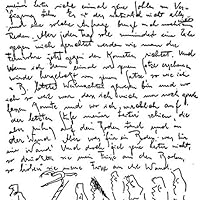
The Unscrambled letters spelled V for Violent!

October 28, 2022
I've given up counting the number of times the book pitches Ellery Queen's Mystery Magazine, and I'm just over halfway through. If I were rating the novel for cross-promotion, it would get 5 stars
At least it's nice to be back in NYC, after the silliness of the fortified secret island in The King is Dead. And, thankfully, no side trips to Wrightsville.
At least it's nice to be back in NYC, after the silliness of the fortified secret island in The King is Dead. And, thankfully, no side trips to Wrightsville.

August 5, 2023
Martha and Dirk Lawrence haven't really been married that long, but Dirk has problems with drinking and seems very anxious about Martha every time she leaves their home. Martha's friend, Nikki, is secretary to Ellery Queen and asks him to check out things. Ellery believes the Nikki should move to be with Martha and Dirk to help Dirk work on the book he's writing and to try to convince him to put his energy into his book.
However, Martha goes back to working on the theater, and then she starts seeing a famous old movie actor, and appears to be giving him money. Martha has a book which tells her where to meet him which goes through the alphabet, beginning with the A Hotel and going through Zoo. Ellery has Nikki tell her where the next place is and what time they are meeting, and Ellery follows to most.
The story seemed a little slow at first, but at the end it turns out to be very clever.
However, Martha goes back to working on the theater, and then she starts seeing a famous old movie actor, and appears to be giving him money. Martha has a book which tells her where to meet him which goes through the alphabet, beginning with the A Hotel and going through Zoo. Ellery has Nikki tell her where the next place is and what time they are meeting, and Ellery follows to most.
The story seemed a little slow at first, but at the end it turns out to be very clever.

August 23, 2010
The cover of my version has a hilarious photograph of a woman in knee-high brown boots and a hot-pink minidress with a plunging neckline, clutching a giant capital letter A like a Sesame Street prop, except that its point has been painted red to resemble blood. Ah! Death by the letter A! The actual plot involves a murder novelist, his besotted wife, blackmail, adultery, and, of course, murder. Far better than the cheesy cover implies.
Displaying 1 - 30 of 38 reviews