Jump to ratings and reviews
Rate this book

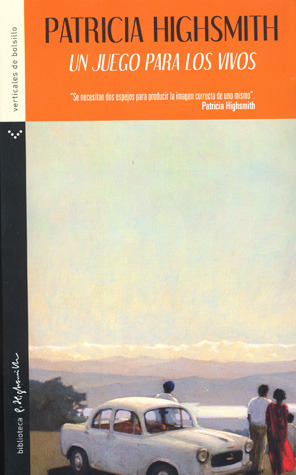
Un juego para los vivos

Rate this book
Este es el tercer titulo de la nueva Biblioteca sobre esta reconocida autora de suspenso. Un grupo de artistas norteamericanos y mexicanos llevan una vida alegre y despreocupada en Mexico. Uno de ellos Theodore encuentra el cadaver de Lelia su amante una joven y hermosa pintora que ha sido violada y salvajemente mutilada. Lelia tenia otro amante Ramon un joven mexicano. Los dos amantes se convierten en los principales sospechosos. Se desarrolla entre ambos una turbia y compleja relacion al estilo de la autora: el interes de la intriga policiaca se funde con un apasionante buceo en la psicologia de los personajes. Moviendose en una sugerente ambiguedad Patricia Highsmith presenta una intriga con una gran carga psicologica. La culpa y los celos dificultan la investigacion de la verdad tras la muerte de Lelia pero la hace mas dificil aun la intensa amistad entre Theodore y Ramon pues no solo les permitio compartir amante sino que ademas sobrevive a la sospecha de que uno de los dos es un asesino.

360 pages, Paperback

First published January 1, 1958

65 people are currently reading
555 people want to read

About the author

Patricia Highsmith

487 books5,017 followers
Patricia Highsmith was an American novelist who is known mainly for her psychological crime thrillers which have led to more than two dozen film adaptations over the years.

She lived with her grandmother, mother and later step-father (her mother divorced her natural father six months before 'Patsy' was born and married Stanley Highsmith) in Fort Worth before moving with her parents to New York in 1927 but returned to live with her grandmother for a year in 1933. Returning to her parents in New York, she attended public schools in New York City and later graduated from Barnard College in 1942.

Shortly after graduation her short story 'The Heroine' was published in the Harper's Bazaar magazine and it was selected as one of the 22 best stories that appeared in American magazines in 1945 and it won the O Henry award for short stories in 1946. She continued to write short stories, many of them comic book stories, and regularly earned herself a weekly $55 pay-check. During this period of her life she lived variously in New York and Mexico.

Her first suspense novel 'Strangers on a Train' published in 1950 was an immediate success with public and critics alike. The novel has been adapted for the screen three times, most notably by Alfred Hitchcock in 1951.

In 1955 her anti-hero Tom Ripley appeared in the splendid 'The Talented Mr Ripley', a book that was awarded the Grand Prix de Litterature Policiere as the best foreign mystery novel translated into French in 1957. This book, too, has been the subject of a number of film versions. Ripley appeared again in 'Ripley Under Ground' in 1970, in 'Ripley's Game' in 1974, 'The boy who Followed Ripley' in 1980 and in 'Ripley Under Water' in 1991.

Along with her acclaimed series about Ripley, she wrote 22 novels and eight short story collections plus many other short stories, often macabre, satirical or tinged with black humour. She also wrote one novel, non-mystery, under the name Claire Morgan , plus a work of non-fiction 'Plotting and Writing Suspense Fiction' and a co-written book of children's verse, 'Miranda the Panda Is on the Veranda'.

She latterly lived in England and France and was more popular in England than in her native United States. Her novel 'Deep Water', 1957, was called by the Sunday Times one of the "most brilliant analyses of psychosis in America" and Julian Symons once wrote of her "Miss Highsmith is the writer who fuses character and plot most successfully ... the most important crime novelist at present in practice." In addition, Michael Dirda observed "Europeans honoured her as a psychological novelist, part of an existentialist tradition represented by her own favorite writers, in particular Dostoevsky, Conrad, Kafka, Gide, and Camus."

She died of leukemia in Locarno, Switzerland on 4 February 1995 and her last novel, 'Small g: a Summer Idyll', was published posthumously a month later.

Gerry Wolstenholme
July 2010

Ratings & Reviews

What do you think?
Rate this book

Friends & Following

Create a free account to discover what your friends think of this book!

Community Reviews

5 stars
82 (10%)
4 stars
202 (26%)
3 stars
308 (40%)
2 stars
144 (18%)
1 star
31 (4%)
Displaying 1 - 30 of 87 reviews
Profile Image for Martin Iguaran.
Author 4 books352 followers
March 30, 2022
Lamento darle solo dos estrellas a un libro de Patricia Highsmith. Pero en la obra de todo escritor hay libros mayores y menores, y éste es de los menores. La novela tiene varios problemas. El primero es la extensión: hay al menos unas cien páginas de relleno que no aportan nada a la trama. El segundo son los personajes: sus motivaciones son indescifrables, en particular las de Ramón, y no terminan de ser creíbles. En tercer y último lugar, el final es anticlimático y es una resolución bastante aburrida al crimen. Me da la impresión de que Highsmith lo escribió en el espacio entre otras novelas mejores.
Profile Image for David.
Author 1 book71 followers
November 13, 2022
I have a dozen or so Patricia Highsmith books on my shelves. Once or twice a year I’ll take one down for a relaxing read. “A Game for the Living”, which I expected to be one of her thrillers, takes place in Mexico—Mexico City, Guanajuato and Acapulco among other cities and historic sites.

The setting of the story is familiar to me because I went to Mexico when I was on my summer break after my junior year in college in Texas. I had saved up my roughnecking money and attended the annual student exchange program in Puebla, Mexico, a city mentioned in the story, but the other places in the book had the familiar feel of my time in Puebla…and Acapulco.

The main character, Theodore, or Teo, is a German who is a professional artist residing in Mexico City. His friends and acquaintances are Mexicans, mostly middle class. Highsmith was clever in choosing a European character instead of an American, because the story might have gravitated toward contemporary disputes between Mexico and the Yanquis.

The value of this mediocre Highsmith book to me personally was the re-experiencing of the place where I had had some of my own youthful adventures, for example, being called at my hotel the third day upon arrival by a young woman who wanted to meet me for coffee and whose brother was a Communist revolutionary, or falling in with a well liked Mexican family with whom I still communicate decades later and within it making a good friend one year younger than I who later came to Norte America and earned his degree at an Ivy League college. An added advantage of making friends in Puebla was having the opportunity of dating Mexican girls they introduced me to.

I was also introduced to a gangster—El Chino and his Lebanese partners. (El Chino would be assassinated years later.) El Chino and my new friends and I would sit on the Zocalo (plaza) after my classes where we listened to a marimba band while drinking beer with freshly fried potato chips with habanera sauce. After that we would casually go to my friend's house where his mother gave us soup and a light lunch. His brother was a professional bull fighter whom I was invited to watch perform. One night El Chino invited us along on a ride in a police cruiser to go to “New City” (not the first by that name in other countries as I would soon find out) where we enjoyed the night.

The part of the story that takes place in Acapulco was also familiar to me, having gone there by myself on a long weekend and meeting two attractive French girls on the beach who had a Mexican young man about my age in tow that they had picked up while traveling from Tierra del Fuego up to Montreal. Much like the party scenes in “A Game for the Living”, we ate, drank and danced the cha-cha-cha way into the early morning after a day on the beach, drinking margaritas and eating small shrimps in flautas of spicy cocktail sauce.

I found this flavor of an experience of my youth in this novel, which was supposed to be a mystery and sort of was but Highsmith is a thriller writer and this book could not hold a candle to her “Strangers on a Train” or her “The Talented Mr. Ripley”. She admitted right after publication (a few years before I myself was in Mexico) that it was her worst book and she begged her friends not to read it.

When Patricia Highsmith invites you into her carefully guarded space, you may be welcomed with a fresh drink in her hand and putting one into yours; or she may ignore you, blowing smoke in your face and asking you embarrassing questions.

She could have asked me embarrasing questions when I lived in Puebla, but she could not do so now. Almost always a pleasure to read, for me at least.
Profile Image for Nancy Oakes.
2,018 reviews915 followers
Read
September 8, 2015
Right off the bat, I will admit that this is not one of my favorite Highsmith novels. It's a departure from her usual stuff, which is okay, but she really wasn't all that terrific at putting together an existential whodunit novel which, when all is said and done, describes what I think she was attempting with A Game for the Living. I'm not the only one who has an issue with this book -- according to her biographer, Andrew Wilson, Highsmith herself "came to regard A Game for the Living ... as one of her worst novels," and she wrote in her Plotting and Writing Suspense Fiction that this novel "was the only really dull book I have written."

As the book begins, you actually do find yourself in Highsmith land. Set in Mexico, two very different men are in love with the same woman, both are her lovers, and both are very civilized about the whole thing. She is also very accommodating; there are no fights between the two men (who are friends), and everyone seems to accept the situation as it is. But, when one of the men returns home from a trip and finds her dead in bed, things start to change. He, Theodore, is positive that the other man, Ramón, is Lelia's murderer -- after all, he knows that Ramón is prone to violent outbursts. Theodore has even come between the two a few times when Ramón was on the verge of hitting her. Ramón had also said that someday he'd "give her up" or "kill himself." Theodore also realizes that
"between killing oneself and killing the object of one's passion was not much difference...Psychologically, they equated sometimes."

The two do a sort of mental and emotional dance wondering if the other one is guilty, and matters don't improve when Ramón decides to confess. But far from being the end of the story, his confession is actually just the beginning. The limits of friendship are constantly tested in this novel; Highsmith also uses the novel to explore the nature of guilt. It's also a book that examines religious belief (which I enjoyed) and art (which I also enjoyed). Yet, while many of these same themes are to be found in her other novels, looking at it as whole, the book as a whole is a kind of a trainwreck of poor plotting, very little in the way of character development outside of the two main characters, and a lack of intensity that for me is the hallmark of a Highsmith novel. And then there's that beyond-flat ending.

If my lack of enthusiasm is showing, there are plenty of reasons why. The biggest one is this: I didn't feel this book like I have the others. If you're a regular Highsmith reader, you know what I mean. I'm at the point where now I have to take breathers between reading her novels because they're so dark and so intense, but I didn't get that here.

I'd say try it but proceed with caution. Do not make this your first Highsmith novel or you may never go back to another one. Oy.
Profile Image for Bruce Beckham.
Author 85 books459 followers
June 3, 2017
I’m fascinated by HOW LITTLE happens in Highsmith novels. Yet I’m perennially glued to the narrative. It’s something to do with that magic word suspense.

In her semi-autobiographical guide ‘Plotting And Writing Suspense Fiction’ Patricia Highsmith defines suspense as the constant presence of possible violence. This she achieves by hooking us up with characters she does not quite allow us to understand – indeed, often they do not seem to understand themselves, and their bad deeds come as much as a surprise to them!

She does not, however, use the tool of the mystery writer, deception.

So I knew that, in this book, I could trust that leading man Theodore – who MAY have been the murderer – was almost certainly NOT. (And anyway, I think Agatha Christie put paid to the ‘protagonist as perpetrator’ for once and for all – I won’t mention the title, so no spoiler alert needed.)

Theo and Ramón are close friends, and – independently – lovers of the same woman, Lelia, whom they find murdered and mutilated in her apartment, where the three sometimes meet.

The story is based in Mexico City, in the artists’ community, and I enjoyed the ‘Frida Kahlo’ atmosphere – an emotive backdrop is something that can be absent in Highsmith novels.

Ramón claims responsibility for the murder – but the police reject his confession. Theo – with reservations (and here comes the suspense) – stands by his friend, and at his behest they set out to track down the ‘real’ killer – albeit Ramón is still in denial about his innocence.

Their quest appears fruitless – and Theo can’t shake off his doubts about Ramón – but the unmasking of an agent provocateur provides the impetus they need. Ramón is galvanized – but is it an act?

The tension mounts; the storyline quickens, and builds to a gruesome crescendo. Perhaps unusually for Highsmith, there is both an element of a mystery being resolved, and a form of closure for which she often saw no requirement.

So – in my book – if not quite reaching the heights of Ripley, still a perfectly satisfying read.
Profile Image for K.A. Laity.
Author 75 books113 followers
June 10, 2021
Highsmith spent some time in Mexico trying to write whilst living cheaply. This is her only novel that takes place there. Dorothy Hughes did not think highly of this effort, nor that Highsmith had much success in capturing the country and its people (something Hughes managed with much more insight and finesse). Highsmith had no high opinion of the novel, either — her attempt to write a traditional ‘whodunit’ failed:, resulting in ‘the one really dull book I have written’ (Plotting andWriting Suspense Fiction ).

Highsmith has a hard time working up interest in hiding clues and providing red herrings. If you can’t figure out almost at once who the real killer is I’d be surprised. Her protagonists are seldom ‘likeable’ but they’re usually more interesting than the cold and self-possessed artist Theo Schiebelhut, a rich German who lives a meditative life of comfort with multiple houses in Mexico. He returns from a painting trip (for a novel about artists, there is almost no interest in art itself and only occasional, intriguing references to the work of the artists) to discover that his lover Leila has been brutally killed and disfigured in a misogynous rage.

His friend Ramon Otero, who is also Leila’s lover is the first suspect. In contrast to the cold, rational, existential Theo, Ramon is highly emotional, Catholic and prone to exaggerated demonstrations of passion — which seems to be Highsmith’s impression of Mexicans as a whole. Her racism is cringingly on display here, even referring to a suspect as ‘disappearing’ into the sea of apparently identical Mexican faces.

The recognisable part of the story that interests her is the debates about philosophy between Theo and Ramon, the former mystified (ahem) about the latter. Theo (and presumably his author in some respects) is drawn by the passion of his faith but completely nonplussed by it, too. Ramon’s free-floating guilt drives him to confess to the murder, but even the police don’t take it seriously for long. Theo believes rational and above all that — except when he gives in to morbid musings like wondering why his brilliance could be overlooked:

He wondered if it happened to other people as often as it happened to him. More insignificant-looking men than him were listened to, no matter how stupid their remarks were.

Poor Theo: discovering in 1959 the triumph of mediocre men. Despite her success, Highsmith always felt as if she lacked proper acknowledgement. Perhaps it was just the ambivalent dis/approval of her mother that she could never get beyond.

You can glimpse the beauty of Mexico working on her despite her efforts to contain it: The melancholy yet hopeful signs at the graveyard, the subterranean cache of mummies, the natural glory of Acapulco away from the tourist glut. Made me long to go back — and of course there’s the fact that Leonora Carrington’s house is being turned into a museum.

[originally published kalaity.com]
Profile Image for Oliver Clarke.
Author 98 books2,013 followers
April 18, 2023
First half was great. Second half was mehhhhhhhh
Profile Image for carlageek.
310 reviews33 followers
December 31, 2024
Highsmith thought this book did not meet her usual standard; I agree. A not very compelling whodunit, it does feature an unusual relationship between two men - in this case, the two lovers of the woman who is found murdered and mutilated when the book opens. But the relationship isn't all that interesting; there isn't much crackle between the two men. They spend much of the book together, but one of them is almost catatonic with grief, so there's not much in the way of dynamics to the relationship. That grief-stricken man has confessed to the crime out of some overblown sense of Catholic guilt (which itself feels like a caricature), but there's never any real question whether he did it, so even that confession doesn't offer much misdirection or tension. The book takes place in Mexico, but (as with most Highsmith books) the POV character is an ex-pat, a European artist who has settled in Mexico. The exotic setting is not as present, not as much of a part of the mood as, say, the Riviera in The Talented Mr Ripley or gloomy, economically depressed Greece in The Two Faces of January.

In recounting the book's weaknesses, I start to feel three stars might even be a bit generous -- but it reads smoothly enough. It isn't a slog to get through; it just isn't terribly rewarding.
Profile Image for Lejla.
339 reviews35 followers
May 16, 2019
Ovo je druga knjiga Patricie Highsmith koju sam pročitala, i moram da priznam da nisam baš oduševljena kao prvom, Sovin huk. Ne jer je ova lošija, već zbog toga jer je radnja dosta sporija. Malo toga se dešava skoro do samog kraja kada se dešavanja ubrzaju i sve se razriješi. Dosad sam mogla da primijetim da su joj likovi dosta kompleksni i ni ova knjiga nije izuzetak.

Nije jedna od knjiga koja vas uvuče od samog početka, mogu čak reći da je i dosadnjikava (barem sam ja imala takav osjećaj) do određenog dijela. Ali izgleda da je to Patricia. Bazirala se na međuljudske odnose, odnose između prijatelja, pa čak i psihološki portret čovjeka kojemu je oduzet neko koga je volio više nego na samu radnju knjige. Tako da ako očekujete akciju, ovu knjigu slobodno zaobiđite. :)
Profile Image for Maria João Fernandes.
368 reviews40 followers
June 17, 2014
"A Vingança não é doce. É tão nociva como o resto."

A história começa com a descoberta do corpo sem vida de Lelia, deixando Theo e Ramon, os amantes que a partilhavam, sozinhos e entregues ao mistério que envolve a sua morte brutal.

"Pertencer a um único homem seria o mesmo que excluir todos os outros."

Este livro destaca-se dos restantes da autora, pela diferente abordagem. Patricia Highsmith apresenta-nos sempre o assassino, que é, normalmente, a sua personagem principal, aquela que é mais explorada a nível de sentimentos e pensamentos, atitudes e acções. Por isso, nas suas histórias nunca existe mistério em torno do assassino, uma vez que é quem primeiro conhecemos.

"Certamente que não é normal; no entanto não pertence à categoria dos loucos."

"O Jogo da Vida" foca-se na procura pelo assassino de Lelia, pelos amantes e pela policia. Com bastante mistério e reviravoltas, onde um lenço de homem se intromete a cada esquina, as duas personagens principais vêm-se confrontados com chantagem, vingança e, acima de tudo, um pouco de loucura.Apesar das diferenças em relação aos outros livros, Highsmith não esconde o que faz melhor: a análise das personagens. Portanto, a investigação policial está em segundo plano, enquanto que a relação entre Theo e Rámon nos envolve até à última página.

As relações entre dois homens são um tema recorrente da autora, que as retrata de uma forma curiosamente fascinante. E mesmo este sendo o livro que Highsmith menos gostou, li-o com bastante prazer e é de admirar um autor que escreve fora do seu estilo, nem que não seja uma só vez!

"Aos olhos do Senhor, todos nós somos culpados."
Profile Image for Mauro.
478 reviews10 followers
August 11, 2018
Libro menor dentro de la gran obra de Patricia Highsmith, pero uno siempre se deleita con su amable prosa y excelente descripción de los personajes con solo algunas paginas. Los buenos escritores se disfrutan incluso en sus libros mas débiles.
Es un policial clásico, lo exótico es que sucede en México y el crimen es muy violento. Pero todo lo demás son las reglas del genero. un final inesperado, un sendero que nos lleva a la resolución equivocada del enigma y acción para sostener el suspenso.
Después de leer varios libros de Patricia noto como le gusta jugar con la ambigüedad sexual de los personajes, todos parecen bisexuales, Ripley lo es, el de extraños en un tren lo es y acá el personaje de Theodore también lo es.
Profile Image for Zoë.
53 reviews
August 4, 2024
so funny that the third quarter of this book is beat for beat identical to Carol only instead of being gay in the north east it's two men having a mental breakdown in Mexico about their murdered girlfriend
Profile Image for haleykeg.
298 reviews2 followers
February 7, 2022
patricia... typically I like your murder mysteries but this was just very thinly veiled meditations on religion which were only half baked. never really went anywhere.
Profile Image for Thomas.
17 reviews8 followers
January 9, 2022
Patricia Highsmith selber hat diesen Roman immer als ihr schlechtestes Buch bezeichnet und betrachtet man das Werk unter Krimi-/Thrilleraspekten sind die Schwächen offensichtlich. Aus einer psychologisch raffinierten Ausgangssituation wird gegen Ende des Romans ein arg konstruierter whodunit-Plot. Die Motive des Romans greift sie später in ihrem Roman "Die zwei Gesichter des Januars" auf, dort stimmt das Highsmithsche Gesamtpaket dann wieder.
Alles in allem aber Jammern auf hohem Niveau, der Roman hat mich trotzdem gut unterhalten und der Highsmith-typische "Suspense" trägt auch hier wieder viel zur Atmosphäre des Buchs bei. Ich vergebe 3,5 Sterne. Und wie heisst es so schön im lesenswerten Nachwort von Paul Ingendaay: " "Ich erkenne, dass ich beim Thema Gut und Böse immer und immer wieder dasselbe Buch schreibe". Das allerdings wäre kein Grund zur Beunruhigung. Manche der Allergrößten haben von sich dasselbe behauptet."
Profile Image for Neko~chan.
511 reviews24 followers
September 14, 2024
Plot thin and psychologically uninteresting, I like her short stories better. The most enthralling aspect of this book was the setting, but a book can’t just rely on setting to stay afloat.
1,817 reviews27 followers
May 19, 2013
3.5 stars

The set-up and finale are tightly written, but there is a lot of plodding psychological space in between. I enjoyed Highsmith's insight into the ex-pat, bohemian life in Mexico. As in other books by Highsmith, we are visiting a section of society that is focused on cocktail parties, affairs, and live-in housekeepers. We also have the unconventional relationship, which is divulged early on, but I'll still mark as a spoiler.

The Harper hardback edition has a really nice cover art image of a graveyard behind decorative gates. Sorry I don't see that 1958 edition listed because the cover art is much better than the paperback re-issue! The back cover also has an early bio of Patricia Highsmith and features a picture of her and her cat Spider. The bio has a much lighter tone than Highsmith would get later in her writing life:

A Game for the Lving marks the fifth suspense novel by Patricia Highsmith. Her first novel, Strangers on a Train, published by Harper & Brothers, was made into a movie by Alfred Hitchcock and was elected one of the ten best movies of the year 1951. Her The Talented Mr. Ripley won an Edgar Allan Poe scroll from the Mystery Writers of America in 1956, and when it was published in France won the Grand Prix de Litterature Policiere for 1957. It should be mentioned that Miss Highsmith is the first American novelist since 1954 to receive this important French honor.

Although she was born in Fort Wayne, Texas, Miss Highsmith has lived mostly in and around New York and was graduated from Barnard College. She has spent considerable time traveling in Europe and has lived in Mexico, the setting for this book. An only child of parents who are artists, Miss Highsmith's writing and drawing vie for her enthusiasm and energies, and mysteriously enough, she has just illustrated a children's book. At present, she lives in Palisades, New York, where she has lived for the past two years.
215 reviews14 followers
November 4, 2020
I enjoy reading crime fiction and I absolutely love the books of my favourite author of the genre, Patricia Highsmith. By all accounts, Highsmith was an eccentric recluse. Those characteristics of idiosyncrasy and isolation permeate her oeuvre. The principal characters in her psychological thrillers are essentially deviant loners, the most famous being Tom Ripley, who features in five of Highsmith’s twenty-two novels. ‘A Game for the Living’ is not a Ripley story and is by no means one of Highsmith’s best books. It lacks the suspense, the tension and the superb plotting that shape much of her work. It’s therefore fairly dull. But it’s nonetheless superior to the work of many other thriller writers and is worth reading.

One of the problems of the story is the unconvincing nature of some of the characterisation and dialogue. At one point, the two principal characters, Theodore and Ramón, have a conversation about the nature of sin and the concept of Original Sin. Despite the fact that the latter is a seemingly devout practising Christian, it just didn’t ring true to me for some reason. There are other such instances - conversations about Christianity and Existentialism, for example - scattered throughout the novel. They are boring, implausible (I simply couldn’t imagine either character, as portrayed in the story, having any such conversation) and have a tendency to overwhelm the thriller elements of the plot. It’s a surprising failing given that one of Highsmith’s fortes is her ability to compose realistic dialogue and riveting storylines. So, an OK novel but, given its author, a disappointing one. 6/10.
62 reviews3 followers
July 14, 2019
Although it took me a while to get caught up in the story, I enjoyed it once I did. It’s a bit of a Mexican vacation of a book for Highsmith: a change of pace in setting (Mexico) and sensibility (not quite so urgent and tense), and rather than follow the crimes of the main character, she gives the reader an actual mystery. But even that mystery is unusually presented. Like the Mexican police in the story, it moves with its own pace and agenda. True to fashion, Highsmith focuses the narrative on the psychological repercussions of a brutal murder on people caught in its wake, exploring notions of religious guilt, justice, love, and friendship. The plot drifts along in several spots, but nonetheless keeps moving until it reaches a flurry of activity at the end. And although the characters may not be as engaging as other novels (I found Ramón particularly opaque), I still found it a compelling enough read with a satisfying conclusion. Any devoted Highsmith reader should give it the once through.
Profile Image for Jim.
2,407 reviews793 followers
April 10, 2019
Patricia Highsmith's A Game for the Living is entirely set in Mexico. A woman artist named Lelia, who is loved by two men who share her favors -- Teodoro and Ramon -- is murdered in her apartment, raped, and mutilated. The story is told mostly from the point of view of Teodoro, who himself is a painter. Ramon confesses to the crime, but is disbelieved by the police and released.

For a while, the action switches to a search for a young man named Salvador Infante, who behaves like a blackmailer and who pretends to know all about Teodoro, Ramon, and their circle of friends. The final resolution is a complete surprise. It all comes together in Acapulco.

This is not one of Highsmith's best stories, but it is well crafted and wholly believable in its Mexican setting.
Profile Image for Jasun Horsley.
Author 12 books100 followers
September 24, 2022
Neither best nor worst Highsmith; marred for me by a rather exasperating character, Ramon, the Catholic, and what I suspect was Highsmith's lack of sympathy for him. The back blurb says the book is about a deep friendship, but barring Carol, a lesbian love story, showing the depth of human affection is not a Highsmith forte; au contraire.

So the book feels a bit pointless, tho it's a great title and as ever the prose is faultless.
Profile Image for Pascale.
1,365 reviews65 followers
February 17, 2015
A completely pointless story, not only because the identity of the murderer is obvious from the start, but because there is nothing remotely credible or interesting happening at any point. The characters have no substance, and the writing is indifferent. How Highsmith kept herself awake writing this is beyond me.
Profile Image for Michael Rumney.
775 reviews6 followers
February 4, 2017
Ramon and Theo are friends and share a lover Leila who is murdered. Once Ramon is released by the police the novel plods along and probably isn't the best Highsmith book. I enjoyed the characters and the relationship between Ramon and Theo. I'll have to give another Highsmith novel ago
Profile Image for Ero.
193 reviews23 followers
November 1, 2008
Unlike some other Patricia Highsmith novels, this doesn't seem to relish implicating the reader in brutal acts of violence. Instead it uses a brutal act of violence as a starting point, to talk about friendship and forgiveness.
Profile Image for Anthony.
7 reviews1 follower
July 20, 2012
I could read Patricia Highsmith forever
Profile Image for Salomé.
36 reviews10 followers
January 14, 2013
Based on "The Talented Mr Ripley" I expected far more. I guess I'll never get these hours of my life back...
9 reviews
May 21, 2023
Si ha habido un libro que merezca dos estrellas, es este.

Hacía mucho tiempo que no leía nada de Highsmith. Tengo un buen recuerdo de sus cuentos El observador de caracoles y de esa obra maestra del suspenso llamada La tortuga. Cuentos potentes con finales increíbles. En cuanto a novelas, recuerdo el disfrute que me supuso leer A pleno sol y el decepcionante final de El grito de la lechuza.

Un juego para los vivos presenta varios elementos comunes con las novelas que leí de Highsmith. Al Igual que en el primer libro de la serie de Tom Ripley, Un juego para los vivos se concentra en la relación entre dos hombres: Theodore, un refinado pintor europeo que pasa sus días viajando por el mundo y Ramón, un apuesto mexicano católico bastante emocional. Además de ser amigos, Theodore y Ramón son amantes... de una amiga en común llamada Lelia. Lelia es una hermosa pintora mexicana, amable con los niños y bastante renuente a establecer lazos definitivos, lo que implica para el piadoso Ramón, un gran problema.

Si bien el suceso detonante del misterio es el brutal asesinato de Lelia, lo que a Highsmith le interesa poner en relieve es los distintos efectos que un crimen pueden causar en una mente transtornada. Ramón es un tipo bastante particular de creyente, alguien que busca refugio en una religión que alude constantemente a la culpa y a la expiación de los pecados a través del castigo autoimpuesto llegando incluso a la flagelación del propio cuerpo.

El punto fuerte que tiene la novela es lo que uno siempre puede encontrar en las ficciones de la autora estadounidense: se muestra la complejidad de la personalidad humana. Los personajes principales de Highsmith se comportan de acuerdo con motivaciones complejas. El foco no está puesto en el crimen, omnipresente en la ficción de misterio, sino en el conjunto de circunstancias y rasgos de personalidad que lo hicieron posible o, como es el caso específico de Un juego para los vivos, en las extrañas consecuencias que este trajo para los protagonistas.

Una de las debilidades más importantes de la novela es el excesivo desbalance en el tratamiento de los personajes. Fuera de Theo y de Ramón, la caracterización de los demás personajes deja mucho que desear. Por ejemplo Sauzas, el detective mexicano de la investigación del crimen de Lelia, no posee rasgo distintivo alguno más que el de ser alguien vinculado con la policía. El detective se encarga de proveerle toda la información del crimen a Theo como si no fuera más que un subordinado. Y es que no es solo Sauzas quien sufre de esta falta de caracterización. El reparto de la novela está plagado de pequeños personajes intrascendentes que lo único que hacen es agregarle situaciones superfluas a una novela que podría haberse resuelto con 100 páginas menos de las que tiene.

Adicionalmente, el crimen de Lelia ocupa un nivel, ya no secundario, sino terciario, en el desarrollo de la novela. El avance en la investigación sobre la naturaleza del crimen es interrumpido por situaciones menos apremiantes para el lector que, de todas maneras, sabe que está leyendo novela negra y que está muy interesado en el crimen. En consecuencia, como pasara en el Grito de la lechuza, el final termina llegando apresuradamente, con una resolución descuidada y en donde personajes que habían tenido una relevancia marginal en el libro, de repente, cobran suma importancia.

En conclusión, sólo le recomendaría esta novela a algún aficionado a la autora que desconociera la existencia del libro. Me costó mucho avanzar por páginas y páginas de hechos y conversaciones irrelevantes y el poco cuidado que la autora tuvo a la hora de incorporar la resolución del crimen al resto de la novela, me frustró. Hay mejores cosas que leer de Highsmith y muchas mejores cosas que leer de otros autores.
Profile Image for Lu.
3 reviews
January 14, 2025
Sinceramente, não achei nada demais. Acho que a primeira parte do livro teve uma construção muito interessante, principalmente bem no comecinho com a maneira como o Theodore é apresentado, com um sarcasmo sútil e afiado. Gostei da parte na festa dos Hidalgo em que ele se define como invisível e faz uma breve reflexão sobre. Isso abre uma brecha para um tipo de thriller mais voltado para o psicólogo que dizem (não posso afirmar porque esse foi o único livro da Patricia Highsmith que eu li até agora) ser a especialidade da autora.
Com um início tão cativante eu estava ansiosa para ver o que aconteceria e esperava mais investimento nessa faceta da narrativa. Mas sinto que as discussões e análises de personagem que vieram a seguir foram rasas, como por exemplo algumas das conversas de Ramón e Theodore sobre religião é existencialismo. Nas poucas vezes que eles conversaram— quando Ramón não estava em estado catatônico— senti que os diálogos foram repetitivos e até um pouco redundantes, tentando sempre chegar a uma conclusão inteligente mas nunca conseguindo plenamente.
Fiquei bem desapontada conforme lia. Mas de vez em quando um parágrafo ou outro trazia de volta aquela esperança de que algo mudaria e que finalmente o livro ficaria mais rico. Sinto que a narrativa finalmente se perdeu, sem salvação mesmo, quando Salvador Infante foi introduzido. Foi no começo, com toda a história do cachecol, mas até o finalzinho da história ele não tinha recebido muito destaque e tinha sido deixado de escanteio. Acho que essa é uma das falhas fatais do livro. Como pode um personagem tão importante, com uma carga tão importante para o desenvolvimento do enredo ser tão negligenciado? E não seria nem um problema se fosse uma escolha calculada deixá-lo um pouco nas sombras, mas do jeito que a história foi construída simplesmente foi insustentável. O periquito de Ramón, com sua metáfora de liberdade previsível, foi um ponto mais desenvolvido do que o próprio crime que teoricamente era o ponto todo do livro.
E no assassino nem se fala. Revelação péssima. O Carlos apareceu nas 10 primeiras páginas pra depois aparecer nas 10 últimas do nada. Como que você faz um ‘whodunnit’ sem explorar minimamente o assassino? Não faz. Não tem como o leitor se familiarizar com ele, tentar entendê-lo e perceber ao longo da narrativa as alterações e deslizes breves que inevitavelmente ele cometeria, todos pontos importantíssimos para construção da ‘grand finale’. A descoberta do assassjno é simplesmente entediante se ele é uma total incógnita.
Por outro lado, gostei muito da construção do cenário. Acho que a autora integrou muito bem o México na narrativa ao ponto que nada seria o mesmo se ela se passasse nos Estados Unidos, por exemplo. Verdadeiramente, o país virou uma parte essencial do livro. É escrito de uma maneira muito cativante, e embora eu geralmente ache meio exagerado dizer que um livro “me transportou para x lugar”, posso dizer com certeza que lendo esse, sendo como se estivesse ora no caos Cidade do México, ora nos portos de Acapulco ou ora no Panteon com as múmias.
Resumindo, não acho que “Um jogo para os vivos” seja algum tipo de obra prima. Acho que dar 3 estrelas é generoso, e só dou pela primeira parte do livro e o que ela prometeu. Mas por outro lado, embora o enredo do em si não seja tão bem feito, a escrita de Patricia Highsmith me manteve presa a ele apesar disso, é só por isso já admiro muito ela. Portanto, acredito que 3/ 2,5 estrelas seja uma boa nota para essa obra.
This entire review has been hidden because of spoilers.
Profile Image for Phillip.
431 reviews
January 6, 2022
i'm not sure why, but based on the opinions of other GR readers, i let this one sit for awhile. i am now one novel away from reading her complete extended works.

A GAME FOR THE LIVING sits easily in her early period, where she uses the crime drama to explore those big questions that have troubled philosophers and other writers who are considered important. it wasn't until the late 1960's that she began to use contemporary issues (civil rights issues of freedom and access, feminism, police corruption, etc.) off the front page of newspapers to find inspiration.

here is the story of a european existentialist and a mexican catholic in dire straights after their lover has been violently murdered. one is wracked with guilt and confesses erroneously, the other keeps his nose to the ground in search of the killer. after hooking the reader in the early pages, the bulk of the book examines the minds of these two men, along with a clever police detective, as they get closer and closer to solving the mystery. the last 90 pages are teeming with the kind of tension you expect with vintage highsmith. the novel is set in mexico city and surrounding areas; setting is used to create a unique atmosphere. highsmith's cultural reading infuses the book with fresh perspectives not found in her other novels.

while this one maybe doesn't have the page-turner, can't-put-it-down effect some of her more popular novels display, it dives deep into reason and morality and is just as rewarding in the end. i continue to be amazed at patricia highsmith's ability to forge new narratives out of familiar materials.
Profile Image for john lambert.
281 reviews
December 12, 2021
I'd read that the author writes thrillers so in keeping with my plan to find 'another Elmore Leonard,' I'd give Patricia Highsmith a chance. She's good, so the plan works sometimes.

Also, she wrote several books about 'The Talented Mr. Ripley,' which is the name of one of her books and the recent movie, which starred Matt Damon. It's a pretty good movie but the origial 1950 movie, 'Purple Rain,' is a masterpiece, starring Alain Delon. Watch it, it's a great movie.

Anyway, this thriller is more of a slow burner/starter than a thriller. Though at the end there is a violent scene on a boat. Part way through I was wondering if I was going to finish it, then the story takes hold and I kept reading to see what would happen. Two men (Theodore and Ramon) "share" a woman, Leila. The relationship among the three of them seems to be quite happy, so it doesn't appear to be a love triangle gone bad. Leila is murdered at the beginning, so the book follows, mainly Theodore, around in Mexico as Theodore and the policeman (Sauzas) try to find the murderer. It takes place in Mexico City and other towns. Theodore is rich and a painter, Leila is also a painter. Ramon repairs furniture.

The writing is very straight forward, not a drop of poetic license or allusions. All matter-of-fact.
But it turns out to be a good story. I will find her books on Mr. Ripley next.
Profile Image for Bob Mackey.
168 reviews71 followers
November 18, 2022
A fairly middling Highsmith, made more unsavory thanks to some expected-for-the-era patronizing racism towards the Mexican people. At first A Game for the Living feels a bit like a subversion of the whodunit, and the book works when it plays with the expected features of the genre. It's a murder mystery with one likely suspect, who confesses, but isn't believed—leaving the reader wondering just what the remaining 80% of the book will entail.

Unfortunately, Highsmith finds few interesting places to take this premise, which eventually gets sabotaged by a wholly traditional ending that feels like a demand of the publisher. A shame, since this book falls within a period of Highsmith's writing that I absolutely love.
172 reviews2 followers
February 6, 2018
This is a little different from Patricia Highsmith's other works, and not altogether in a good way. Not that she is remotely formulaic, but there are common themes: menace amongst the everyday security, and deviancy amongst the commonplace. And then there is the perverse pleasure of observing normal people getting a sneak preview of a descent into Hell.

Whilst this book is good, I found that it just did not grip me in quite the same way. The characters did not appeal, the storyline was adequate but lacking in tension, and Graham Greene did Catholic Guilt much better.

A much better Highsmith Game is to be had in 'Ripley's Game'. The two films are great as well.
Displaying 1 - 30 of 87 reviews

Can't find what you're looking for?

Get help and learn more about the design.