
The Readers Review: Literature from 1714 to 1910 discussion

This topic is about
H.G. Wells
A Focus on Our Authors
>
H.G. Wells Biography
date newest »
newest »
 Mod
Mod
Some of his early novels, called "scientific romances", invented several themes now classic in science fiction in such works as The Time Machine, The Island of Doctor Moreau, The Invisible Man, and The War of the Worlds. He also wrote realistic novels that received critical acclaim, including Kipps and a critique of English culture during the Edwardian period, Tono-Bungay. Wells also wrote dozens of short stories and novellas which helped bring the full impact of Darwin's revolutionary botanical ideas to a wider public, and was followed by many later successes.


The Martian Cylinder - Woking England

The Martian Tripod - Woking England
According to James E. Gunn, one of Wells's major contributions to the science fiction genre was his approach, which he referred to as his "new system of ideas". In his opinion, the author should always strive to make the story as credible as possible, even if both the writer and the reader knew certain elements are impossible, allowing the reader to accept the ideas as something that could really happen, today referred to as "the plausible impossible" and "suspension of disbelief". While neither invisibility nor time travel was new in speculative fiction, Wells added a sense of realism to the concepts which the readers were not familiar with. He conceived the idea of using a vehicle that allows an operator to travel purposely and selectively forward or backward in time. The term "time machine", coined by Wells, is now almost universally used to refer to such a vehicle. He explained that while writing The Time Machine, he realized that "the more impossible the story I had to tell, the more ordinary must be the setting and the circumstances in which I now set the Time Traveler were all that I could imagine of solid upper-class comforts." In "Wells's Law", a science fiction story should contain only a single extraordinary assumption. Therefore, as justification for the impossible, he employed scientific ideas and theories. Wells' best-known statement of the "law" appears in his introduction to a collection of his works published in 1934: As soon as the magic trick has been done the whole business of the fantasy writer is to keep everything else human and real. Touches of prosaic detail are imperative and a rigorous adherence to the hypothesis. Any extra fantasy outside the cardinal assumption immediately gives a touch of irresponsible silliness to the invention.
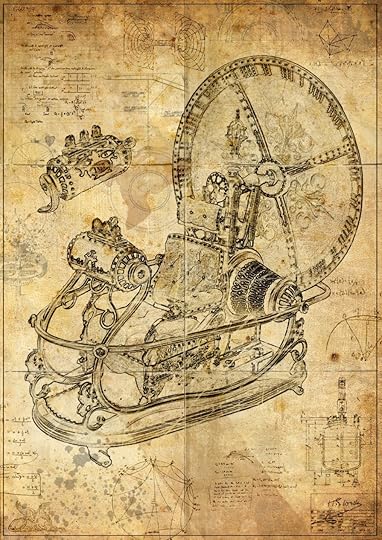
The Time Machine
Dr. Griffin in The Invisible Man is a brilliant research scientist who discovers a method of invisibility but finds himself unable to reverse the process. An enthusiast of random and irresponsible violence, Griffin has become an iconic character in horror fiction. The Island of Doctor Moreau sees a shipwrecked man left on the island home of Doctor Moreau, a mad scientist who creates human-like hybrid beings from animals via vivisection. The earliest depiction of uplift, the novel deals with a number of philosophical themes, including pain and cruelty, moral responsibility, human identity, and human interference with nature. In The First Men in the Moon Wells used the idea of radio communication between astronomical objects, a plot point inspired by Nikola Tesla's claim that he had received radio signals from Mars. In addition to science fiction, Wells produced work dealing with mythological beings like an angel in The Wonderful Visit (1895) and a mermaid in The Sea Lady (1902).
Though Tono-Bungay is not a science-fiction novel, radioactive decay plays a small but consequential role in it. Radioactive decay plays a much larger role in The World Set Free (1914), a book dedicated to Frederick Soddy who would receive a Nobel for proving the existence of radioactive isotopes. This book contains what is surely Wells' biggest prophetic "hit", with the first description of a nuclear weapon (which he termed "atomic bombs"). Scientists of the day were well aware that the natural decay of radium releases energy at a slow rate over thousands of years. The rate of release is too slow to have practical utility, but the total amount released is huge. Wells' novel revolves around an (unspecified) invention that accelerates the process of radioactive decay, producing bombs that explode with no more than the force of ordinary high explosives—but which "continue to explode" for days on end. "Nothing could have been more obvious to the people of the earlier twentieth century, than the rapidity with which war was becoming impossible ... [but] they did not see it until the atomic bombs burst in their fumbling hands". In 1932, the physicist and conceiver of nuclear chain reaction Leó Szilárd read The World Set Free (the same year Sir James Chadwick discovered the neutron), a book which he wrote in his memoirs had made "a very great impression on me." In 1934, Szilárd took his ideas for a chain reaction to the British War Office and later the Admiralty, assigning his patent to the Admiralty to keep the news from reaching the notice of the wider scientific community. He wrote, "Knowing what this [a chain reaction] would mean—and I knew it because I had read H. G. Wells—I did not want this patent to become public."
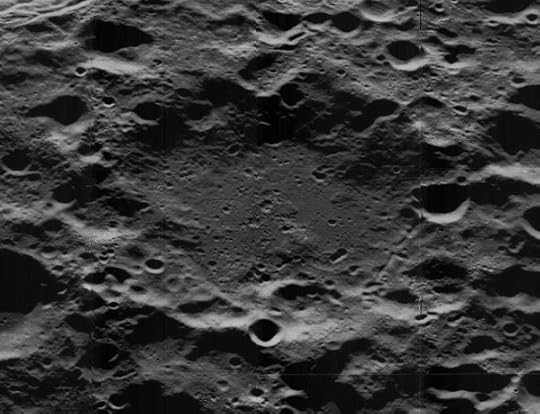
The H. G. Wells crater - on the far side of the Moon was named after the author in 1970
Wells also wrote non-fiction. His first non-fiction bestseller was Anticipations of the Reaction of Mechanical and Scientific Progress upon Human Life and Thought (1901). When originally serialized in a magazine it was subtitled "An Experiment in Prophecy", and is considered his most explicitly futuristic work. It offered the immediate political message of the privileged sections of society continuing to bar capable men from other classes from advancement until war would force a need to employ those most able, rather than the traditional upper classes, as leaders. Anticipating what the world would be like in the year 2000, the book is interesting both for its hits (trains and cars resulting in the dispersion of populations from cities to suburbs; moral restrictions declining as men and women seek greater sexual freedom; the defeat of German militarism, and the existence of a European Union) and its misses (he did not expect successful aircraft before 1950, and stated that "my imagination refuses to see any sort of submarine doing anything but suffocate its crew and founder at sea").
His bestselling two-volume work, The Outline of History (1920), began a new era of popularised world history. It received a mixed critical response from professional historians. However, it was very popular amongst the general population and made Wells a rich man.
From quite early in Wells's career, he sought a better way to organize society and wrote a number of Utopian novels. The first of these was A Modern Utopia (1905), which shows a worldwide utopia with "no imports but meteorites, and no exports at all"; two travelers from our world fall into its alternate history. The others usually begin with the world rushing to catastrophe, this depicted, all too accurately, the impending World War, with cities being destroyed by aerial bombs. He also portrayed the rise of fascist dictators in The Autocracy of Mr. Parham (1930) and The Holy Terror (1939). Wells in this period was regarded as an enormously influential figure; the literary critic Malcolm Cowley stated: "by the time he was forty, his influence was wider than any other living English writer".
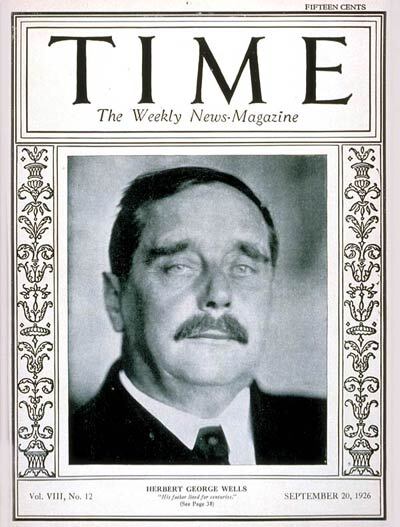
H. G. Wells - on the front cover of Time magazine, September 20, 1926
Final years
Wells's greatest literary output occurred before the First World War, which was lamented by younger authors whom he had influenced. In this connection, George Orwell described Wells as "too sane to understand the modern world", and "since 1920 he has squandered his talents in slaying paper dragons." G. K. Chesterton quipped: "Mr Wells is a born storyteller who has sold his birthright for a pot of message".
On October 28, 1940, on the radio station KTSA in San Antonio, Texas, Wells took part in a radio interview with Orson Welles, who two years previously had performed a famous radio adaptation of The War of the Worlds. During the interview, by Charles C Shaw, a KTSA radio host, Wells admitted his surprise at the sensation that resulted from the broadcast but acknowledged his debt to Welles for increasing sales of one of his "more obscure" titles.
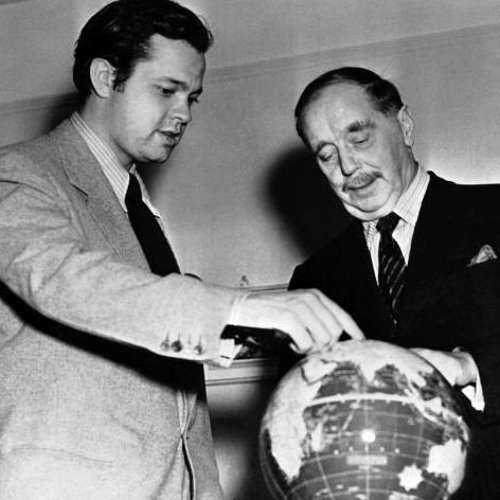
Orson Welles and H.G. Wells
Death
Wells died on 13 August 1946, aged 79, at his home at 13 Hanover Terrace, overlooking Regent's Park, London. In his preface to the 1941 edition of The War in the Air, Wells had stated that his epitaph should be: "I told you so. You damned fools". Wells's body was cremated at Golders Green Crematorium on August 16, 1946; his ashes were subsequently scattered into the English Channel at Old Harry Rocks, the most eastern point of the Jurassic Coast and about 3.5 miles from Swanage in Dorset.
Additional Biographical Information
The H.G. Wells Society: http://hgwellssociety.com/
Author's Bibliography
https://en.wikipedia.org/wiki/H._G._W...


H.G. Wells Biography
Herbert George Wells (September 21, 1866 – August 13, 1946) was an English writer who was prolific in many genres, he wrote more than fifty novels and dozens of short stories. His non-fiction output included works of social commentary, politics, history, popular science, satire, biography, and autobiography. Wells is now best remembered for his science fiction novels and has been called the "father of science fiction." Wells rendered his works convincing by instilling commonplace detail alongside a single extraordinary assumption per work – dubbed "Wells's law."
In addition to his fame as a writer, he was prominent in his lifetime as a forward-looking, even prophetic social critic who devoted his literary talents to the development of a progressive vision on a global scale. A futurist, he wrote a number of utopian works and foresaw the advent of aircraft, tanks, space travel, nuclear weapons, satellite television, and something resembling the World Wide Web. His science fiction imagined time travel, alien invasion, invisibility, and biological engineering before these subjects were common in the genre. Brian Aldiss referred to Wells as the "Shakespeare of science fiction."
Wells's earliest specialized training was in biology, and his thinking on ethical matters took place in a Darwinian context. He was also an outspoken socialist from a young age, often (but not always, as at the beginning of the First World War) sympathizing with pacifist views. In his later years, he wrote less fiction and more works expounding his political and social views, sometimes giving his profession as that of a journalist. Wells was a diabetic and co-founded the charity The Diabetic Association (known today as Diabetes UK) in 1934.
Early Life
Herbert George Wells was born at Atlas House, 162 High Street in Bromley, Kent, on 21 September 1866. Called "Bertie" by his family, he was the fourth and last child of Joseph Wells, a former domestic gardener, and at the time a shopkeeper and professional cricketer and Sarah Neal, a former domestic servant. An inheritance had allowed the family to acquire a shop in which they sold china and sporting goods, although it failed to prosper: the stock was old and worn out, and the location was poor. Joseph Wells managed to earn a meager income, but little of it came from the shop and he received an unsteady amount of money from playing professional cricket for the Kent county team.
(circa 1870s)
A defining incident of young Wells's life was an accident in 1874 at the age of seven, which left him bedridden with a broken leg. To pass the time he began to read books from the local library, brought to him by his father. He became a voracious reader of everything from Charles Dickens to Washington Irving. He soon became devoted to the other worlds and lives to which books gave him access; they also stimulated his desire to write. When the family store finally went under, his mother went to work as a housekeeper at a large estate. It was there Wells was able to expand his literary horizons with authors such as Voltaire.
In his early teens, Wells also went to work as a draper's assistant. He hated the job and eventually quit, much to his mother's dismay. Turning to teaching, Wells soon found a way to continue his own studies. He won a scholarship to the Normal School of Science where he learned about physics, chemistry, astronomy, biology, and among other subjects. Wells also devoted much of his time to becoming a writer. During college, he published a short story about time travel called The Chronic Argonauts, which foreshadowed his future literary success.
Wells’ first published book was a Textbook of Biology (1893). With his first novel, The Time Machine (1895), which was immediately successful, he began a series of science fiction novels that revealed him as a writer of marked originality and an immense ability to produce new ideas. For a time he acquired a reputation as a prophet of the future, and indeed, in The War in the Air (1908), he foresaw certain developments in the military use of aircraft. But his imagination flourished at its best not in the manner of the comparatively mechanical anticipations of Jules Verne but in the astronomical fantasies of The First Men in the Moon (1902) and The War of the Worlds (1898), from the latter of which the image of the Martian has passed into popular mythology.
Behind his inventiveness lay a passionate concern for man and society, which increasingly broke into the fantasy of his science fiction, often diverting it into satire and sometimes, as in The Food of the Gods, destroying its credibility. Eventually, Wells decided to abandon science fiction for comic novels of lower-middle-class life, most notably in Love and Mr. Lewisham (1900), Kipps: The Story of a Simple Soul (1905), and The History of Mr. Polly (1910). In these novels, and in Tono-Bungay (1909), he drew on memories of his own earlier life, and, through the thoughts of inarticulate yet often ambitious heroes, revealed the hopes and frustrations of clerks, shop assistants, and underpaid teachers, who had rarely before been treated in fiction with such sympathetic understanding. In these novels, too, he made his liveliest, most persuasive comment on the problems of Western society that were soon to become his main preoccupation. The somber vision of a dying world in The Time Machine shows that, in his long-term view of humanity’s prospects, Wells felt much of the pessimism prevalent in the 1890s. In his short-term view, however, his study of biology led him to hope that human society would evolve into higher forms, and with Anticipations (1901), Mankind in the Making (1903), and A Modern Utopia (1905), he took his place in the British public’s mind as a leading preacher of the doctrine of social progress. About this time, too, he became an active socialist, and in 1903 joined the Fabian Society, though he soon began to criticize its methods. The bitter quarrel he precipitated by his unsuccessful attempt to wrest control of the Fabian Society from George Bernard Shaw and Sidney and Beatrice Webb in 1906–07 is retold in his novel The New Machiavelli (1911), in which the Webbs are parodied as the Baileys.
Personal Life
In 1891, Wells married his cousin Isabel Mary Wells (1865–1931). The couple agreed to separate in 1894, when he had fallen in love with one of his students, Amy Catherine Robbins (1872–1927), with whom he moved to Woking, Surrey, in May 1895. They lived in a rented house, 'Lynton' (now No.141), Maybury Road, in the town center for just under 18 months and married at St Pancras register office in October 1895. His short period in Woking was perhaps the most creative and productive of his whole writing career.
In late summer 1896, Wells and Jane moved to a larger house in Worcester Park, near Kingston upon Thames, for two years; this lasted until his poor health took them to Sandgate, near Folkestone, where he constructed a large family home, Spade House, in 1901. He had two sons with Jane: George Philip (1901–1985) and Frank Richard (1903–1982). Jane died on 6 October 1927, in Dunmow, at the age of 55, which left Wells devastated. She was cremated at Golders Green, with friends of the couple present including George Bernard Shaw.
Wells had affairs with a significant number of women. Dorothy Richardson was a friend and they had a brief affair which led to a pregnancy and then miscarriage, in 1907. In December 1909, he had a daughter, Anna-Jane, with the writer Amber Reeves whose parents, William and Maud Pember Reeves, he had met through the Fabian Society. Amber had married the barrister G. R. Blanco White in July of that year, as co-arranged by Wells. After Beatrice Webb voiced disapproval of Wells' "sordid intrigue" with Amber, he responded by lampooning Beatrice Webb and her husband Sidney Webb in his 1911 novel The New Machiavelli as 'Altiora and Oscar Bailey', a pair of short-sighted, bourgeois manipulators. Between 1910 and 1913, novelist Elizabeth von Arnim was one of his mistresses. In 1914, he had a son, Anthony West (1914–1987), by the novelist and feminist Rebecca West, 26 years his junior. In 1920–21, and intermittently until his death, he had a love affair with the American birth control activist Margaret Sanger.
Between 1924 and 1933 he partnered with the 22-year-younger Dutch adventurer and writer Odette Keun, with whom he lived in Lou Pidou, a house they built together in Grasse, France. Wells dedicated his longest book to her (The World of William Clissold, 1926). When visiting Maxim Gorky in Russia 1920, he had slept with Gorky's mistress Moura Budberg, then still Countess Benckendorf and 27 years his junior. In 1933, when she left Gorky and emigrated to London, their relationship renewed and she cared for him through his final illness. Wells repeatedly asked her to marry him, but Budberg strongly rejected his proposals.