
Reading the 20th Century discussion

This topic is about
The Love-charm of Bombs
Buddy Reads
>
The Love-Charm of Bombs by Lara Feigel (September 2023)
date newest »
newest »
 Mod
Mod
My review...
https://www.goodreads.com/review/show...
3/5
 Mod
Mod
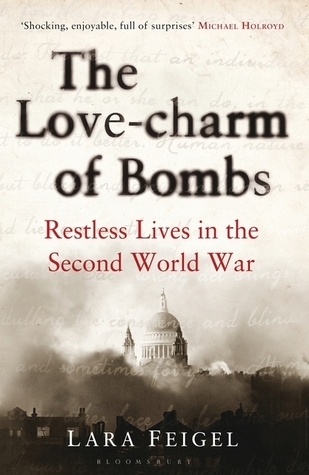
The second world war has suffered in comparison to the great war of 1914-18. Readers' imaginations are still dominated by "Anthem for Doomed Youth" and All Quiet on the Western Front. Yet the sequel is just as literary, as Lara Feigel cleverly demonstrates in The Love-charm of Bombs, a title she owes to Graham Greene.
In Britain, the second world war was prosecuted with rhetorical majesty by one of the great writers of the century, Winston Churchill. After the crisis of May 1940, the prime minister became a demanding impresario to a circle of literary men with corkscrew minds and an appetite for jeopardy, from Ian Fleming to Stephen Spender. "We were a generation," Graham Greene later wrote in Ways of Escape, "brought up on adventure stories who had missed the enormous disillusionment of the first world war, and so we went looking for adventure."
Books and writers became braided into the plot of war. TS Eliot, JB Priestley, EM Forster and George Orwell all went in front of BBC microphones. The home front would never generate the electrifying poetry of the trenches, but it was still a highly charged moment for a generation of 30s writers accustomed to publishers' lunches and mistress dinners at Rules restaurant.
If there was one domestic experience to match the horror of the trenches, it was the blitz, a metropolitan trauma unknown to Wilfred Owen. The Nazis' terror bombing of London began on 7 September 1940. The novelist William Sansom captured the image of the blitz: "that black London roofscape silhouetted against what was to become a monotonous copper-orange sky".
The worst phase of the bombing continued until May 1941, when there was a lull. During these months everyday life went haywire. Many Londoners took the opportunity to play truant from their responsibilities. Malcolm Muggeridge remembered the blitz as a "protracted debauch, with the shape of orderly living shattered, all restraints removed, barriers non-existent". Here was a mise-en-scène perfectly tailored to the wartime writer's search for contemporary material, an idea Sarah Waters has also explored in her 2006 novel The Night Watch.
Lara Feigel, a young critic, has transformed this insight into an absorbing and well-researched group biography of five prominent writers who responded imaginatively to the nightly routine of sirens and barrage: Elizabeth Bowen, Graham Greene, Rose Macaulay, Hilde Spiel (an Austrian writer trapped in wartime Wimbledon) and Henry Yorke (better known as novelist Henry Green). Regrettably, Feigel does not confine herself to these lives in wartime, but tries to encompass their postwar careers as well. A shorter, tighter book might have been even more successful.
However, she does connect the making of three classic English novels – Caught, The Heat of the Day and The End of the Affair – to the blitz, and through the lives of their authors unfolds a fascinating home front story. She persuasively demonstrates that London in 1941 sponsored all the sensations usually found on the battlefield.
Above all, the blitz was lethal and remorseless. Some 40,000 civilians died, more than half of them in London. The autobiographical hero of Green's Caught confesses: "all that was real to him was his death in a matter of days". Perception traumatised reality. Everyone responded to the thrill. Bowen pictured the "inscrutable canyons" of the city under a terrifying blackout.
Graham Greene revelled in this atmosphere: "there was something rather wonderful about London in the blitz, with no street lights, no traffic and no pedestrians to speak of: just an empty dark city, torn with great explosions, racked with ack-ack fire, lit with lurid flames, acrid smoke, its air full of the dust of fallen buildings". Writers such as Bowen were also discovering that, in extremis, war is a great leveller. "We are almost a commune," she wrote. "All destructions make the same grey mess."
Feigel is particularly good on the erotic corollary to the blitz: wartime passion. All her subjects made love to the detonations of high explosives. Greene's life became so entwined with the stage designer Dorothy Glover that she was sometimes mistaken for his wife. Henry Yorke/Green used Caught to ponder the relation between love and death in the character of Prudence. "War, she thought, was sex." According to Feigel, women preparing for a night out during the blitz used to ask one another, saucily: "Is he someone you'd like to die with?"
In a telling reversal, Evelyn Waugh, fighting in Dakar, became jealous of fellow writers "fighting fires day and night". He complained that regular soldiers had become "like wives reading letters from the trenches". Certainly, Rose Macaulay, whose Towers of Trebizond had its origins in the blitz, was explicit about the larger significance of her experience. The blitz, she wrote, "was a sample of total war". Indeed, the skies of wartime London were never quite free from terror. January 1944 saw the start of "the little blitz", followed by Hitler's "secret weapon", the V1 and V2 rockets.
Strangely, Feigel, who has trawled an extraordinary range of sources to develop this story, does not mention the most significant German hit made on an English literary man. In June 1944, George Orwell's flat in Mortimer Crescent was destroyed by a doodlebug. He moved to Canonbury Square and began to write Nineteen Eighty-Four, drawing freely on London's atmosphere of terror. Winston Smith's affair with Julia must be the strangest literary love-child of the blitz.
http://www.theguardian.com/books/2013...
 I’m in, for the wartime part at a minimum
 I think I'm still reading it from our previous reading - lost somewhere on a Kindle. I remember I was really enjoying it.
 Mod
Mod
However, again, I found my interest was caught unevenly - I love the sections of Elizabeth Bowen and was quite interested in Graham Greene. I was interested in learning more about Rose Macaulay but she's of a later generation and her story at this point of her life felt a bit one-note to me.
Once again, I found it hard to get involved with either Henry Green or the Austrian lady - and it all tails off after the end of the war.
I can't help wondering if this was just to do with my own interest or if Feigel also had favourites and her interest or waning of interest seeped through?
 Mod
Mod
Mod
Mod
I'd forgotten there's so much information about Bowen's relationship with Sean O'Faolain which fascinates me. She's a complicated lady!
Hilde Spiel always feels like an add-on, there to make a point rather than because she's a natural member of this group though obviously her story is important.
I think I generally find Feigel a little patchy - but when she's good, she's excellent.
Mod
Bowen was certainly complicated. It was interesting to read that she was travelling to Ireland, as was Greene, even in wartime. It must have been strange to be in a city at war, then hop across to Ireland and find life going on as before.
By the way, there's a kindle deal, Eve Bites Back, which I think might interest you. It was highly recommended by a friend of mine and I think you'd like it. If you haven't read it already of course.
Mod
On Bowen and Ireland, I'd forgotten that she was half spying for the British government - very complicated.
I also disliked her Canadian lover this time, he seemed to constantly have one eye over her shoulder looking out for someone better. It's funny how our emotions can change on re-reading.
Mod
Mod
Interesting to think of both Bowen and Woolf as childless women, even if not intentionally.
And all these affairs (I'm thinking of Barbara Pym and Elizabeth Taylor too as we've been discussing them) really show how simplistic it is to think of these women as less 'modern' than we are.
I think I'm going to go back to reading this. I have located it on my Kindle. I tried searching for it but the search function didn't want to actually locate it. I had to do it by hand.
 Feigel's quite explicit about the rationale for her inclusion of Spiel, and personally found her an interesting figure but I generally enjoy finding out writers who are new to me. I also found the discussion of Green interesting, I read Bowen's Blitz novel alongside this the first time I read it, think I'll try Green's this time round.
 I thought it was interesting that Feigel thinks of these writers as the equivalent of WW1 poets, made me wonder what literature from the WW2 era grew out of direct experience of combat? I couldn't immediately think of examples that aren't American. Also wondered why it was that poetry as a general medium of expression died out between the two wars, it's clear from reading various books including accounts of war by people like Vera Brittain that it was a commonplace approach to representing war/wartime in England in general - at least for a particular cultural/social group.
Mod
"I read Bowen's Blitz novel alongside this the first time I read it, think I'll try Green's this time round"
Which one is that Alwynne?
Is it Caught (1943)?
We've got some Henry Green coming up next year
Mod
I tend to associate it with class-based ideas of what an educational curriculum should look like and the decline of classics as a/the basis of a 'good' education just because so much literature studied in classics is poetry which is a general currency. And the old public schools included 'composition' in their teaching.
So maybe the idea of 'modern' education for a general populace becomes a turning point when Latin and Greek are no longer routinely taught to 'the masses' and the idea of poetry, as opposed to prose and the novel, gets categorized as rarefied and elitist?
Mod
So much of the well-known WW1 poetry comes from the trenches or while men were recuperating from trench warfare which was largely static with long periods of hanging around in dug-outs before flurries of action.
Whereas WW2 tends to be characterised as a war of movement and speed in combat terms.
Interesting to compare this to later wars such as Vietnam, the Balkans, Iraq and Afghanistan. The latter two seem to have generated some interesting literary work from American writers, albeit prose rather than poetry, but less so, as far as I know, from British and European ones.
I've finally finished this. I enjoyed it in short bursts, and then it waited patiently while I read other works. History books often work for me in this way.So many unhappy, limited marriages. Funny how we imagine that people were more "virtuous" in the past, as opposed to our irreligious, immoral present. Balderdash!
Clearly the experiences enriched their writing, although like others who have reviewed this, I don't buy the reading of the novels as an extended journal on their lives.
I most enjoyed the sections on Bowen, Macaulay and Greene. Bowen because I love her writing and want to understand more of what makes her tick, Macaulay because I find something noble about her, even though as a writer she's not in the same class as Bowen and Greene, and Greene because Feigel intensifies every negative feeling I've developed about him by reading three of his novels (and no more).
The pictures of London in the Blitz are wonderful and I enjoyed every detail about how these five pitched in, suffered and coped. With war so much in the news these last two years, a refresher on how it felt close to home was valuable.
Mod
"So many unhappy, limited marriages. Funny how we imagine that people were more "virtuous" in the past, as opposed to our irreligious, immoral present. Balderdash! "
The war time context contributed to the bad behaviour. During the Blitz there was a heightened sense of maybe not surviving the next 24 hours
Plus the social classes mingled more freely, in the underground and the streets, and of course, in some cases, with partners and/or children evacuated, there was plenty of opportunity for extra marital affairs.
Nigeyb wrote: "The war time context contributed to the bad behaviour. During the Blitz there was a heightened sense of maybe not surviving the next 24 hours"That's certainly true, and I've noticed that happening around me whenever people are in unusual situations or even just away from home.
But still, the "misbehaviour" in many cases pre-dated the Blitz. People are just human.
Mod
That said, there's significantly less of it in the novels of Anthony Trollope 🤠
Mod
Ha, well, Trollope wouldn't mention it but adultery, sex outside marriage, prostitution, unplanned pregnancies, abortions and all manner of decadencies were certainly alive and rife throughout the Victorian period. Dickens is less squeamish about making this clear.
Trollope does have Signora Negroni in Barchester Towers and she's quite the minx!
Mod
Roman Clodia wrote:
"Trollope does have Signora Negroni in Barchester Towers and she's quite the minx!"
Looking forward to meeting Signora Negroni 🤠
When I started reading this originally I was enjoying it. When I picked it back up this time it was a real chore. I think I'm at around 65%. But I was relieved when Kindle did an update and closed it for me. Maybe I'll feel more like reading it at a later time.
Mod

Reading the 20th Century
Books mentioned in this topic
The Towers of Trebizond (other topics)Caught (other topics)
The Love-charm of Bombs: Restless Lives in the Second World War (other topics)
Authors mentioned in this topic
Rose Macaulay (other topics)Henry Green (other topics)
Rose Macaulay (other topics)
Lara Feigel (other topics)

Some of us are keen to read this for the light it shines on the lives of Elizabeth Bowen, Rose Macaulay and Henry Green, writers that we're reading in 2023-4. But it's also a fantastic and atmospheric recreation of the precariousness of life during the London blitz.
Everyone is welcome, as always! This thread is open now for comments: