
 Sign in with Facebook


“The reason that the rich were so rich, Vimes reasoned, was because they managed to spend less money.
Take boots, for example. He earned thirty-eight dollars a month plus allowances. A really good pair of leather boots cost fifty dollars. But an affordable pair of boots, which were sort of OK for a season or two and then leaked like hell when the cardboard gave out, cost about ten dollars. Those were the kind of boots Vimes always bought, and wore until the soles were so thin that he could tell where he was in Ankh-Morpork on a foggy night by the feel of the cobbles.
But the thing was that good boots lasted for years and years. A man who could afford fifty dollars had a pair of boots that'd still be keeping his feet dry in ten years' time, while the poor man who could only afford cheap boots would have spent a hundred dollars on boots in the same time and would still have wet feet.
This was the Captain Samuel Vimes 'Boots' theory of socioeconomic unfairness.”
― Men at Arms: The Play
Take boots, for example. He earned thirty-eight dollars a month plus allowances. A really good pair of leather boots cost fifty dollars. But an affordable pair of boots, which were sort of OK for a season or two and then leaked like hell when the cardboard gave out, cost about ten dollars. Those were the kind of boots Vimes always bought, and wore until the soles were so thin that he could tell where he was in Ankh-Morpork on a foggy night by the feel of the cobbles.
But the thing was that good boots lasted for years and years. A man who could afford fifty dollars had a pair of boots that'd still be keeping his feet dry in ten years' time, while the poor man who could only afford cheap boots would have spent a hundred dollars on boots in the same time and would still have wet feet.
This was the Captain Samuel Vimes 'Boots' theory of socioeconomic unfairness.”
― Men at Arms: The Play
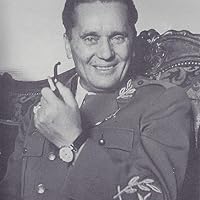
“I am the leader of one country which has two alphabets, three languages, four religions, five nationalities, six republics, surrounded by seven neighbours, a country in which live eight ethnic minorities.”
―
―

“The slow cancellation of the future has been accompanied by a deflation of expectations. There can be few who believe that in the coming year a record as great as, say, the Stooges’ Funhouse or Sly Stone’s There’s A Riot Goin’ On will be released. Still less do we expect the kind of ruptures brought about by The Beatles or disco. The feeling of belatedness, of living after the gold rush, is as omnipresent as it is disavowed. Compare the fallow terrain of the current moment with the fecundity of previous periods and you will quickly be accused of ‘nostalgia’. But the reliance of current artists on styles that were established long ago suggests that the current moment is in the grip of a formal nostalgia, of which more shortly.
It is not that nothing happened in the period when the slow cancellation of the future set in. On the contrary, those thirty years has been a time of massive, traumatic change. In the UK, the election of Margaret Thatcher had brought to an end the uneasy compromises of the so-called postwar social consensus. Thatcher’s neoliberal programme in politics was reinforced by a transnational restructuring of the capitalist economy. The shift into so-called Post-Fordism – with globalization, ubiquitous computerization and the casualisation of labour – resulted in a complete transformation in the way that work and leisure were organised. In the last ten to fifteen years, meanwhile, the internet and mobile telecommunications technology have altered the texture of everyday experience beyond all recognition. Yet, perhaps because of all this, there’s an increasing sense that culture has lost the ability to grasp and articulate the present. Or it could be that, in one very important sense, there is no present to grasp and articulate anymore.”
― Ghosts of My Life: Writings on Depression, Hauntology and Lost Futures
It is not that nothing happened in the period when the slow cancellation of the future set in. On the contrary, those thirty years has been a time of massive, traumatic change. In the UK, the election of Margaret Thatcher had brought to an end the uneasy compromises of the so-called postwar social consensus. Thatcher’s neoliberal programme in politics was reinforced by a transnational restructuring of the capitalist economy. The shift into so-called Post-Fordism – with globalization, ubiquitous computerization and the casualisation of labour – resulted in a complete transformation in the way that work and leisure were organised. In the last ten to fifteen years, meanwhile, the internet and mobile telecommunications technology have altered the texture of everyday experience beyond all recognition. Yet, perhaps because of all this, there’s an increasing sense that culture has lost the ability to grasp and articulate the present. Or it could be that, in one very important sense, there is no present to grasp and articulate anymore.”
― Ghosts of My Life: Writings on Depression, Hauntology and Lost Futures
“Don’t confuse my personality with my attitude. My personality is who I am. My attitude depends on who you are.”
―
―

“Only put off until tomorrow what you are willing to die having left undone”
―
―

Edward’s 2024 Year in Books
Take a look at Edward’s Year in Books, including some fun facts about their reading.
Edward hasn't connected with their friends on Goodreads, yet.
Polls voted on by Edward
Lists liked by Edward
