
 Sign in with Facebook
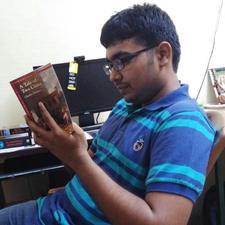
Harikrishna Raghuraman
http://freezingeternity.blogspot.in/


Anger’s solid; it has weight. You can beat your fists against it. Pity’s a fog to become lost within.


“What an unreliable thing is time--when I want it to fly, the hours stick to me like glue. And what a changeable thing, too. Time is the twine to tie our lives into parcels of years and months. Or a rubber band stretched to suit our fancy. Time can be the pretty ribbon in a little girl's hair. Or the lines in your face, stealing your youthful colour and your hair. .... But in the end, time is a noose around the neck, strangling slowly.”
― A Fine Balance
― A Fine Balance

“To sell your soul is the easiest thing in the world. That's what everybody does every hour of his life. If I asked you to keep your soul - would you understand why that's much harder?”
― The Fountainhead
― The Fountainhead
“You see, we cannot draw lines and compartments and refuse to budge beyond them. Sometimes you have to use your failures as stepping-stones to success. You have to maintain a fine balance between hope and despair.' He paused, considering what he had just said. 'Yes', he repeated. 'In the end, it's all a question of balance.”
― A Fine Balance
― A Fine Balance
“Have you felt it too? Have you seen how your best friends love everything about you- except the things that count? And your most important is nothing to them; nothing, not even a sound they can recognize.”
― The Fountainhead
― The Fountainhead
“...you have to use your failures as stepping stones to success. You have to maintain a fine balance between hope and despair. In the end it’s all a question of balance.”
― A Fine Balance
― A Fine Balance


Harikrishna’s 2024 Year in Books
Take a look at Harikrishna’s Year in Books, including some fun facts about their reading.

8,669 books
|
1,600 friends

385 books
|
120 friends

624 books
|
22 friends

286 books
|
337 friends

158 books
|
130 friends

581 books
|
136 friends

273 books
|
180 friends

108 books
|
314 friends
More friends…


Favorite Genres
Art, Biography, Business, Children's, Classics, Comics, Crime, Ebooks, Fantasy, Fiction, Graphic novels, Historical fiction, History, Horror, Humor and Comedy, Memoir, Music, Mystery, Non-fiction, Paranormal, Philosophy, Poetry, Psychology, Religion, Romance, Science, Science fiction, Self help, Suspense, Spirituality, Sports, Thriller, and Travel
Polls voted on by Harikrishna
Lists liked by Harikrishna
