
Ask the Author: Rick Boling
Answered Questions (6)

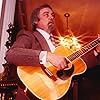
Rick Boling
It may sound clichéd, but the way I get over writer’s block is simply to write. If I’m stuck on some point in a novel, wondering what should happen next, I stew over it for a while, and if nothing comes of that, I sit down at the computer and start writing anything I can think of. This could be nonsensical gibberish, a silly poem, or a letter to a friend—anything so long as it has nothing whatsoever to do with the novel I am writing. The simple process of writing without the pressure of having to create some clever part of a story can jump start things, and it almost always seems to work. I also practice transcendental meditation, during which ideas often pop into my mind. It’s kind of like when you are trying hard to remember something and can’t until you stop trying. Then, when you’re doing something else and not thinking about what you were trying to remember, suddenly it comes to you seemingly out of nowhere.
Rick Boling
I don’t know that there is a “best thing” for me as a writer. Like many other writers, I don’t have much choice in the matter. I’ve always been a dreamer and a story teller, and once I learned to write it seemed only natural to put these things down on paper. I’ve also always been a keen observer of people and how they interact with the world, constantly making up stories in my head about them. And eventually these stories have to come out or I feel like my head will explode. I do enjoy the independence of being a writer, and I’m fascinated by those little sparks of creativity that sometimes invade my mind without requiring any conscious effort on my part. But for the most part, the writing process is difficult, lonely, and simply a lot of work. It’s work that I love, but that doesn’t mean it isn’t hard or sometimes gruelingly frustrating. Creating first drafts is probably the most “fun” part of my work, but that only accounts for about 10% of the time it takes to complete a novel. The other 90% consists of editing, rewriting, dealing with criticisms from others, then starting the process all over again. Of course, there’s the thrill of hearing someone say how much they enjoyed the finished product, or that they recognized part of themselves in one of my characters, or how what I wrote made them face some problem they had been struggling with. So I guess, in the end, I could say the “best thing” is the satisfaction of having written something that touched others in a positive way.
Rick Boling
If you hope to make a living as a freelance journalist, be sure to present yourself in the most professional way possible. Adhere to the rules in the Chicago Manual of Style, spend lots of time researching and fact checking, send out tons of queries, and get used to rejection.
For fiction writers, about the only advice I would have is to read as many novels and short stories as you can get your hands on; absorb as much as you can; observe carefully the people and settings wherever you go; make up character studies and descriptions based on your observations; and keep a personal journal. Eventually these things will begin to generate story ideas, which you should write down and expand until you have strong narratives. Once some of these narratives begin to gel into longer stories, begin developing plot lines and turning them into short stories or novels. Then rewrite, rewrite, rewrite, until you have exhausted every possible chance to improve what you have written. Finally, try to get as many friends as you can to read your work and comment on it critically.
For fiction writers, about the only advice I would have is to read as many novels and short stories as you can get your hands on; absorb as much as you can; observe carefully the people and settings wherever you go; make up character studies and descriptions based on your observations; and keep a personal journal. Eventually these things will begin to generate story ideas, which you should write down and expand until you have strong narratives. Once some of these narratives begin to gel into longer stories, begin developing plot lines and turning them into short stories or novels. Then rewrite, rewrite, rewrite, until you have exhausted every possible chance to improve what you have written. Finally, try to get as many friends as you can to read your work and comment on it critically.
Rick Boling
I am currently working on an outline and research for a new novel I plan to call “Faker.” The basic premise is centered around a relatively uneducated but clever fellow, who goes through life learning just enough about various professions to “fake” his way through. These professions would include: musician, marketing consultant, abstract artist, journalist, guitar teacher, construction contractor, pool hustler, and several others.
Rick Boling
I wrote my first short story in fourth grade and got an A on it, but before long I got involved in music and for several years I did little or no writing. Then, in my late twenties I moved to a small cabin in the north Georgia woods, with the intention of using the isolation to write music and poetry. At the time I was also a luthier (builder of stringed instruments), but making a living at that was difficult because I was so isolated, so I eventually moved back to Florida, where I started a small business building instruments and furniture.
I was semi-successful at song writing, and came close to having a couple of my songs released nationally, but the woodworking business was doing poorly, so I had to think of some way to add to my income. I had always been interested in science, and it was actually my wife who suggested I try writing some articles for magazines. I sent out a few queries and within a month I had two assignments from national magazines (OMNI and Science Digest). From there things sort of snowballed, and for the next 30 years I worked as a freelance journalist, publishing some 2,000 articles in dozens of magazines, and also serving for a while as Editor in Chief of a leisure sports magazine. Then about eight years ago, I decided to quit all that and try my hand at writing fiction.
Years earlier I had sold a few stories to the SF pulp magazines, but this time I wanted to try writing novels. Over the next five years, I published three erotic novels under a pen name (to save my family the embarrassment), then decided to take a shot at writing an SF novel.
It took me nearly three years to finish “Then Again,” which is the first novel I have published under my real name.
I was semi-successful at song writing, and came close to having a couple of my songs released nationally, but the woodworking business was doing poorly, so I had to think of some way to add to my income. I had always been interested in science, and it was actually my wife who suggested I try writing some articles for magazines. I sent out a few queries and within a month I had two assignments from national magazines (OMNI and Science Digest). From there things sort of snowballed, and for the next 30 years I worked as a freelance journalist, publishing some 2,000 articles in dozens of magazines, and also serving for a while as Editor in Chief of a leisure sports magazine. Then about eight years ago, I decided to quit all that and try my hand at writing fiction.
Years earlier I had sold a few stories to the SF pulp magazines, but this time I wanted to try writing novels. Over the next five years, I published three erotic novels under a pen name (to save my family the embarrassment), then decided to take a shot at writing an SF novel.
It took me nearly three years to finish “Then Again,” which is the first novel I have published under my real name.
Rick Boling
The story behind "Then Again" evolved from my years as a musician and my intimate knowledge of the pop music culture. From my early teens through my late twenties I worked as a guitarist, keyboard player, and vocalist, playing in several rock bands and as a studio musician. I later became a singer/songwriter, and delved into record producing with limited success. The impetus for writing the novel stemmed from imagining what it would be like to live my life over again while retaining all my accumulated wisdom and experience. In contemplating the possibilities and changes I might make if given such an opportunity, I soon realized that it would be far more complex and perilous than I had originally thought, and I became fascinated with attempting to extrapolate all the pitfalls and problems I would encounter.
Written in three parts (Now, Then, and Then Again), the novel centers on three main characters: Rix Vaughn, an aging, drug-ravaged, alcoholic singer/songwriter nearing the end of a less-than-illustrious career; Heyoka Husereau D'Ailleboust, a world renowned particle physicist and Native American spiritual adept; and Aurélie, a brilliant mathematician who serves as Rix’s spiritual and scientific mentor.
Though a bit offbeat and somewhat humorous in tone, the story is a serious one that incorporates a variety of emotional, psychological and sociopolitical topics, as well as an in-depth examination of what is known as the “butterfly effect”—that is, how everything we do in life has consequences far beyond what most of us could imagine.
Written in three parts (Now, Then, and Then Again), the novel centers on three main characters: Rix Vaughn, an aging, drug-ravaged, alcoholic singer/songwriter nearing the end of a less-than-illustrious career; Heyoka Husereau D'Ailleboust, a world renowned particle physicist and Native American spiritual adept; and Aurélie, a brilliant mathematician who serves as Rix’s spiritual and scientific mentor.
Though a bit offbeat and somewhat humorous in tone, the story is a serious one that incorporates a variety of emotional, psychological and sociopolitical topics, as well as an in-depth examination of what is known as the “butterfly effect”—that is, how everything we do in life has consequences far beyond what most of us could imagine.
About Goodreads Q&A
Ask and answer questions about books!
You can pose questions to the Goodreads community with Reader Q&A, or ask your favorite author a question with Ask the Author.
See Featured Authors Answering Questions
Learn more