
Ask the Author: J.M. Lanham
Answered Questions (8)

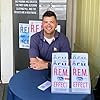
J.M. Lanham
This has got to be every writer's kryptonite. I've had my fair share of writer's block in the past, where I've gone weeks without getting down a single word (at least a single word of fiction; copywriting is the day job). And, the longer I've left a page blank, the longer it has taken to get back in the rhythm of locking down a substantial word count every day.
But, there is one way I've found to address this, and it helps me more often than not. It has to do with the way we sometimes draw a blank when recalling simple information like a person's name or a familiar street. When our brains are put on the spot, we have an inadvertent tendency to stress out about the very information we're trying to recall. And when we're stressed, the odds of connecting the dots go from scarce to non-existent.
There's actually a scientific explanation for this effect. When we get stressed, we naturally produce more cortisol—a stress hormone. More cortisol leads to more stress, which takes your brain's attention away from problems like your latest plot line, and closer to the problem at hand (in this case, the direction of your work in progress).
My solution? Get your mind dead set on another task. Now, I get how this is easier said than done. If you're obsessing over a scene or character development or tying up loose ends in a rough draft, then a long walk on the beach or a baseball game or diving into the latest Stephen King novel is going to be the last thing on your mind. But the trick here is to get your mind to relax; to calm the neural pathways that are essentially leading to the traffic jam in your brain that's keeping you from free and creative thinking.
If you're anything like me, abandoning a writing assignment to go on a bike ride is going to make you feel a little uncomfortable. In fact, your mind will likely be completely against it. But, if you get your mind set on another task, and do the actual work to forget the problems you're having with your work in progress, then eventually something strange will happen, just as it happens when you've completely abandoned the notion of recalling the name of your new neighbor down the street: the fog begins to lift, and solutions begin to present themselves.
Steer your mind away from the task at hand, and eventually the gears will start turning again. I can't tell you how many times I've hit a complete roadblock trying to solve a narrative problem while sitting in my office, only to have the solution presented to me when writing fiction was the last thing on my mind.
So next time you get hit with a nasty case of writer's block, do whatever you can to get writing completely off your mind. If you can accomplish that, then I believe you'll start filling up those blank pages again sooner rather than later.
But, there is one way I've found to address this, and it helps me more often than not. It has to do with the way we sometimes draw a blank when recalling simple information like a person's name or a familiar street. When our brains are put on the spot, we have an inadvertent tendency to stress out about the very information we're trying to recall. And when we're stressed, the odds of connecting the dots go from scarce to non-existent.
There's actually a scientific explanation for this effect. When we get stressed, we naturally produce more cortisol—a stress hormone. More cortisol leads to more stress, which takes your brain's attention away from problems like your latest plot line, and closer to the problem at hand (in this case, the direction of your work in progress).
My solution? Get your mind dead set on another task. Now, I get how this is easier said than done. If you're obsessing over a scene or character development or tying up loose ends in a rough draft, then a long walk on the beach or a baseball game or diving into the latest Stephen King novel is going to be the last thing on your mind. But the trick here is to get your mind to relax; to calm the neural pathways that are essentially leading to the traffic jam in your brain that's keeping you from free and creative thinking.
If you're anything like me, abandoning a writing assignment to go on a bike ride is going to make you feel a little uncomfortable. In fact, your mind will likely be completely against it. But, if you get your mind set on another task, and do the actual work to forget the problems you're having with your work in progress, then eventually something strange will happen, just as it happens when you've completely abandoned the notion of recalling the name of your new neighbor down the street: the fog begins to lift, and solutions begin to present themselves.
Steer your mind away from the task at hand, and eventually the gears will start turning again. I can't tell you how many times I've hit a complete roadblock trying to solve a narrative problem while sitting in my office, only to have the solution presented to me when writing fiction was the last thing on my mind.
So next time you get hit with a nasty case of writer's block, do whatever you can to get writing completely off your mind. If you can accomplish that, then I believe you'll start filling up those blank pages again sooner rather than later.
J.M. Lanham
I'm currently working on the followup to my debut novel, with plans for a spring 2017 release.
J.M. Lanham
Glad you think so! I had a lot of fun writing this one. It's also worth mentioning that it wouldn't have been possible without an excellent editor; it's a profession that doesn't get near enough credit. Cheers!
J.M. Lanham
Hi Faith,
Happy to hear you like the book! No plans to stop writing anytime soon; I've been a copywriter and ghostwriter for five years now, and with the addition of fiction to the resume, writing has pretty much taken over my life (in a good way, of course).
On that note, I'm already working on the followup titled "The R.E.M. Project," set to be out spring of 2017. Plans are to release the third and final installment this winter, which will wrap up the trilogy.
So looks like I'll be stuck to my office chair for the foreseeable future. Wish me luck, and thanks for your support!
— John
Happy to hear you like the book! No plans to stop writing anytime soon; I've been a copywriter and ghostwriter for five years now, and with the addition of fiction to the resume, writing has pretty much taken over my life (in a good way, of course).
On that note, I'm already working on the followup titled "The R.E.M. Project," set to be out spring of 2017. Plans are to release the third and final installment this winter, which will wrap up the trilogy.
So looks like I'll be stuck to my office chair for the foreseeable future. Wish me luck, and thanks for your support!
— John
J.M. Lanham
Awesome, thanks Faith. I'll shoot your copy of The R.E.M. Effect right over.
J.M. Lanham
One of the best things about being a writer is getting to see the stories in your head play out on the pages in front of you. Can't find anything on television? Why not create your own little world to dive into during those long breaks between your favorite TV shows?
Another great thing about writing is the fact that anyone can do it! I think a lot of people tend to believe they're not great writers, so there's no point in trying. But like anything in life—at least in my humble opinion—I think it's more about working hard to get better at the craft than it is God-given talent. Don't get me wrong: some people just seem to have the Powers of Prose miraculously bestowed upon them, but for the most part, I think everyone should give it a shot. Just my two cents.
I also love getting to know the characters. It sounds weird, since I'm the one thinking these people up. For the most part, though, I don't really know who they are or how they will react in different situations until they're right in the thick of it.
Another great thing about writing is the fact that anyone can do it! I think a lot of people tend to believe they're not great writers, so there's no point in trying. But like anything in life—at least in my humble opinion—I think it's more about working hard to get better at the craft than it is God-given talent. Don't get me wrong: some people just seem to have the Powers of Prose miraculously bestowed upon them, but for the most part, I think everyone should give it a shot. Just my two cents.
I also love getting to know the characters. It sounds weird, since I'm the one thinking these people up. For the most part, though, I don't really know who they are or how they will react in different situations until they're right in the thick of it.
J.M. Lanham
For aspiring writers, I have two pieces of advice.
First, make sure you write every day. Not three times a week, or even five.
Every. Single. Day.
No weekends off. No holidays. No excuses.
I like to compare writing to going to the gym. The first few weeks you try it, you're basically forcing yourself through the motions. But after a while, it becomes a part of your routine, and you feel empty and uncomfortable when you don't get it done.
I think writing—or any good habit for that matter—is all about maintaining the routine, no matter what. I've heard people say, "Well Bill is just a good writer," when really, Ol' Bill is probably just fine-tuning his craft every day of his life. Write (and read) every day, and you'll be surprised how much your writing improves over the long run.
The second piece of advice is simple: Read Stephen King's "On Writing." He's one of the best, so why wouldn't you want to pick his brain? The book helped me overcome a lot of self-doubt and excuses, and is one I would personally like to thank him for writing someday. It really is that good.
First, make sure you write every day. Not three times a week, or even five.
Every. Single. Day.
No weekends off. No holidays. No excuses.
I like to compare writing to going to the gym. The first few weeks you try it, you're basically forcing yourself through the motions. But after a while, it becomes a part of your routine, and you feel empty and uncomfortable when you don't get it done.
I think writing—or any good habit for that matter—is all about maintaining the routine, no matter what. I've heard people say, "Well Bill is just a good writer," when really, Ol' Bill is probably just fine-tuning his craft every day of his life. Write (and read) every day, and you'll be surprised how much your writing improves over the long run.
The second piece of advice is simple: Read Stephen King's "On Writing." He's one of the best, so why wouldn't you want to pick his brain? The book helped me overcome a lot of self-doubt and excuses, and is one I would personally like to thank him for writing someday. It really is that good.
J.M. Lanham
I first got the idea for The R.E.M. Effect about five years ago. The original conception wasn't a singular event, but more like a series of events built on top of one another. For example, I had never heard of antisense gene therapy until I stumbled upon the technology while looking for promising biotech companies to invest in. The idea of taking a pill that could change our genetic flaws fascinated me. On top of that, antisense wasn't just science fiction: this technology is still being explored today. When it comes to antisense, researchers have only hit the tip of the iceberg.
I also wanted to touch on the dangers surrounding our culture of pills and prescriptions. We're in such a rush to get a quick fix, sometimes we find ourselves taking medications for conditions we didn't even know we had until a three-minute-long pharmaceutical commercial told us so.
Overall, I wanted to put a sci-fi twist on a plausible concept. I've always enjoyed reading science fiction thrillers that are grounded in reality—at least to some extent. And while this book covers some pretty incredible concepts, I hope readers find it fun and intriguing enough to make it to the last page.
I also wanted to touch on the dangers surrounding our culture of pills and prescriptions. We're in such a rush to get a quick fix, sometimes we find ourselves taking medications for conditions we didn't even know we had until a three-minute-long pharmaceutical commercial told us so.
Overall, I wanted to put a sci-fi twist on a plausible concept. I've always enjoyed reading science fiction thrillers that are grounded in reality—at least to some extent. And while this book covers some pretty incredible concepts, I hope readers find it fun and intriguing enough to make it to the last page.
About Goodreads Q&A
Ask and answer questions about books!
You can pose questions to the Goodreads community with Reader Q&A, or ask your favorite author a question with Ask the Author.
See Featured Authors Answering Questions
Learn more