
Ask the Author: Gaylord Dold
Answered Questions (9)

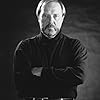
Gaylord Dold
There are many, many books on my reading lists. I keep two. One is a
general list of political, social, economic, history and philosophy books. Another is a list of fiction, poetry and travel. I work my way through them. I expect to die clutching a reading list that extends to hundreds of books I'm hoping to read. Perhaps if there is a heaven it will be stocked with books, dogs, horses and trout.
Right now I am reading "From Bacteria to Bach and Back: The evolution of minds" by the neurobiologist and philosopher David Dennett. Next up is "Thinking Fast and Slow" by Nobel prize winning cognitive psychologist Daniel Kahneman.
general list of political, social, economic, history and philosophy books. Another is a list of fiction, poetry and travel. I work my way through them. I expect to die clutching a reading list that extends to hundreds of books I'm hoping to read. Perhaps if there is a heaven it will be stocked with books, dogs, horses and trout.
Right now I am reading "From Bacteria to Bach and Back: The evolution of minds" by the neurobiologist and philosopher David Dennett. Next up is "Thinking Fast and Slow" by Nobel prize winning cognitive psychologist Daniel Kahneman.
Gaylord Dold
Hello RetroHound:
It is wonderful to hear from someone who knows Dennis, Kansas. My
grandmother raised my father and his brothers and sisters there in the
Depression. I know the Church well and attend services there when I
visit my mother who lives in Ft. Scott. Two of the parishioners were
best friends with my dad, played sports with him and herded cattle
out of the village in the mornings and herded them back into the village
after school as their jobs. Parsons is where my mother grew up as part
of the extended Sawyer clan, many of whom still live there. Many of
my cousins were part of my "playmate" clan and some still reside in
Parsons. Dennis is very special to me and I drop by when I can to see
how it is going there. My grandmother was a "pillar" of the village during
the 30s-60s. In the 30s Dennis was a "going concern", with a High School,
lumberyard, merchants, post office, bank, grocery store and mechanics.
There was as legendary bank robbery there in the 30s that hurt the
village badly. The railroad pulled out too.
As for "numbering" the Mitch Roberts books, it wasn't done during the
80s when they were first published by Avon and Fawcett. I didn't think
it mattered a whole lot then but maybe numbering them now as e-books
is a good idea. Thanks.
Best regards,
Gaylord Dold
It is wonderful to hear from someone who knows Dennis, Kansas. My
grandmother raised my father and his brothers and sisters there in the
Depression. I know the Church well and attend services there when I
visit my mother who lives in Ft. Scott. Two of the parishioners were
best friends with my dad, played sports with him and herded cattle
out of the village in the mornings and herded them back into the village
after school as their jobs. Parsons is where my mother grew up as part
of the extended Sawyer clan, many of whom still live there. Many of
my cousins were part of my "playmate" clan and some still reside in
Parsons. Dennis is very special to me and I drop by when I can to see
how it is going there. My grandmother was a "pillar" of the village during
the 30s-60s. In the 30s Dennis was a "going concern", with a High School,
lumberyard, merchants, post office, bank, grocery store and mechanics.
There was as legendary bank robbery there in the 30s that hurt the
village badly. The railroad pulled out too.
As for "numbering" the Mitch Roberts books, it wasn't done during the
80s when they were first published by Avon and Fawcett. I didn't think
it mattered a whole lot then but maybe numbering them now as e-books
is a good idea. Thanks.
Best regards,
Gaylord Dold
Gaylord Dold
After giving this some thought, I have two favorite couples. They are very different. First comes Henry Miller and his sexual and spiritual nemesis, Mona--a couple appearing in Miller's erotic classics Sexus, Nexus and Plexus. Second place goes to Lieutenant Henry and the doomed Catherine from A Farewell to Arms.
Gaylord Dold
Hello and Thanks for the Question:
My most recent book is a memoir entitled "Jack's Boy: An Alcoholic Childhood". Needless to say, the "idea" is nothing more than the heartfelt desire to tell my story, not to show it off, but to possibly help some poor kid out there who is going through what I went through. My idea for the book stems from pain, shame and anger.
My most recent book is a memoir entitled "Jack's Boy: An Alcoholic Childhood". Needless to say, the "idea" is nothing more than the heartfelt desire to tell my story, not to show it off, but to possibly help some poor kid out there who is going through what I went through. My idea for the book stems from pain, shame and anger.
Gaylord Dold
Hello and Thanks for the Question:
There are a couple of ways to answer that question. Many years ago, thirty five or so at least, I used to tell everybody I knew that I wanted to be a writer. I did that for two or three years. It got to be like wanting to make love to Marilyn Monroe, an embarrassment. Pretty soon I knew I had to begin writing, if nothing more than to avoid shame. If I didn't begin to write,
I knew I'd have to give it up forever by shutting my mouth. So, the original inspiration to write was the pressure I applied to myself in wanting to change my life.
On the immediate day to day level, I'm inspired to "start" a book by something simple like a mood, time of year, state of the weather, something entirely accidental. I'm a writer who has no idea what is "going to come next" in terms of plot, so I consider writing every day a kind of adventure, much better than working in a cube or in an office. People ask me if my background as a lawyer inspires me with "real tales" of crime and I always truthfully say no. Nothing could be further from the truth. My legal
background is of minimal importance.
Inspiration they say is mostly perspiration. I believe it.
There are a couple of ways to answer that question. Many years ago, thirty five or so at least, I used to tell everybody I knew that I wanted to be a writer. I did that for two or three years. It got to be like wanting to make love to Marilyn Monroe, an embarrassment. Pretty soon I knew I had to begin writing, if nothing more than to avoid shame. If I didn't begin to write,
I knew I'd have to give it up forever by shutting my mouth. So, the original inspiration to write was the pressure I applied to myself in wanting to change my life.
On the immediate day to day level, I'm inspired to "start" a book by something simple like a mood, time of year, state of the weather, something entirely accidental. I'm a writer who has no idea what is "going to come next" in terms of plot, so I consider writing every day a kind of adventure, much better than working in a cube or in an office. People ask me if my background as a lawyer inspires me with "real tales" of crime and I always truthfully say no. Nothing could be further from the truth. My legal
background is of minimal importance.
Inspiration they say is mostly perspiration. I believe it.
Gaylord Dold
Hello and Thanks for the Question:
For the past two years I've been working on digitizing
and publishing in e-formats the 18 novels in my "backlist",
including all the early Mitch Roberts "mysteries", three
new works I call the "Jack Kilgore" series (crime novels set
in Florida), and the "Five Major Stand Alone" crime novels
I wrote between 1996 and 2006, including Bay of Sorrows,
Schedule Two, The Devil to Pay, Storm 33 (originally titled,
The Last Man in Berlin) and Six White Horses. Most of
these books received starred reviews in Publisher's Weekly,
and I thought it important that they return to "print", even
as digital books.
Recently, I finished up a young adult novel set in Wyoming called "The Moon When Water Freezes", about a young boy and his Shoshone
Indian friend who run away from home into the Wind River Mountains.
But mainly, I worked on my memoir called "Jack's Boy: An Alcoholic Childhood", which was difficult for me, as you can imagine. It is
a terror for me to think about even now that it's done. I'm going to take a rest and begin a book called "The Kindergarten" about dream research in a maximum security prison.
For the past two years I've been working on digitizing
and publishing in e-formats the 18 novels in my "backlist",
including all the early Mitch Roberts "mysteries", three
new works I call the "Jack Kilgore" series (crime novels set
in Florida), and the "Five Major Stand Alone" crime novels
I wrote between 1996 and 2006, including Bay of Sorrows,
Schedule Two, The Devil to Pay, Storm 33 (originally titled,
The Last Man in Berlin) and Six White Horses. Most of
these books received starred reviews in Publisher's Weekly,
and I thought it important that they return to "print", even
as digital books.
Recently, I finished up a young adult novel set in Wyoming called "The Moon When Water Freezes", about a young boy and his Shoshone
Indian friend who run away from home into the Wind River Mountains.
But mainly, I worked on my memoir called "Jack's Boy: An Alcoholic Childhood", which was difficult for me, as you can imagine. It is
a terror for me to think about even now that it's done. I'm going to take a rest and begin a book called "The Kindergarten" about dream research in a maximum security prison.
Gaylord Dold
Hello and Thanks for the Question:
I've done a number of lengthy seminars on writers and writing over my career. They are lengthy affairs, hours and hours long, if not days. These seminars are filled with "advice". Frankly, much of it is useless, though I hope not all of it. Right now, on my website (gaylorddold.com) I'm attempting to put together something in writing called the "Writer's Workshop", though it is still a work in progress I'm afraid (I've been writing too much to get it done!).
I guess here are some harmless thoughts:
1. Read everything important. Read as if your career depended on
it because it does. Great writers and their books are your teachers,
mentors and friends. Without them you are nothing. Read slowly
and lovingly, earning the respect of the writer who has gone before
you. Think of it this way: If you wanted to learn to play the piano,
you'd study Chopin, Mozart and Jelly Roll Morton, well before you
created your own compositions. Right?
2. Write unique characters without worrying too much about plot.
Stories flow from the blank page without effort, if you have the
characters, mood, scene, location and "feel". Hemingway said,
"Get the weather in your book." by which he meant, throw yourself
into the world.
3. Think of writing as a business, which it is. Have a regular schedule.
You can join a writer's group, but don't place much importance on
it. Our great writers didn't join writer's groups, believe me. Don't
go around getting too much advice, unless there's someone out
there you really, really trust to tell you the truth. As a professional
writer, there is only one opinion that ever was important to me and
that was the editor's---the one who was going to accept or reject
my book, the one who was going to send me a check, or send back
the manuscript. Throughout most of my writing career, I had a
wonderful agent, whose opinions I trusted. You can do that if
you get that far.
I've done a number of lengthy seminars on writers and writing over my career. They are lengthy affairs, hours and hours long, if not days. These seminars are filled with "advice". Frankly, much of it is useless, though I hope not all of it. Right now, on my website (gaylorddold.com) I'm attempting to put together something in writing called the "Writer's Workshop", though it is still a work in progress I'm afraid (I've been writing too much to get it done!).
I guess here are some harmless thoughts:
1. Read everything important. Read as if your career depended on
it because it does. Great writers and their books are your teachers,
mentors and friends. Without them you are nothing. Read slowly
and lovingly, earning the respect of the writer who has gone before
you. Think of it this way: If you wanted to learn to play the piano,
you'd study Chopin, Mozart and Jelly Roll Morton, well before you
created your own compositions. Right?
2. Write unique characters without worrying too much about plot.
Stories flow from the blank page without effort, if you have the
characters, mood, scene, location and "feel". Hemingway said,
"Get the weather in your book." by which he meant, throw yourself
into the world.
3. Think of writing as a business, which it is. Have a regular schedule.
You can join a writer's group, but don't place much importance on
it. Our great writers didn't join writer's groups, believe me. Don't
go around getting too much advice, unless there's someone out
there you really, really trust to tell you the truth. As a professional
writer, there is only one opinion that ever was important to me and
that was the editor's---the one who was going to accept or reject
my book, the one who was going to send me a check, or send back
the manuscript. Throughout most of my writing career, I had a
wonderful agent, whose opinions I trusted. You can do that if
you get that far.
Gaylord Dold
Hello and Thanks for the Question:
You know, when I was in my early 30s I was a hardworking and unhappy lawyer and teacher. I'd loved books my whole life and was a voracious reader. I'd read everything. My life was one long day at the office, with clients and their complaints and problems, and the traditional Friday evenings in the bar decompressing. One day I decided that I'd try to change my life. It's easier said than done, we all know that.
I got some white paper and stuck it in the typewriter and wrote the sentence, "It was hot and dead still." At work sometimes I'd abandon my legal job and type some more, even though I was often harried and tired. Late at night, after a long day, I'd sit alone in my room and type more. One day, six months later, I had a manuscript. I was a writer.
But I wanted to be a published writer. I began submitted manuscripts to publishers over the transom and was laughed out of New York. I found an agent who liked my work. He sold the book I'd spent nights writing when I was tired. I bought an old Buick with my first advance. I continued practicing law to make a living.
Ten books later I was able to quite being a lawyer. Through contacts in the book world, good reviews, a little luck, some "readings" in New York, and the help of my wife, I got away from courts, clients and lawsuits.
For me, the best thing about being a writer is that I'm no longer a lawyer.
I'm poorer for sure than if I'd stayed an attorney. But I can say that I made the sacrifice for something I loved and still do.
You know, when I was in my early 30s I was a hardworking and unhappy lawyer and teacher. I'd loved books my whole life and was a voracious reader. I'd read everything. My life was one long day at the office, with clients and their complaints and problems, and the traditional Friday evenings in the bar decompressing. One day I decided that I'd try to change my life. It's easier said than done, we all know that.
I got some white paper and stuck it in the typewriter and wrote the sentence, "It was hot and dead still." At work sometimes I'd abandon my legal job and type some more, even though I was often harried and tired. Late at night, after a long day, I'd sit alone in my room and type more. One day, six months later, I had a manuscript. I was a writer.
But I wanted to be a published writer. I began submitted manuscripts to publishers over the transom and was laughed out of New York. I found an agent who liked my work. He sold the book I'd spent nights writing when I was tired. I bought an old Buick with my first advance. I continued practicing law to make a living.
Ten books later I was able to quite being a lawyer. Through contacts in the book world, good reviews, a little luck, some "readings" in New York, and the help of my wife, I got away from courts, clients and lawsuits.
For me, the best thing about being a writer is that I'm no longer a lawyer.
I'm poorer for sure than if I'd stayed an attorney. But I can say that I made the sacrifice for something I loved and still do.
Gaylord Dold
Hello Questioner:
I've been in the professional writing business since about 1983,
first as a mystery writer, then as a crime novelist and travel
writer, and now as a publisher and writer of e-books, literary
novels and other critical works. Throughout many of those years I was also a publisher and practicing attorney, so I've always been busy.
I've also conducted many "writing seminars". I'm often asked about "writer's block" and when I am, it often puzzles me. The first thing I
do in response to an "in person" question, is ask the questioner if something is bothering him/her. I wonder if the questioner is a writer with a long track record of publishing novels; and, if so, if the questioner is facing some kind of roadblock, or if the question is just a general inquiry not based on personal experience.
If this is just a general inquiry, I'll answer you by saying that I've never had much "juice" with the idea of writer's block. What is it? What is it really? The writers I admire---and there are many, don't seem to have had writer's block or complained much about it. Even drunks, depressives, and prisoners in the Gulag, don't seem to have had anything that could be classified as writer's block. Norman Mailer, a notorious drunk and womanizer, write incessantly. Hemingway was a bad alcoholic and wrote every day. John Cheever, a badly depressive drunk with socially ambiguous sexual desires, wrote well for money and prestige, even when he was "down". So, once you get writing in your blood, I think it unlikely that you can suffer from anything as mysterious as "writer's block".
At conferences, some people ask me about writer's block and I ask them if they're writing now and they often say no. That usually means that they've sat down at a table facing a white sheet of paper and haven't yet written a word. And that's what they're calling writer's block. I don't consider that writer's block. That's just the white paper scaring the daylights out of a novice. And white paper scares all prospective writers new to the trade.
And some people are lazy or have other problems or just have a block about most hard work in their lives.
My conclusion is that writers don't have blocks. Sometimes they get stuck, but I never have. I trust the page. I have a routine, getting up in the morning and making it my job to write. Writer's block then becomes something no more frightening that wanting to stay in bed.
You've heard the long of it. The short of it is that I don't believe in writer's block in mature people who have discipline.
I've been in the professional writing business since about 1983,
first as a mystery writer, then as a crime novelist and travel
writer, and now as a publisher and writer of e-books, literary
novels and other critical works. Throughout many of those years I was also a publisher and practicing attorney, so I've always been busy.
I've also conducted many "writing seminars". I'm often asked about "writer's block" and when I am, it often puzzles me. The first thing I
do in response to an "in person" question, is ask the questioner if something is bothering him/her. I wonder if the questioner is a writer with a long track record of publishing novels; and, if so, if the questioner is facing some kind of roadblock, or if the question is just a general inquiry not based on personal experience.
If this is just a general inquiry, I'll answer you by saying that I've never had much "juice" with the idea of writer's block. What is it? What is it really? The writers I admire---and there are many, don't seem to have had writer's block or complained much about it. Even drunks, depressives, and prisoners in the Gulag, don't seem to have had anything that could be classified as writer's block. Norman Mailer, a notorious drunk and womanizer, write incessantly. Hemingway was a bad alcoholic and wrote every day. John Cheever, a badly depressive drunk with socially ambiguous sexual desires, wrote well for money and prestige, even when he was "down". So, once you get writing in your blood, I think it unlikely that you can suffer from anything as mysterious as "writer's block".
At conferences, some people ask me about writer's block and I ask them if they're writing now and they often say no. That usually means that they've sat down at a table facing a white sheet of paper and haven't yet written a word. And that's what they're calling writer's block. I don't consider that writer's block. That's just the white paper scaring the daylights out of a novice. And white paper scares all prospective writers new to the trade.
And some people are lazy or have other problems or just have a block about most hard work in their lives.
My conclusion is that writers don't have blocks. Sometimes they get stuck, but I never have. I trust the page. I have a routine, getting up in the morning and making it my job to write. Writer's block then becomes something no more frightening that wanting to stay in bed.
You've heard the long of it. The short of it is that I don't believe in writer's block in mature people who have discipline.
About Goodreads Q&A
Ask and answer questions about books!
You can pose questions to the Goodreads community with Reader Q&A, or ask your favorite author a question with Ask the Author.
See Featured Authors Answering Questions
Learn more