Goodreads helps you follow your favorite authors. Be the first to learn about new releases!
Start by following Adele Berlin.

Showing 1-30 of 73
“the book of genesis received its English name from the Greek translation of the Heb word toledot, which is used thirteen times in Genesis and is translated as “story” (2.4), “record” (5.1), or “line” (10.1). In Heb, it is known, like many books in the Tanakh, by its first word, bereshit, which means, “In the beginning.”
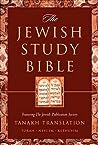
― The Jewish Study Bible
― The Jewish Study Bible
“41Then Moses set aside three cities on the east side of the Jordan 42to which a manslayer could escape, one who unwittingly slew a fellow man without having been hostile to him in the past; he could flee to one of these cities and live: 43Bezer, in the wilderness in the Tableland, belonging to the Reubenites; Ramoth, in Gilead, belonging to the Gadites; and Golan, in Bashan, belonging to the Manassites.”
― The Jewish Study Bible
― The Jewish Study Bible
“Do not imagine that you, of all the Jews, will escape with your life by being in the king’s palace. 14On the contrary, if you keep silent in this crisis, relief and deliverance will come to the Jews from another quarter, while you and your father’s house will perish. And who knows, perhaps you have attained to royal position for just such a crisis.”
― The Jewish Study Bible
― The Jewish Study Bible
“19When you reap the harvest in your field and overlook a sheaf in the field, do not turn back to get it; it shall go to the stranger, the fatherless, and the widow—in order that the Lord your God may bless you in all your undertakings. 20When you beat down the fruit of your olive trees, do not go over them again; that shall go to the stranger, the fatherless, and the widow. 21When you gather the grapes of your vineyard, do not pick it over again; that shall go to the stranger, the fatherless, and the widow. 22Always remember that you were a slave in the land of Egypt; therefore do I enjoin you to observe this commandment.”
― The Jewish Study Bible
― The Jewish Study Bible
“We must all die; we are like water that is poured on the ground and cannot be gathered up.”
― The Jewish Study Bible Publisher: Oxford University Press, USA
― The Jewish Study Bible Publisher: Oxford University Press, USA
“19You shall not judge unfairly: you shall show no partiality; you shall not take bribes, for bribes blind the eyes of the discerning and upset the plea of the just.”
― The Jewish Study Bible
― The Jewish Study Bible
“6 1The Ark of the Lord remained in the territory of the Philistines seven months.* 2Then the Philistines summoned the priests and the diviners and asked, “What shall we do about the Ark of the Lord? Tell us with what we shall send it off to its own place.” 3They answered, “If you are going to send the Ark of the God of Israel away, do not send it away without anything; you must also pay an indemnity to Him. Then you will be healed, and *He will make Himself known to you; otherwise His hand will not turn away from you.”-a 4They asked, “What is the indemnity that we should pay to Him?” They answered, “Five golden hemorrhoids and five golden mice, corresponding to the number of lords of the Philistines; for the same plague struck all of you* and your lords. 5You shall make figures of your hemorrhoids and of the mice that are ravaging your land; thus you shall honor the God of Israel, and perhaps He will lighten the weight of His hand upon you and your gods and your land.”
― The Jewish Study Bible
― The Jewish Study Bible
“2 1And Hannah prayed: My heart exults in the Lord; *I have triumphed-a through the Lord. *I gloat-b over my enemies; I rejoice in Your deliverance. 2 There is no holy one like the Lord, Truly, there is none beside You; There is no rock like our God. 3 Talk no more with lofty pride, Let no arrogance cross your lips! For the Lord is an all-knowing God; By Him actions are measured. 4 The bows of the mighty are broken, And the faltering are girded with strength. 5 Men once sated must hire out for bread; Men once hungry hunger no more. While the barren woman bears seven, The mother of many is forlorn. 6 The Lord deals death and gives life, Casts down into Sheol and raises up. 7 The Lord makes poor and makes rich; He casts down, He also lifts high. 8 He raises the poor from the dust, Lifts up the needy from the dunghill, Setting them with nobles, Granting them seats of honor. For the pillars of the earth are the Lord’s; He has set the world upon them. 9 He guards the steps of His faithful, But the wicked perish in darkness— For not by strength shall man prevail. 10 The foes of the Lord shall be shattered; He will thunder against them in the heavens. The Lord will judge the ends of the earth. He will give power to His king, *And triumph to-c His anointed one.”
― The Jewish Study Bible
― The Jewish Study Bible
“leviticus is the direct continuation of what precedes it at the end of Exodus, and the narrative at the end of Leviticus continues directly into Numbers. Ch 1 takes up the story from the time the divine Presence enters the Tabernacle, on the first day of Nisan (the first month, in the spring) in the year following the exodus (Exod. ch 40). From within, God calls to Moses and imparts to him, in a series of encounters (Lev. chs 1–27), His laws and commandments. Since Numbers begins on the first day of ʾIyar (the second month) in the same year (Num. 1.1), it emerges that the entire book of Leviticus covers but one month.”
― The Jewish Study Bible
― The Jewish Study Bible
“10Encamped at Gilgal, in the steppes of Jericho, the Israelites offered the passover sacrifice on the fourteenth day of the month, toward evening. 11On the day after the passover offering, on that very day, they ate of the produce of the country, unleavened bread and parched grain. 12On that same day,* when they ate of the produce of the land, the manna ceased. The Israelites got no more manna; that year they ate of the yield of the land of Canaan.”
― The Jewish Study Bible
― The Jewish Study Bible
“24If you lend money to My people, to the poor among you, do not act toward them as a creditor; exact no interest from them.”
― The Jewish Study Bible
― The Jewish Study Bible
“16Then the Lord said to Moses, “Gather for Me seventy of Israel’s elders of whom you have experience as elders and officers of the people, and bring them to the Tent of Meeting and let them take their place there with you. 17I will come down and speak with you there, and I will draw upon the spirit that is on you and put it upon them; they shall share the burden of the people with you, and you shall not bear it alone. 18And say to the people: *Purify yourselves-a for tomorrow and you shall eat meat, for you have kept whining before the Lord and saying, ‘If only we had meat to eat! Indeed, we were better off in Egypt!’ The Lord will give you meat and you shall eat. 19You shall eat not one day, not two, not even five days or ten or twenty, 20but a whole month, until it comes out of your nostrils and becomes loathsome to you. For you have rejected the Lord who is among you, by whining before Him and saying, ‘Oh, why did we ever leave Egypt!”
― The Jewish Study Bible
― The Jewish Study Bible
“in Sheol there is no retribution and all its inhabitants are equal, without regard to their former status or behavior in life. Raising up from Sheol, a common biblical motif, does not refer to resurrection from death—a later belief as well—but to deliverance from near death (seePs.”
― The Jewish Study Bible
― The Jewish Study Bible
“4They set out from Mount Hor by way of the Sea of Reeds* to skirt the land of Edom. But the people grew restive on the journey, 5and the people spoke against God and against Moses, “Why did you make us leave Egypt to die in the wilderness? There is no bread and no water, and we have come to loathe this miserable food.”
― The Jewish Study Bible
― The Jewish Study Bible
“23Whenever the [evil] spirit of God came upon Saul, David would take the lyre and play it;a Saul would find relief and feel better, and the evil spirit would leave him.”
― The Jewish Study Bible
― The Jewish Study Bible
“20 When they had finished dividing the land, 1the Lord said to Joshua: 2“Speak to the Israelites: Designate the cities of refuge—about which I commanded you through Moses—3to which a manslayer who kills a person by mistake, unintentionally, may flee. They shall serve you as a refuge from the blood avenger. 4He shall flee to one of those cities, present himself at the entrance to the city gate, and plead his case before the elders of that city; and they shall admit him into the city and give him a place in which to live among them. 5Should the blood avenger pursue him, they shall not hand the manslayer over to him, since he killed the other person without intent and had not been his enemy in the past. 6He shall live in that city until he can stand trial before the assembly, [and remain there] until the death of the high priest who is in office at that time. Thereafter, the manslayer may go back to his home in his own town, to the town from which he fled.”
― The Jewish Study Bible
― The Jewish Study Bible
“David attacked a region, he would leave no man or woman alive; he would take flocks, herds, asses, camels, and clothing. When he returned and came* to Achish, 10Achish would ask, “Where* did you raid today?” and David would reply, “The Negeb* of Judah,” or “the Negeb of the Jerahmeelites,” or “the Negeb of the Kenites.” 11David would leave no man or woman alive to be brought to Gath; for he thought, “They might tell about us: David did this.” Such was his practice as long as he stayed in the territory of the Philistines.”
― The Jewish Study Bible
― The Jewish Study Bible
“14If you bring a meal offering of first fruits to the Lord, you shall bring new ears parched with fire, grits of the fresh grain, as your meal offering of first fruits. 15You shall add oil to it and lay frankincense on it; it is a meal offering. 16And the priest shall turn a token portion of it into smoke: some of the grits and oil, with all of the frankincense, as an offering by fire to the Lord.”
― The Jewish Study Bible
― The Jewish Study Bible
“28When Lamech had lived 182 years, he begot a son. 29And he named him Noah, saying, “This one will provide us relief * from our work and from the toil of our hands, out of the very soil which the Lord placed under a curse.” 30After the birth of Noah, Lamech lived 595 years and begot sons and daughters. 31All the days of Lamech came to 777 years; then he died. 32When Noah had lived 500 years, Noah begot Shem, Ham, and Japheth.”
― The Jewish Study Bible
― The Jewish Study Bible
“Matters relating to the historicity of the wilderness accounts, however, continue to be debated among scholars. But literary criticism need not discount the presence of historical facts in the texts. On one hand, an argument can be advanced that usage of Egyptian terms, geography of the Sinai, and political realities of periods corresponding to Israel’s prehistory bespeak some knowledge of a residency in Egypt and wilderness sojourn. On the other hand, studies of genre show that ancient historiography, even if peppered with authentic data, is not necessarily synonymous with history writing in the modern sense.”
― The Jewish Study Bible
― The Jewish Study Bible
“22And when you reap the harvest of your land, you shall not reap all the way to the edges of your field, or gather the gleanings of your harvest; you shall leave them for the poor and the stranger: I the Lord am your God.”
― The Jewish Study Bible
― The Jewish Study Bible
“I will greatly increase your offspring, And they shall be too many to count.” 11 The angel of the Lord said to her further, “Behold, you are with child And shall bear a son; You shall call him Ishmael,* For the Lord has paid heed to your suffering. 12 He shall be a wild ass of a man; His hand against everyone, And everyone’s hand against him; He shall dwell alongside of all his kinsmen.”
― The Jewish Study Bible
― The Jewish Study Bible
“28 You are my God and I will praise You; You are my God and I will extol You. 29 Praise the Lord for He is good, His steadfast love is eternal.”
― The Jewish Study Bible
― The Jewish Study Bible
“The exodus also served to orient Jewish festivals increasingly toward God’s actions in history, in contrast to polytheistic festivals which focused on the gods’ actions in nature. The role of Pesaḥ and the Feast of Unleavened Bread as commemorations of the exodus completely eclipsed their presumed earlier significance as spring agricultural and livestock festivals (12.6–14 n., 14–20 n.). Sukkot, although essentially an agricultural festival, ultimately comes to commemorate the Israelites’ dwelling in booths following the exodus (Lev. 23.43).”
― The Jewish Study Bible
― The Jewish Study Bible
“9Then the chief cupbearer told his dream to Joseph. He said to him, “In my dream, there was a vine in front of me. 10On the vine were three branches. It had barely budded, when out came its blossoms and its clusters ripened into grapes. 11Pharaoh’s cup was in my hand, and I took the grapes, pressed them into Pharaoh’s cup, and placed the cup in Pharaoh’s hand.” 12Joseph said to him, “This is its interpretation: The three branches are three days. 13In three days Pharaoh will pardon you* and restore you to your post; you will place Pharaoh’s cup in his hand, as was your custom formerly when you were his cupbearer. 14But think of me when all is well with you again, and do me the kindness of mentioning me to Pharaoh, so as to free me from this place. 15For in truth, I was kidnapped from the land of the Hebrews; nor have I done anything here that they should have put me in the dungeon.” 16When the chief baker saw how favorably he had interpreted, he said to Joseph, “In my dream, similarly, there were three openwork baskets* on my head. 17In the uppermost basket were all kinds of food for Pharaoh that a baker prepares; and the birds were eating it out of the basket above my head.” 18Joseph answered, “This is its interpretation: The three baskets are three days. 19In three days Pharaoh will lift off your head and impale you upon a pole; and the birds will pick off your flesh.” 20On the third day—his birthday—Pharaoh made a banquet for all his officials, and he singled out* his chief cupbearer and his chief baker from among his officials. 21He restored the chief cupbearer to his cupbearing, and he placed the cup in Pharaoh’s hand; 22but the chief baker he impaled—just as Joseph had interpreted to them. 23Yet the chief cupbearer did not think of Joseph; he forgot him.”
― The Jewish Study Bible
― The Jewish Study Bible
“18 1When [David] finished speaking with Saul, Jonathan’s soul became bound up with the soul of David; Jonathan loved David as himself.”
― The Jewish Study Bible
― The Jewish Study Bible
“21When Enoch had lived 65 years, he begot Methuselah. 22After the birth of Methuselah, Enoch walked with God 300 years; and he begot sons and daughters. 23All the days of Enoch came to 365 years. 24Enoch walked with God; then he was no more, for God took him.”
― The Jewish Study Bible
― The Jewish Study Bible
“5 1When the Philistines captured the Ark of God, they brought it from Eben-ezer to Ashdod. 2The Philistines took the Ark of God and brought it into the temple of Dagon and they set it up beside Dagon. 3Early the next day, the Ashdodites found Dagon lying face down on the ground in front of the Ark of the Lord. They picked Dagon up and put him back in his place; 4but early the next morning, Dagon was again lying prone on the ground in front of the Ark of the Lord. The head and both hands of Dagon were cut off, lying on the threshold; only *Dagon’s trunk was left intact.-a 5That is why, to this day, the priests of Dagon and all who enter the temple of Dagon do not tread on the threshold of Dagon in Ashdod. 6The hand of the Lord lay heavy upon the Ashdodites, and He wrought havoc among them: He struck *Ashdod and its territory-b with hemorrhoids. 7When the men of Ashdod saw how matters stood, they said, “The Ark of the God of Israel must not remain with us, for His hand has dealt harshly with us and with our god Dagon.” 8They sent messengers and assembled all the lords of the Philistines and asked, “What shall we do with the Ark of the God of Israel?” They answered, “Let the Ark of the God of Israel be removed to Gath.” So they moved the Ark of the God of Israel [to Gath]. 9And after they had moved it, the hand of the Lord came against the city, causing great panic; He struck the people of the city, young and old, so that hemorrhoids a-broke out-a among them.”
― The Jewish Study Bible
― The Jewish Study Bible
“5So he took the troops down to the water. Then the Lord said to Gideon, “Set apart all those who *lap up the water with their tongues like dogs-f from all those who get down on their knees to drink.” 6Now those who “lapped” the water into their mouths by hand numbered three hundred; all the rest of the troops got down on their knees to drink. 7Then the Lord said to Gideon, “I will deliver you and I will put Midian into your hands through the three hundred ‘lappers’; let the rest of the troops go home.” 8d-So [the lappers] took the provisions and horns that the other men had with them,-d and he sent the rest of the men of Israel back to their homes, retaining only the three hundred men.”
― The Jewish Study Bible
― The Jewish Study Bible
“Arise, O Barak; Take your captives, O son of Abinoam!”
― The Jewish Study Bible
― The Jewish Study Bible