Goodreads helps you follow your favorite authors. Be the first to learn about new releases!
Start by following Ted Gioia.

Showing 1-30 of 47
“Jazz at this time is still mostly a group effort.”
― How to Listen to Jazz
― How to Listen to Jazz
“NEW ORLEANS JAZZ: RECOMMENDED LISTENING Louis Armstrong, “Heebie Jeebies,” February 26, 1926 Louis Armstrong, “Potato Head Blues,” May 10, 1927 Louis Armstrong, “Struttin’ with Some Barbecue,” December 9, 1927 Louis Armstrong, “West End Blues,” June 28, 1928 Sidney Bechet, “I’ve Found a New Baby,” September 15, 1932 Sidney Bechet, “Wild Cat Blues,” June 30, 1923 Johnny Dodds, “Perdido Street Blues,” July 13, 1926 Freddie Keppard, “Stock Yards Strut,” September, 1926 Jelly Roll Morton, “Black Bottom Stomp,” September 15, 1926 Jelly Roll Morton, “Sidewalk Blues,” September 21, 1926 King Oliver, “Dipper Mouth Blues,” April 6, 1923 King Oliver, “Froggie Moore,” April 6, 1923”
― How to Listen to Jazz
― How to Listen to Jazz
“In America, music was the first sphere of social interaction in which racial barriers were challenged and overturned. And the challenge went both ways: by the mid-1920s, white bands were playing for all-black audiences at Lincoln Theater and elsewhere. These intermediate steps between segregation and integration represented, for all their problems, progress of sorts.”
― The History of Jazz
― The History of Jazz
“When dealing with music, the personal is the political, and always has been.”
― Music: A Subversive History
― Music: A Subversive History
“Looking back at the first century of jazz's history, its most identifiable trademark may simply be this unwillingness to sit still, this mandate to absorb other sounds and influences, this destiny as a music of flux and fusion.”
― The History of Jazz
― The History of Jazz
“By the way, this tells you why Auto-Tuned vocals on many contemporary records sound so shallow and lifeless. It’s almost as if everything we learned from African American music during the twentieth century was thrown out the window by technologies in the twenty-first century. The goal should not be to sing every note dead center in the middle of the pitch---we escaped from that musical prison a hundred years ago. Why go back? In an odd sort of way, much of contemporary pop music resembles opera, with all the subtle shadings of bent notes and microtonal alterations abandoned in the quest for mathematically pure tones.”
― How to Listen to Jazz
― How to Listen to Jazz
“In every sphere of social interaction, that hermeneutic leap—that ability to put yourself in the mind frame of the other—is a virtue and a blessing.”
― How to Listen to Jazz
― How to Listen to Jazz
“With few exceptions, the nature of jazz performance requires group interaction of the highest level. And much of the irony of jazz is that, for all its celebration of the individual soloist, it remains a music of ensembles.”
― The History of Jazz
― The History of Jazz
“As recently as the twentieth century, some cultures retained religious prohibitions asserting the “uncleanliness” of believers eating at the same table as musicians.”
― The History of Jazz
― The History of Jazz
“And the two colleagues are still hanging out together: Van Heusen is buried in the Sinatra family plot in Cathedral City, California.”
― The Jazz Standards: A Guide to the Repertoire
― The Jazz Standards: A Guide to the Repertoire
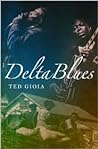
“I know why the best blues artist comes from Mississippi,” Hooker told an interviewer from Melody Maker in 1964. “Because it’s the worst state. You have the blues all right if you’re down in Mississippi.”
― Delta Blues: The Life and Times of the Mississippi Masters Who Revolutionized American Music
― Delta Blues: The Life and Times of the Mississippi Masters Who Revolutionized American Music
“Western musicians had to choose between creating sounds and playing notes—and they opted for the latter. But African musicians never got enlightened (or is corrupted the better word?) by Pythagorean thinking.”
― How to Listen to Jazz
― How to Listen to Jazz
“The role of these New Orleans Creoles in the development of jazz remains one of the least understood and most commonly mis-represented issues in the history of this music.”
― The History of Jazz
― The History of Jazz
“Before taking an analytical approach, you should immerse yourself in the sheer visceral intensity of these performances, which capture the ethos of”
― How to Listen to Jazz
― How to Listen to Jazz
“The oppression of a minority- whether political, religious, or ethnic- has long borne an uncanny relation to the production of art of lasting value.”
― West Coast Jazz: Modern Jazz in California, 1945-1960
― West Coast Jazz: Modern Jazz in California, 1945-1960
“When stealing from other players, an older musician wisely advised me, choose a different instrument from your own, and people won’t notice the theft.”
― How to Listen to Jazz
― How to Listen to Jazz
“Jazz ist für diejenigen, die dabei sein wollen, wenn ein Wunder passiert.”
― Jazz hören - Jazz verstehen
― Jazz hören - Jazz verstehen
“Like the New Orleans tradition that preceded it, and the Swing Era offerings that followed it, Chicago jazz was not just the music of a time and place, but also a timeless style of performance - and for its exponents, very much a way of life - one that continues to reverberate to this day in the works of countless Dixieland and traditional jazz bands around the world. For many listeners, the Chicago style remains nothing less than the quintessential sound of jazz.”
― The History of Jazz
― The History of Jazz
“As M. I. Finley11 points out with regard to ancient Greece, it was a culture that reached the pinnacle of artistic achievement, yet totally lacked museums: “Art was meshed in with daily living, not set apart for occasional leisure time or for the enjoyment of rich collectors and aesthetes.” In contrast, musical performance for the purpose of mere entertainment was seen by the ancients not simply as a lesser art but in fact as a low art. Tacitus, for example, describes as a “national disgrace” 11 the emperor Nero’s desire to perform music on a public stage. In fact, the “connectedness principle” is not very far from Aristotle’s 11 ancient view of the complicated, various roles of music, which included alleviating toils and pains, providing refreshment, strengthening the soul, firming the character, and—yes, but almost as an afterthought—also offering entertainment. If we have forgotten all but the last of these roles in our media-dominated commercial culture, we need do nothing more than listen with open ears to the pathos and intrinsic dignity of the work song to be called back to this richer view of the role of music.”
― Work Songs
― Work Songs
“AVANT-GARDE / FREE JAZZ: RECOMMENDED LISTENING Art Ensemble of Chicago,”A Jackson in Your House,” June 23, 1969 Albert Ayler, “The Wizard,” July 10, 1964 Ornette Coleman, “Free Jazz,” December 21, 1960 Ornette Coleman, “Lonely Woman,” May 22, 1959 John Coltrane, “Ascension (Edition II),” June 28, 1965 John Coltrane, “Selflessness,” October 14, 1965 Eric Dolphy, “Out to Lunch,” February 25, 1964 Cecil Taylor, “Abyss,” July 2, 1974 Cecil Taylor, “Conquistador,” October 6, 1966”
― How to Listen to Jazz
― How to Listen to Jazz
“Art and disease proliferate via contagion, and similar conditions favor both.”
― How to Listen to Jazz
― How to Listen to Jazz
“CHICAGO JAZZ RECOMMENDED LISTENING Bix Beiderbecke and Frank Trumbauer, “I’m Coming Virginia,” May 13, 1927 Bix Beiderbecke and Frank Trumbauer, “Singin’ the Blues,” February 4, 1927 Bing Crosby and Bix Beiderbecke, “Mississippi Mud,” January 20, 1928 Chicago Rhythm Kings, “I’ve Found a New Baby,” April 4, 1928 Eddie Condon and Frank Teschemacher, “Indiana,” July 28, 1928 Eddie Lang and Joe Venuti, “Stringin’ the Blues,” November 8, 1926 McKenzie and Condon Chicagoans, “Nobody’s Sweetheart,” December 16, 1927 Pee Wee Russell and Jack Teagarden, “Basin Street Blues,” June 11, 1929”
― How to Listen to Jazz
― How to Listen to Jazz
“BEBOP / MODERN JAZZ: RECOMMENDED LISTENING Dizzy Gillespie, “Hot House,” May 11, 1945 Dizzy Gillespie, “Salt Peanuts,” May 11, 1945 Thelonious Monk, “Epistrophy,” July 2, 1948 Thelonious Monk, “’Round Midnight,” November 21, 1947 Charlie Parker, “Donna Lee,” May 8, 1947 Charlie Parker, “Ko-Ko,” November 26, 1945 Charlie Parker, “Night in Tunisia,” March 28, 1946 Bud Powell, “Cherokee,” February 23, 1949 Bud Powell, “Un Poco Loco,” May 1, 1951”
― How to Listen to Jazz
― How to Listen to Jazz
“In this regard, I like to quote a favorite aphorism from Oxford art historian Edgar Wind: “Mediocrity which claims to be intense has a peculiarly repulsive effect.”
― How to Listen to Jazz
― How to Listen to Jazz
“Dizzy Gillespie recorded it with Charlie Parker in an
influential 1945 track (incorporating a much imitated intro—perhaps initially
intended as a parody of Rachmaninoff ’s Prelude in C-Sharp Minor”
― The Jazz Standards: A Guide to the Repertoire
influential 1945 track (incorporating a much imitated intro—perhaps initially
intended as a parody of Rachmaninoff ’s Prelude in C-Sharp Minor”
― The Jazz Standards: A Guide to the Repertoire
“In music, purity is a myth, albeit a resilient one.”
― The History of Jazz
― The History of Jazz
“Maybe we need an injection of Africanized soundscapes—let’s even call it a new jazz revolution!—all over again.”
― How to Listen to Jazz
― How to Listen to Jazz
“Listening, not jargon, is the path into the heart of music. And if we listen at a deep enough level, we enter into the magic of the song—no degrees or formal credentials required.”
― How to Listen to Jazz
― How to Listen to Jazz
“the most powerful and forgotten aspect of music is its role as a change agent; its potential as a transformative force for individuals and groups; its quasi-magical efficacy in ameliorating conditions, softening attitudes, recharging or redirecting energies, fueling or channeling emotions, its capability of purifying or refining or augmenting, and making our day-to-day existence better than it would be otherwise.”
― Healing Songs
― Healing Songs
“Given this long and murky lineage, any inquiry into the origin of hunting songs is tantamount to a search for the birth of music itself.”
― Work Songs
― Work Songs