Goodreads helps you follow your favorite authors. Be the first to learn about new releases!
Start by following Adoniram Judson.
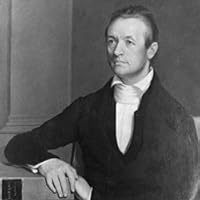
Showing 1-28 of 28
“Think what the consequences of this invasion [by the British] must be. Here have I been ten years preaching the Gospel to timid listeners who wished to embrace the truth, but dared not; beseeching the emperor to grant liberty of conscience to his people, but without success; and now, when all human means seemed at an end, God opens the way by leading a Christian nation to subdue the country. It is possible that my life may be spared; if so, with what ardor and gratitude shall I pursue my work; and if not, His will be done; the door will be opened for others who will do the work better.”
―
―
“There is no success without sacrifice. If you succeed without sacrifice it is because someone has suffered before you. If you sacrifice without success it is because someone will succeed after.”
―
―
“Accordingly, Dr. Williams, the opponent of Mr. Booth, inquires, ‘Are not the same reasons, which are brought for infant baptism, in like manner, applicable to infant communion? And will not the objections against the latter, admit of the same answer, as those against the former?’208 The reasons stated in both parts of this discourse, lead us to the conclusion, that the immersion of a professing believer, into the name of the Father, and of the Son, and of the Holy Ghost, is the only Christian baptism. ‘He that believeth and is baptized, shall be saved; but he that believeth not, shall be damned’.209 To believe in Christ is necessary to salvation; and to be baptized is the instituted method of professing our belief. It is, therefore, not only an infinitely important question to all men, whether they believe in Christ; but it is also a very important question to all Christians, whether they have been baptized.”
― Christian Baptism
― Christian Baptism
“But throughout the whole New Testament, I could find nothing, that looked like sprinkling, in connection with the ordinance of baptism. It appeared to me, that if a plain person should, without any previous information on the subject, read through the New Testament, he would never get the idea, that baptism consisted in sprinkling. He would find, that baptism in all cases particularly”
― Christian Baptism
― Christian Baptism
“Never, by any Christians, in any age, was sprinkling or pouring allowed in common cases, until the council of Ravenna, assembled by the pope, in the year 1311, declared immersion or pouring to be indifferent. From that time, the latter gradually came into general use. It was not, however, admitted into England, till the middle of the sixteenth century and not sanctioned till the middle of the seventeenth; when the Westminster assembly, influenced by Dr. Lightfoot, decided, that ‘dipping of the person in water, is not necessary; but baptism is rightly administered, by pouring or sprinkling water upon the person.”
― Christian Baptism
― Christian Baptism
“There are no instances, in the New Testament which require us to depart from the etymological and established interpretation of the word.”
― Christian Baptism
― Christian Baptism
“Christ promised to baptize his disciples with the Holy Spirit,41 and on the day of Pentecost, fulfilled his promise by pouring out the Spirit upon them.42 Here, it is said, the pouring out of the Spirit is compatible with the supposition, that sprinkling or pouring is baptism, but not with the supposition, that immersion only is baptism. This objection derives all its force, from the erroneous supposition that the baptism of the disciples consisted in having the Spirit poured out upon them. But if the pouring out of the Spirit proves that pouring is baptism, their being filled with the Spirit proves that filling is baptism.”
― Christian Baptism
― Christian Baptism
“Dr. Wall. ‘France seems to have been the first country in the world, where baptism by affusion was used ordinarily to persons of health, and in the public way of administering it.—It being allowed to weak children (in the reign of Queen Elizabeth) to be baptized by aspersion, many fond ladies and gentlewomen first, and then by degrees, the common people, would obtain the favor of the priest, to have their children, too tender to endure dipping in the water. As for sprinkling, properly called, it seems it was at sixteen hundred and forty-five, just then beginning, and used by very few. It must have begun in the disorderly times after forty-one. They (the assembly of divines in Westminster) reformed the font into a basin. This learned assembly could not remember, that fonts to baptize in had been always used by primitive Christians, long before the beginning of popery, and ever since churches were built; but that sprinkling, for the common use of baptizing, was really introduced (in France first, and then in other popish countries) in times of popery: And that, accordingly, all those countries, in which the usurped power of the pope is, or has formerly been owned, have left off dipping of children in the font; but that all other countries in the world, which had never regarded his authority, do still use it; and that basins, except in cases of necessity, were never used by papists, or any other Christians whosoever, till by themselves.’90 ‘The way”
― Christian Baptism
― Christian Baptism
“It has, however, been supposed, that the church membership of infants is supported in the following passage: ‘Suffer little children, and for bid them not, to come unto me; for of such is the kingdom of heaven’.150 In the Gospels of Mark and Luke, it follows, ‘Whosoever shall not receive the kingdom of God as a little child, he shall not enter therein’.151 We cannot suppose, that our Lord used words, in such different senses, in the same speech, as would unavoidably mislead his hearers. In the latter passage, the kingdom of God denotes heaven, and to receive the kingdom, as a little child, is to receive it with the humility and docile disposition which characterize children. This passage explains the former. Of such, says Christ, is the kingdom of heaven. Does he mean, of such in age and size, of such in the moral temper of the heart, or of such in humility and docility of disposition? His subsequent remark determines in favor of the latter meaning. Nor is this a singular application of the phrase. On another occasion, he says ‘Except ye be converted and become as little children, ye shall not enter into the kingdom of heaven’.152 He certainly does not mean, Except ye become as little children, in age and size, but in humility; for he immediately adds, ‘Whosoever, therefore, shall humble himself, as this little child,’ zampc.”
― Christian Baptism
― Christian Baptism
“The primitive word (βάπτω) from which the word denoting baptism, is derived, signifies immersion. This, with the general consent of the Pedobaptists themselves, is as much the appropriate meaning of the Greek word, as of the English word, dip or immerse.1 This is the word used in the New Testament, when the rich man entreats, that Lazarus may be sent to dip the tip of his finger in water:2 when Christ says, ‘He it is, to whom I shall give a sop, when I have dipped it;’3 and when, in the Revelation, Christ is represented, as clothed with a vesture dipped in blood.4 The inspired penmen have used no other word, beside this and its derivatives, to convey the idea of immersion; nor have they ever used this word in any other sense.”
― Christian Baptism
― Christian Baptism
“The first Christian writer, in the beginning of the third century, Tertullian of Carthage, the oldest Latin father, whose writings are extant, opposed the baptism of infants, which in the words of Professor Venema, ‘he certainly would not have done, if it had been a tradition, and a public custom of the church, seeing he was very tenacious of traditions; nor had it been a tradition, would he have failed to mention it.’170 His words lead us to conclude, that infant baptism was then a novel practice, just beginning and approved by very few.”
― Christian Baptism
― Christian Baptism
“Baptism is, by the apostle Paul, repeatedly compared to burial. In one passage, believers are said to be buried with Christ by baptism,51 and in another, to be buried with him in baptism, and to be therein risen with him.52 Whether baptism, in these passages, denotes external or spiritual baptism, it is evident, that the figure derives all its propriety and beauty from some implied resemblance between the external rite and a burial; nor can it be imagined, that the apostle would have ever compared baptism of any kind to burial, had there been no such resemblance.”
― Christian Baptism
― Christian Baptism
“In the epistle to the Galatians, it is written, ‘If ye be Christ’s, then are ye Abraham’s seed, and heirs according to the promise’.120 Let us inquire, what is implied in believers’ being the seed of Abraham; and what promise is here intended. In the context,(ver. 6, 7.) it is written, ‘Even as Abraham believed God, and it was accounted to him for righteousness: Know ye therefore, that they which are of faith, the same are the children of Abraham.’ Abraham believed; therefore, they who believe, are his children. This is perfectly in the style of scripture. The unbelieving Jews are called children of the devil, because they were like the devil, in their character and conduct. On the same principle, the profligate are called children of Belial; believers, children of light; and unbelievers, children of disobedience. On the same principle, believers are called children of Abraham. They are like Abraham, in character and conduct. They have faith of Abraham.”
― Christian Baptism
― Christian Baptism
“The seed to which the land of Canaan was promised, was most evidently the lineal descendants of Abraham. To the same seed the Lord promised to be a God. Mark the terms of the promises: ‘I will give unto thee, and to thy seed after thee, the land wherein thou art a stranger, all the land of Canaan, for an everlasting possession; and I will be their God.’ But he was not their God, in a spiritual sense. It appears from their history, that, in every age, a remnant only were truly pious.”
― Christian Baptism
― Christian Baptism
“Behold the established church of England. She proves herself, in many respects, a worthy daughter of the Abrahamic or Jewish church. She receives into her charitable bosom, all the descendants of professors; and all those who, though not of her seed, belong to the families of professors; and these collectively come, in process of time, to comprise the whole nation.”
― Christian Baptism
― Christian Baptism
“They were probably confirmed in this idea, by the phrase, ‘buried in baptism.’ The consequence has been, that all the Baptists in the world, who have sprung from the English Baptists, have practiced the backward posture. But from the beginning, it was not so. In the apostolic times, the administrator placed his right hand on the head of the candidate, who then, under the pressure of the administrators hand, bowed forward, aided by that genuflection, which instinctively comes to one’s aid, when attempting to bow in that position, until his head was submerged, and then rose by his own effort. This appears from the figures sculptured in bronze and mosaic work, on the walls of the ancient baptisteries of Italy and Constantinople. Those figures represent John the Baptist leaning towards the river; his right hand on the head of the Savior, as if pressing him down into the water ; while the Savior is about to bow down under the pressure of the hand of John.”
― Christian Baptism
― Christian Baptism
“Cardinal Hosius, President of the Council of Trent. ‘If the truth of religion were to be judged of by the readiness and cheerfulness which a man of any sect shows in suffering, then the opinion and persuasion of no sect can be truer or surer that that of the Anabaptists; since there have been none, for these twelve hundred years past, that have been more grievously punished, or that have more cheerfully and steadfastly undergone, and even offered themselves to, the most cruel sorts of punishment, than these people.’ ‘The Anabaptists are a pernicious sect, of which kind the Waldensian brethren seem also to have been. Nor is this heresy a modern thing; for it existed in the time of Augustine.’ In Rees’ Reply to Walker, p. 220; and apud Schyn Hist. Mennonit. p. 135.”
― Christian Baptism
― Christian Baptism
“When I proceeded to consider certain passages, which are thought to favor the Pedobaptist system, I found nothing satisfactory. The sanctification, which St. Paul ascribes to the children of a believer, (1 Cor. vii. 14.) I found that he ascribed to the unbelieving parent also; and therefore, whatever be the meaning of the passage, it could have no respect to church membership, or a right to church ordinances. The declaration of St. Peter, ‘The promise is unto you and to your children, and to all that are afar even as many as the Lord our God shall call,’ (Acts ii. 39,) appeared not to bear at all on the point in hand, because the apostle does not command his hearers to have their children baptized, or acknowledged members of the church, but to repent and be baptized themselves. There is indeed a promise made to their children, and to all others that God shall call; but it does not follow, that they were to procure the baptism of their children, or of those that were afar off, until they gave evidence that God had called them.”
― Christian Baptism
― Christian Baptism
“The Christian writers of the first century, who immediately succeeded the apostles, Barnabas, Hermas, Clemens Romanus, Ignatius, and Polycarp, usually called, by way of distinction, apostolical fathers, frequently mention the baptism of believers; but, like the inspired penmen, are entirely silent on the subject of infant baptism. The Christian writers of the second century, Justin Martyr, Athenagoras, Theophilus of Antioch, Tatian, Irenæus, and Clemens Alexandrinus, frequently mention the baptism of believers; but, like the inspired penmen, and the apostolical fathers, never mention infant baptism.”
― Christian Baptism
― Christian Baptism
“You are now drinking the bitter cup whose dregs I am somewhat acquainted with. And though, for some time, you have been aware of its approach, I venture to say that it is far bitterer than you expected…But don’t be concerned. I can assure you that months and months of heartrending anguish are before you, whether you will or not. I can only advise you to take the cup with both hands, and sit down quietly to the bitter repast which God has appointed for your sanctification…Take the bitter cup with both hands, and sit down to your repast. You will soon learn a secret, that there is sweetness at the bottom. You will find it the sweetest cup that you ever tasted in all your life.”
―
―
“Bossuet. ‘Experience has shown that all the attempts of the Reformed to confound the Anabaptists, by the scripture, have been weak; and, therefore, they are, at last, obliged to allege to them the practice of the church.’161 Chambers. ‘As none but adults are capable of believing, they’ the German Baptists, ‘argued, that no others are capable of baptism; especially, as there is no passage in all the New Testament, where the baptism of infants is clearly enjoined. Calvin, and other writers against them, are pretty much embarrassed, to answer this argument; and are obliged to have recourse to tradition, and the practice of the primitive church.’162 Also the Oxford Divines, in a convocation, held one thousand, six hundred and forty-seven, acknowledged, ‘that, without the consentaneous judgment of the universal church, they should be at a loss, when they are called upon for proof, in the point of infant baptism.”
― Christian Baptism
― Christian Baptism
“St. Paul. ‘As many of you as have been baptized into Christ, have put on Christ’.182 Erasmus. ‘Paul does not seem,’ in Rom. v. 14, ‘to treat about infants.—It was not yet the custom for infants to be baptized.’183 Luther. ‘It cannot be proved by the sacred scripture, that infant baptism was instituted by Christ, or begun by the first Christians after the apostles.’184 M. De La Roque. ‘The primitive church did not baptize infants: and the learned Grotius proves it, in his annotations on the Gospel.’185 Ludovicus Vives. ‘No one, in former times, was admitted to the sacred baptistery, except he was of age, understood what the mystical water meant, desired to be washed in it, and expressed that desire more than once.’186 Chambers. ‘It appears, that in the primitive times none were baptized but adults.’187 Bishop Barlow. ‘I do believe and know, that there is neither precept nor example in scripture, for pedobaptism, nor any evidence for it, for about two hundred years after Christ.’188 Salmasius and Suicerus. ‘In the first two centuries, no one was baptized, except, being instructed in the faith and acquainted with the doctrine of Christ, he was able to profess himself a believer; because of those words, He that believeth, and is baptized.”
― Christian Baptism
― Christian Baptism
“Christ commands those who believe, to be baptized. Pedobaptists adopt a system, which tends to preclude the baptism of believers. They baptize the involuntary infant, and deprive him of the privilege of ever professing his faith in the appointed way. If this system were universally adopted, it would banish believer’s baptism out of the world.”
― Christian Baptism
― Christian Baptism
“During his passage from America to India, in the spring of 1812, he began to doubt the truth of his former sentiments. After his arrival in this country, and before he communicated the exercises of his mind to any of the Baptist denomination, he became convinced, that the immersion of a professing believer, into the name of the Father, and of the Son, and of the Holy Ghost, is the only Christian Baptism”
― Christian Baptism
― Christian Baptism
“how little can be said in support of a point, which, on account of its importance in the Pedobaptist system, demands the fairest and most invincible proof; and may lead you to adopt the sentiment, contained in the following words of Dr. Emmons: ‘Can we justly conclude, that it is the duty of believers now to circumcise their children, or even to baptize them, because it was once their duty to circumcise them? The truth is, we must learn the particular duties of believers, under the present dispensation of the covenant of grace, from the dispensation itself, which enjoins all the peculiar duties which belong it.”
― Christian Baptism
― Christian Baptism
“If, thought I, this system is the true one, if the Christian church is not a continuation of the Jewish, if the covenant of circumcision is not precisely the covenant in which Christians now stand, the whole foundation of Pedobaptism is gone; there is no remaining ground for the administration of any church ordinance, to the children and domestics of professors; and it follows inevitably, that I, who was christened in infancy, on the faith of my parents, have never yet received Christian baptism. Must I, then, forsake my parents, the church with which I stand connected, the society under whose patronage I have come out, the companions of my missionary undertaking? Must I forfeit the good opinion of all my friends in my native land, occasioning grief to some, and provoking others to anger, and be regarded henceforth, by all my former dear acquaintance, as a weak, despicable Baptist, who has not sense enough to comprehend the connection between the Abrahamic and the Christian systems? All this was mortifying; it was hard to flesh and blood. But I thought again—It is better to be guided by the opinion of Christ, who is the truth, than by the opinion of men, however good, whom I know to be in an error. The praise of Christ is better than the praise of men.”
― Christian Baptism
― Christian Baptism
“Dr. Owen. ‘The institution of the rite of baptism is no where mentioned in the Old Testament. There is no example of it in those ancient records; nor was it ever used in the admission of proselytes while the Jewish church continued. No mention of it occurs in Philo, in Josephus, in Jesus, the son of Sirach, nor in the Evangelical History. This Rabbinical opinion, therefore, owes its rise to the Tannerœ, or Ante-Mishnical doctors, after the destruction of their city. The opinion of some learned men, therefore, about the transferring of a Jewish baptismal rite (which in reality did not then exist) by the Lord Jesus, for the use of his disciples, is destitute of all probability.”
― Christian Baptism
― Christian Baptism
“When Christ said, concerning little children, that ‘of such is the kingdom of heaven,’ (Matt. xix. 14,) it appeared to me; that his comparison had respect, not to the age or size of little children, but to the humility and docility which distinguish them from adults. This seemed to be put beyond a doubt, by his own explanation, in a similar passage, in which he says, ‘Except ye be converted, and become as little children, ye shall not enter into the kingdom of heaven.’ (Matt. xviii. 3.)”
― Christian Baptism
― Christian Baptism