Goodreads helps you follow your favorite authors. Be the first to learn about new releases!
Start by following Stephen J. Nichols.

Showing 1-30 of 58
“The church is the real thing when it is not consumed with the assertion of power in culture, but it is driven by service to others. The word ministry translates the Greek word diakonia, which means service. The church must be about serving others. When a church can lay claim to all three criteria, namely, preaching of the Word, being true to its confession, and focusing on serving, then it’s a church worth going to. And then it’s a church full of sermons worth listening to.”
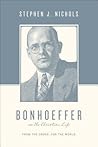
― Bonhoeffer on the Christian Life: From the Cross, for the World
― Bonhoeffer on the Christian Life: From the Cross, for the World
“R. C. would later say that theology is doxology; that is to say that studying God and knowing God lead to praising God and worshiping God.”
― R. C. Sproul: A Life
― R. C. Sproul: A Life
“We could summarize all of this background to Bonhoeffer’s christology in one sentence, albeit a complex one: The cross was a stumbling block to the Romans; the cross was a stumbling block to the Nazis; the cross was a stumbling block to moderns; and—unless we are humbled and brought low beneath the cross to see its power and beauty—the cross can be a stumbling block to us.”
― Bonhoeffer on the Christian Life: From the Cross, for the World
― Bonhoeffer on the Christian Life: From the Cross, for the World
“There is one chief work that defines and centers all of human history. It is God’s work of salvation. History is the history of redemption. It is a grand narrative that shapes all of life and meaning. Redemption is the center, guiding and governing all the details. There is not chaos; there is nothing random. God has bent His bow. He has taken aim, and the arrow of His purposes and intentions will hit squarely on the mark. Not only does redemption give shape and meaning to human history, redemption gives shape and meaning to individual lives. The movie playing out on the big screen has not been left to chance. God governs history and moves it along toward His desired end and purpose as surely as the sun rises. The short clip, playing out on the small screen, has not been left to chance, either. God’s purposes for His people, the individual purposes for His individual people, will come to pass. We can have confidence in God’s work of redemption.”
― A Time for Confidence: Trusting God in a Post-Christian Society
― A Time for Confidence: Trusting God in a Post-Christian Society
“As long as man is persuaded that he can make even the smallest contribution to his salvation, he remains self-confident and does not utterly despair of himself.”
― R. C. Sproul: A Life
― R. C. Sproul: A Life
“We are not the first Christians trying to make sense of the Bible and trying to proclaim it faithfully and winsomely in the world in which we live.”
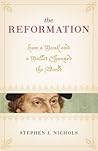
― The Reformation: How a Monk and a Mallet Changed the World
― The Reformation: How a Monk and a Mallet Changed the World
“David McCullough has said, “We are shaped by those we never met.”
― Bonhoeffer on the Christian Life: From the Cross, for the World
― Bonhoeffer on the Christian Life: From the Cross, for the World
“Nearly all the wisdom that we possess, that is sound and true wisdom, consists of two parts: the knowledge of God and the knowledge of ourselves.”
― R. C. Sproul: A Life
― R. C. Sproul: A Life
“The ethics of the Sermon on the Mount are nothing less than extraordinary. To look at them as something that can be fulfilled within the ordinary and by ordinary means is foolish. Bonhoeffer writes that loving one’s enemies “demands more than the strength a natural person can muster.”4 Only from the perspective of the cross do the ethics of the Sermon on the Mount become possible; only by living from the cross can the ethical demands of Jesus come to pass in our lives. Again, “In Christ the crucified and his community, the ‘extraordinary’ occurs.”5 Do we really understand what love is? Or, to put the matter another way, who among us truly understands being a follower of Christ, a disciple? If left on our own, we would not get very far in answering these questions. So we see in Christ and we find in Christ what we need. But Bonhoeffer still calls us to live this way, not simply calling us to see Christ living this way.”
― Bonhoeffer on the Christian Life: From the Cross, for the World
― Bonhoeffer on the Christian Life: From the Cross, for the World
“The answer to studied ambiguity, that is, being purposefully vague so as to allow for an elastic interpretation or to allow for latitude on a particular doctrine or view, is precision. Precision and clarity, not ambiguity, serve the church best in remaining faithful to its biblical, historic, and confessional roots. R. C. was learning that in 1965 in his own denomination.”
― R. C. Sproul: A Life
― R. C. Sproul: A Life
“We are also brought into the church-community as a result of Christ’s death on the cross—a community of the forgiven, who should be quick to forgive, a community of those who have been interceded for and should be, likewise, quick to intercede, and a community whose burdens have been lifted and who should be quick to bear the burdens of others. Bonhoeffer”
― Bonhoeffer on the Christian Life: From the Cross, for the World
― Bonhoeffer on the Christian Life: From the Cross, for the World
“Gratitude is equally underrated and under-practiced. It too requires humility to say “thank you.” Saying “thank you” means one is dependent on the other, that one needs the other.”
― Bonhoeffer on the Christian Life: From the Cross, for the World
― Bonhoeffer on the Christian Life: From the Cross, for the World
“To understand Bonhoeffer, we must understand, on the one hand, the limits of oneself and, on the other hand, the utter absence of limits of God.”
― Bonhoeffer on the Christian Life: From the Cross, for the World
― Bonhoeffer on the Christian Life: From the Cross, for the World
“God draws near to the lowly, loving the lost, the unnoticed, the unremarkable, the excluded, the powerless, and the broken.”15”
― Bonhoeffer on the Christian Life: From the Cross, for the World
― Bonhoeffer on the Christian Life: From the Cross, for the World
“Between the influence of the graduates of the small university at Wittenberg and the graduates of the small Academy of Geneva, the world was changed. R.C. Sproul”
― R. C. Sproul: A Life
― R. C. Sproul: A Life
“It would be safe to say that by the nineteenth century, pietism had long since dislodged Puritanism as the dominant force in American religious life.”
― Bonhoeffer on the Christian Life: From the Cross, for the World
― Bonhoeffer on the Christian Life: From the Cross, for the World
“What theological conservatives need to guard against, though, is thinking that because we affirm the Bible to be God’s inerrant and authoritative word, we have therefore submitted to the Bible. We can be conservatively confessional and functionally liberal. In other words, submitting to the Bible is far more than affirming an orthodox statement of Scripture. Affirming such a statement is crucial and essential. We should never minimize that. But affirming a high view of Scripture is only the first step of submission. We fully submit to God’s Word when we accept its authority over our lives as we read it.”
― Bonhoeffer on the Christian Life: From the Cross, for the World
― Bonhoeffer on the Christian Life: From the Cross, for the World
“Ecclesia reformata, semper reformanda,” meaning “the church reformed, always reforming.”
― The Reformation: How a Monk and a Mallet Changed the World
― The Reformation: How a Monk and a Mallet Changed the World
“These sentences, heavily underlined by R. C., present Luther’s idea that the law is a “schoolmaster” that points us to Christ. To put it existentially, as Luther does, the law makes us despair over our inability. Therefore, we need a righteousness extra nos, outside of us. This stresses, again, the necessity of the doctrine of imputation. Luther was the original imputationist.”
― R. C. Sproul: A Life
― R. C. Sproul: A Life
“As R. C. learned from Edwards, truths that ignite the passion are both rational (“’Tis Rational”) and biblical (“’Tis Biblical”). R. C. was both laying a foundation for his future teaching ministry and establishing a pattern that he would follow all of his life, a pattern of Bible study, not just Bible reading.”
― R. C. Sproul: A Life
― R. C. Sproul: A Life
“This life from the cross (Bonhoeffer’s christology) and life in the church (his ecclesiology) together lead to the disciplines of the Christian life.”
― Bonhoeffer on the Christian Life: From the Cross, for the World
― Bonhoeffer on the Christian Life: From the Cross, for the World
“Everything in the prior chapters has been leading us up to this point. Our look at his christology (chap. 2) and ecclesiology (chap. 3) laid the foundation for it. Our discussion of Scripture and reading and living God’s Word (chap. 4), our discussion of prayer (chap. 5), and our discussion of thinking and living theologically (chap. 6) all explained the particular means by which we learn and practice it. Our most recent discussions of being “worldly” (chap. 7) and of freedom and service and sacrifice (chap. 8) were looking at manifestations of it. Now, what remains is to travel to the peak itself, to see Bonhoeffer’s views on love and his life of love.”
― Bonhoeffer on the Christian Life: From the Cross, for the World
― Bonhoeffer on the Christian Life: From the Cross, for the World
“Bonhoeffer has both christology (the doctrine of Christ) and ecclesiology (the doctrine of the church) at the center of his theology, like the hub of a wheel. It might even be better to say that Bonhoeffer’s ecclesiology flows from, naturally and necessarily, his christology”
― Bonhoeffer on the Christian Life: From the Cross, for the World
― Bonhoeffer on the Christian Life: From the Cross, for the World
“This life from the cross (Bonhoeffer’s christology) and life in the church (his ecclesiology) together lead to the disciplines of the Christian”
― Bonhoeffer on the Christian Life: From the Cross, for the World
― Bonhoeffer on the Christian Life: From the Cross, for the World
“Christuswirklichkeit, a living in the one realm of the Christ reality.”
― Bonhoeffer on the Christian Life: From the Cross, for the World
― Bonhoeffer on the Christian Life: From the Cross, for the World
“He labored to help others know what they believe and why they believe it, because, as he would often say, it’s not a matter of life and death; it’s a matter of eternal life and eternal death.”
― R. C. Sproul: A Life
― R. C. Sproul: A Life
“one of the dates that historians like best is October 31, 1517. On that day one monk with mallet in hand nailed a document to the church door in Wittenberg. It contained a list of Ninety-Five Theses for a debate. The”
― The Reformation: How a Monk and a Mallet Changed the World
― The Reformation: How a Monk and a Mallet Changed the World
“The church simply can’t afford to forget the lesson of the Reformation about the utter supremacy of the gospel in everything the church does. Elie”
― The Reformation: How a Monk and a Mallet Changed the World
― The Reformation: How a Monk and a Mallet Changed the World
“Additionally, he liked to make his readers smile. Still in the preface, he writes that he avoided “academic technicalia,” to which he adds a footnote. The footnote reads: Semper ubi, sub ubi, which translated means, “Always where, under where.” In English it sounds like, “Always wear underwear.”
― R. C. Sproul: A Life
― R. C. Sproul: A Life
“The idea is that we are “meritorious,” righteous before God, by both justification and infusion. Christ’s strength is infused, it fills us, and then we are enabled to do good works. This is salvation by cooperation. God works and God infuses us to do good works. Salvation is by faith and works, not by faith alone. Infusion is about cooperation. Imputation, on the other hand, is the work of one.”
― R. C. Sproul: A Life
― R. C. Sproul: A Life