Goodreads helps you follow your favorite authors. Be the first to learn about new releases!
Start by following Connie Zweig.

Showing 1-30 of 79
“The Taoists realized that no single concept or value could be considered absolute or superior. If being useful is beneficial, the being useless is also beneficial. The ease with which such opposites may change places is depicted in a Taoist story about a farmer whose horse ran away.
His neighbor commiserated only to be told, "Who knows what's good or bad?" It was true. The next day the horse returned, bringing with it a drove of wild horses it had befriended in its wanderings. The neighbor came over again, this time to congratulate the farmer on his windfall. He was met with the same observation: "Who knows what is good or bad?" True this time too; the next day the farmer's son tried to mount one of the wild horses and fell off, breaking his leg. Back came the neighbor, this time with more commiserations, only to encounter for the third time the same response, "Who knows what is good or bad?" And once again the farmer's point was well taken, for the following day soldiers came by commandeering for the army and because of his injury, the son was not drafted.
According to the Taoists, yang and yin, light and shadow, useful and useless are all different aspects of the whole, and the minute we choose one side and block out the other, we upset nature's balance. If we are to be whole and follow the way of nature, we must pursue the difficult process of embracing the opposites.”
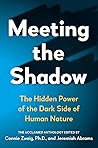
― Meeting the Shadow: The Hidden Power of the Dark Side of Human Nature
His neighbor commiserated only to be told, "Who knows what's good or bad?" It was true. The next day the horse returned, bringing with it a drove of wild horses it had befriended in its wanderings. The neighbor came over again, this time to congratulate the farmer on his windfall. He was met with the same observation: "Who knows what is good or bad?" True this time too; the next day the farmer's son tried to mount one of the wild horses and fell off, breaking his leg. Back came the neighbor, this time with more commiserations, only to encounter for the third time the same response, "Who knows what is good or bad?" And once again the farmer's point was well taken, for the following day soldiers came by commandeering for the army and because of his injury, the son was not drafted.
According to the Taoists, yang and yin, light and shadow, useful and useless are all different aspects of the whole, and the minute we choose one side and block out the other, we upset nature's balance. If we are to be whole and follow the way of nature, we must pursue the difficult process of embracing the opposites.”
― Meeting the Shadow: The Hidden Power of the Dark Side of Human Nature
“In order to protect its own control and sovereignty the ego instinctively puts up a great resistance to the confrontation with the shadow; when it catches a glimpse of the shadow the ego most often reacts with an attempt to eliminate it. Our will is mobilized and we decide. "I just won't be that way any more!" Then comes the final shattering shock, when we discover that, in part at least, this is impossible no matter how we try. For the shadow represents energically charged autonomous patterns of feeling and behavior. Their energy cannot simply be stopped by an act of will. What is needed is rechanneling or transformation.”
― Meeting the Shadow: The Hidden Power of the Dark Side of Human Nature
― Meeting the Shadow: The Hidden Power of the Dark Side of Human Nature
“The shadow, when it is realized, is the source of renewal; the new and productive impulse cannot come from established values of the ego. When there is an impasse, and sterile time in our lives—despite an adequate ego development—we must look to the dark, hitherto unacceptable side which has been at our conscious disposal….This brings us to the fundamental fact that the shadow is the door to our individuality. In so far as the shadow renders us our first view of the unconscious part of our personality, it represents the first stage toward meeting the Self. There is, in fact, no access to the unconscious and to our own reality but through the shadow. Only when we realize that part of ourselves which we have not hitherto seen or preferred not to see can we proceed to question and find the sources from which it feeds and the basis on which it rests. Hence no progress or growth is possible until the shadow is adequately confronted and confronting means more than merely knowing about it. It is not until we have truly been shocked into seeing ourselves as we really are, instead of as we wish or hopefully assume we are, that we can take the first step toward individual reality.”
― Meeting the Shadow: The Hidden Power of the Dark Side of Human Nature
― Meeting the Shadow: The Hidden Power of the Dark Side of Human Nature
“Hence no progress or growth is possible until the shadow is adequately confronted—and confronting means more than merely knowing about it. It is not until we have truly been shocked into seeing ourselves as we really are, instead of as we wish or hopefully assume we are, that we can take the first step toward individual reality.”
― Meeting the Shadow: The Hidden Power of the Dark Side of Human Nature
― Meeting the Shadow: The Hidden Power of the Dark Side of Human Nature
“This being human is a guest-house. Every morning a new arrival. A joy, a depression, a meanness, some momentary awareness comes as an unexpected visitor. Welcome and entertain them all! Even if they’re a crowd of sorrows, who violently sweep your house empty of its furniture, still, treat each guest honorably. He may be clearing you out”
― Romancing the Shadow: A Guide to Soul Work for a Vital, Authentic Life
― Romancing the Shadow: A Guide to Soul Work for a Vital, Authentic Life
“There are at least five effective pathways for traveling inward to gain insight into the composition of our shadow: (1) soliciting feedback from others as to how they perceive us; (2) uncovering the content of our projections; (3) examining our “slips” of tongue and behavior, and investigating what is really occurring when we are perceived other than we intended to be perceived; (4) considering our humor and our identifications; and (5) studying our dreams, daydreams, and fantasies.”
― Meeting the Shadow: The Hidden Power of the Dark Side of Human Nature
― Meeting the Shadow: The Hidden Power of the Dark Side of Human Nature
“To admit frankly, our capacity for evil hinges on our breaking through our pseudoinnocence. So long as we preserve our one-dimensional thinking, we can cover up our deeds by pleading innocent. This antediluvian escape from conscience is no longer possible. We are responsible for the effect of our actions, and we are also responsible for becoming as aware as we can of these effects.”
― Meeting the Shadow: The Hidden Power of the Dark Side of Human Nature
― Meeting the Shadow: The Hidden Power of the Dark Side of Human Nature
“The “central defect of evil,” says Scott Peck, “is not the sin but the refusal to acknowledge it.”1 What we cannot face will catch us from behind. When we gain the true strength to acknowledge our imperfect moral condition, we are no longer possessed by demons.”
― Meeting the Shadow: The Hidden Power of the Dark Side of Human Nature
― Meeting the Shadow: The Hidden Power of the Dark Side of Human Nature
“The inner urge that sets us seeking is itself the thing we are looking for. Karlfried Graf Durckheim”
― Meeting the Shadow of Spirituality: The Hidden Power of Darkness on the Path
― Meeting the Shadow of Spirituality: The Hidden Power of Darkness on the Path
“the shadow is not necessarily always an opponent. In fact, he is exactly like any human being with whom one has to get along, sometimes by giving in, sometimes by resisting, sometimes by giving love—whatever the situation requires. The shadow becomes hostile only when he is ignored or misunderstood.”
― Meeting the Shadow: The Hidden Power of the Dark Side of Human Nature
― Meeting the Shadow: The Hidden Power of the Dark Side of Human Nature
“We all have the opportunity to radically reinvent and reimagine the process of aging for ourselves. And I don’t mean merely doing more or doing differently. I don’t use “reinvention” in the way that many experts do—from the outside in. That’s the topic of most books about aging.
Rather, my emphasis is on the internal, less familiar terrain of soul—those subtle yearnings that appear in images and fantasies, the ways we respond or fear to respond to those messengers, and the symbolic meanings we glean from them. As we learn the psychological and spiritual practices in this book, we discover how to orient to our inner worlds, deepen our self-knowledge, and reimagine age for ourselves, eventually shifting from denial to awareness, from self-rejection to self-acceptance, from obligation to flow, from holding on to letting go, from distraction to presence. Even from role to soul.
The result: a newfound freedom from the constraints of past roles and identities, an emerging sense of becoming who you were always meant to be, and a profound gratitude for the way that your life unfolded.”
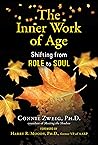
― The Inner Work of Age: Shifting from Role to Soul
Rather, my emphasis is on the internal, less familiar terrain of soul—those subtle yearnings that appear in images and fantasies, the ways we respond or fear to respond to those messengers, and the symbolic meanings we glean from them. As we learn the psychological and spiritual practices in this book, we discover how to orient to our inner worlds, deepen our self-knowledge, and reimagine age for ourselves, eventually shifting from denial to awareness, from self-rejection to self-acceptance, from obligation to flow, from holding on to letting go, from distraction to presence. Even from role to soul.
The result: a newfound freedom from the constraints of past roles and identities, an emerging sense of becoming who you were always meant to be, and a profound gratitude for the way that your life unfolded.”
― The Inner Work of Age: Shifting from Role to Soul
“Eventually, she discovered that she could respect some of his traits without becoming him.”
― Romancing the Shadow: A Guide to Soul Work for a Vital, Authentic Life
― Romancing the Shadow: A Guide to Soul Work for a Vital, Authentic Life
“Jung has pointed out that bitterness and wisdom form a pair of opposites. “Where there is bitterness, wisdom is lacking, and where wisdom is, there can be no bitterness.” Tears, sorrow, and disappointment are bitter, he says. But wisdom is the comforter in suffering.”
― Romancing the Shadow: A Guide to Soul Work for a Vital, Authentic Life
― Romancing the Shadow: A Guide to Soul Work for a Vital, Authentic Life
“Meditation also appears to slow age-related degeneration in our brains. Neurologist Eileen Luders at UCLA looked at the link between age and the volume of the brain’s white matter, which typically shrinks with age. She reported that this decrease was less prominent in meditators as compared to non-meditators. On average, the brains of long-term practitioners appeared to be seven and a half years younger at the age of fifty than the brains of non-meditators.”
― The Inner Work of Age: Shifting from Role to Soul
― The Inner Work of Age: Shifting from Role to Soul
“We should be as wary of psychologizing political events as we should be of politicizing psychological events.”
― Meeting the Shadow: The Hidden Power of the Dark Side of Human Nature
― Meeting the Shadow: The Hidden Power of the Dark Side of Human Nature
“If you study Christian history, you see the development quite clearly. Those people who professed to be doing very good things were leading the Inquisition,”
― Meeting the Shadow: The Hidden Power of the Dark Side of Human Nature
― Meeting the Shadow: The Hidden Power of the Dark Side of Human Nature
“Although at times it may be frustrating and even painful to hold the tension of your yearning rather than to submerge it, when you align with it you align with the force of evolution itself.”
― Meeting the Shadow of Spirituality: The Hidden Power of Darkness on the Path
― Meeting the Shadow of Spirituality: The Hidden Power of Darkness on the Path
“And this is what I mean by “aging from the inside out.” If we merely move around our internal furniture, redesigning our roles and maintaining high gear, we do not see through the ego’s charade. Instead, we permit it to continue its endless efforts at control. And this does not carry us deeper into our spiritual center, beyond ego.”
― The Inner Work of Age: Shifting from Role to Soul
― The Inner Work of Age: Shifting from Role to Soul
“As Ram Dass puts it, “The ego is a tiny room. But the soul can merge into the One.”
― The Inner Work of Age: Shifting from Role to Soul
― The Inner Work of Age: Shifting from Role to Soul
“So the shadow, no matter how troublesome it may be, is not intrinsically evil. The ego, in its refusal of insight and its refusal to accept the entire personality, contributes much more to evil than the shadow.”
― Meeting the Shadow: The Hidden Power of the Dark Side of Human Nature
― Meeting the Shadow: The Hidden Power of the Dark Side of Human Nature
“we are betrayed in the very same close relationships where primal trust is possible. We can be truly betrayed only where we truly trust—by brothers, lovers, wives, husbands, not by enemies, not by strangers. The greater the love, the greater the betrayal. Trust has in it the seed of betrayal.”
― The Inner Work of Age: Shifting from Role to Soul
― The Inner Work of Age: Shifting from Role to Soul
“our early personal histories and unmet emotional needs influence our adult spiritual quests and religious desires.”
― Meeting the Shadow of Spirituality: The Hidden Power of Darkness on the Path
― Meeting the Shadow of Spirituality: The Hidden Power of Darkness on the Path
“This is a key task of late life—to recognize early self-concepts and rejected parts, begin to repair them, and cultivate a broader, deeper sense of identity.”
― The Inner Work of Age: Shifting from Role to Soul
― The Inner Work of Age: Shifting from Role to Soul
“Spiritual Practices In Hindu myth, Hanuman, servant of the god Ram, tells Ram: “When I don’t know who I am, I serve you. When I know who I am, I am you.” Can you see the evolution of your soul through service? How can you be the change you long to see in the world?”
― The Inner Work of Age: Shifting from Role to Soul
― The Inner Work of Age: Shifting from Role to Soul
“As Gandhi put it, “Those who say that religion has nothing to do with politics do not know what religion really means.”
― The Inner Work of Age: Shifting from Role to Soul
― The Inner Work of Age: Shifting from Role to Soul
“Authentic grief is humbling; it causes the ego to face forces that are much greater than it can even imagine and it teaches us how to find gain in loss. With authentic grief, then, our profane wound becomes a sacred wound, permitting us to molt out of the cocoon into a wholly new life. Going through the wound like a gateway, we emerge transformed”
― Romancing the Shadow: A Guide to Soul Work for a Vital, Authentic Life
― Romancing the Shadow: A Guide to Soul Work for a Vital, Authentic Life
“Jung understated the case when he said, “We have in all naiveté forgotten that beneath our world of reason another lies buried. I do not know what humanity will still have to undergo before it dares to admit this.”
― Meeting the Shadow: The Hidden Power of the Dark Side of Human Nature
― Meeting the Shadow: The Hidden Power of the Dark Side of Human Nature
“W. C. Fields, used to say: “You can’t cheat an honest man.” Only the devious manipulator cannot resist the opportunity to believe the illusion that he is in control, that he can get away with it.”
― Meeting the Shadow: The Hidden Power of the Dark Side of Human Nature
― Meeting the Shadow: The Hidden Power of the Dark Side of Human Nature
“It belongs to the depth of the religious spirit to have felt forsaken, even by God.”
― Meeting the Shadow: The Hidden Power of the Dark Side of Human Nature
― Meeting the Shadow: The Hidden Power of the Dark Side of Human Nature
“To set up what you like against what you dislike,” says the third Zen Patriarch Sengstan, “is the disease of the mind.”
― Meeting the Shadow: The Hidden Power of the Dark Side of Human Nature
― Meeting the Shadow: The Hidden Power of the Dark Side of Human Nature