Goodreads helps you follow your favorite authors. Be the first to learn about new releases!
Start by following David Grinspoon.

Showing 1-30 of 108
“Right now I would submit that lack of self-knowledge is an existential risk. An inability to act with global intent and consideration of multigenerational timescales is an existential risk.”
― Earth in Human Hands: Shaping Our Planet's Future
― Earth in Human Hands: Shaping Our Planet's Future
“The planetary perspective provides a kind of out of body experience for us—hovering in orbit and watching ourselves sleepwalk through a slow disaster of our own making. Now, can this experience help us to shake ourselves awake? For virtually all of its history Earth has evolved without us, and we have always seen ourselves as autonomous actors on a passive planetary backdrop. But now we are beginning to see that our futures—those of humanity and of planet Earth—are tightly conjoined. If human civilization is to persist and thrive we will need a completely different view of our planet, and of ourselves, in which we acknowledge both our deep dependence and our increasing influence.”
― Earth in Human Hands: Shaping Our Planet's Future
― Earth in Human Hands: Shaping Our Planet's Future
“It sometimes seems to rub people the wrong way to say anything sympathetic about humanity, positive about our potential influence on Earth or hopeful about our future. How could you not be shocked and alarmed by our jarring, accelerating influence on this planet? We rightfully feel some deep regret, and some shame, at how we have (not) managed ourselves. However, our obligation now is to move beyond just lamenting the job we’ve done as reluctant, incompetent planet-shapers. We have to face the fact that we’ve become a planetary force, and figure out how to be a better one.”
― Earth in Human Hands: Shaping Our Planet's Future
― Earth in Human Hands: Shaping Our Planet's Future
“invisible. Yet in our new Anthropocene science, the boundaries are not so clean. As we observe the world, the lens is part of the photograph. As I’ve discussed, climate modeling is hard enough even when the modelers are not themselves part of what is being modeled. Ecologists, accustomed to studying various biomes, or communities of organisms existing in specialized environments, are now studying “anthromes,” where human activities have become part of ecological systems. Rather than simply ignore or deplore croplands, rangelands, parks, cities, and managed forests, we can put them in our maps and models and decide how we want to integrate them into the world. The”
― Earth in Human Hands: Shaping Our Planet's Future
― Earth in Human Hands: Shaping Our Planet's Future
“One of the more extreme claims of the Gaia camp, at present neither proven nor refuted, is that the influence of life over the eons has helped Earth hold on to her life-giving water, while Venus and Mars, lifeless through most of their existence, lost theirs. If so, then life may indeed be responsible for Earth’s plate tectonics. One of the original architects of plate tectonic theory, Norm Sleep from Stanford, has become thoroughly convinced that life is deeply implicated in the overall physical dynamics of Earth, including the “nonliving” interior domain. In describing the cumulative, long-term influence of life on geology, continent building, and plate tectonics, he wrote, “The net effect is Gaian. That is, life has modified Earth to its advantage.”6”
― Earth in Human Hands: Shaping Our Planet's Future
― Earth in Human Hands: Shaping Our Planet's Future
“Margulis and Lovelock were more than willing to mix science with philosophy and poetry, and they didn’t mind controversy; in fact, I’d say they enjoyed and courted it. Gaia, subversively, blurs the boundaries between the scientific and the nonscientific. This may be one of its most valuable aspects, but is also a big reason that the scientific establishment has had so much trouble with it. Saying that “Earth is alive” is, of course, asking for it. The statement is both true and not true, profoundly insightful yet subject to infinite reinterpretation, and not a scientific statement that can be tested. Yet”
― Earth in Human Hands: Shaping Our Planet's Future
― Earth in Human Hands: Shaping Our Planet's Future
“Ultimately there may be no completely rational basis on which to decide. We can discuss probabilities and scenarios and continue to gather evidence, but the decision whether or not to make ourselves known may come down to what kind of universe we think we’re living in. I still feel that we cannot be frightened of the universe. I believe that we should start pursuing active SETI, reaching out to our space brethren and sistren, letting them know they are not alone and seeing if we can spark some cosmic conversation. There is no way to defend ourselves from, or hide from, some superadvanced entity that means to do us”
― Earth in Human Hands: Shaping Our Planet's Future
― Earth in Human Hands: Shaping Our Planet's Future
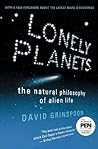
“We are blatantly biased by an overwhelming desire to find certain answers. Life good. Dead universe bad. Science, we have been taught, is supposed to be neutral, like Switzerland. We’re not supposed to take sides or rig the game. Yet, when it comes to life in the universe, we’ve unabashedly forsaken our neutrality. We can’t hide our love away. We want life.”
― Lonely Planets: The Natural Philosophy of Alien Life
― Lonely Planets: The Natural Philosophy of Alien Life
“the TTAPS study and the wider debate it ignited helped drive home the absurdity of nuclear strategies dependent on massive deterrence. The United States and the USSR had created a situation where even a limited nuclear conflict would cause a climate disaster that could quite possibly, among other things, collapse global agriculture, dooming civilization as we know it. With these weapons, there was no destroying your enemy without also destroying yourself. It brought to mind Stanley Kubrick’s brilliant Cold War dark comedy, Dr. Strangelove, in which the Soviets create a “doomsday machine” that will detonate if a nuclear war starts, rendering the entire world uninhabitable. The TTAPS nuclear winter study revealed that we had, unwittingly, built such a machine. These results were widely discussed in the security communities of both superpowers, and are often cited as helping to motivate the partial disarmament that both sides undertook as the Cold War wound down. Anti-Greenhouse In all these studies, Pollack and his collaborators were discovering variations that can be induced, by changes in quantities of gases or suspended particles, in a planetary greenhouse.”
― Earth in Human Hands: Shaping Our Planet's Future
― Earth in Human Hands: Shaping Our Planet's Future
“We take it for granted, but now our Earth-observing capacity comes and goes with the launch and failure of different satellite systems. If we are going to build the capacity to avoid dangerous climate changes and asteroid impacts, then we will need long-term, stable, space-based infrastructure. We’ll need monitoring capability that can be ensured to last over the lifetime of such a project. Right now we are obsessed with innovation, but at some point we will need to focus more on stability. Not that innovation shouldn’t be welcomed if better ways are found to accomplish our goals, but at the very least the baseline plan must be undertaken with technology that can be built to finish the job at hand. We will need systems built to last for centuries, and the institutions to reliably maintain them. We’ve”
― Earth in Human Hands: Shaping Our Planet's Future
― Earth in Human Hands: Shaping Our Planet's Future
“Her theory of endosymbiosis, controversial at first and now enshrined in biology textbooks, showed that in evolution, radical cooperation is just as potent a force as deathly competition. One great example involves mitochondria, the tiny micron-size power plants inside our cells. According to endosymbiotic theory, these used to be freely living bacteria that joined our ancestral cells in a mutually beneficial, symbiotic, relationship. The association became so tight that eventually the partners joined together to form a new kind of organism.”
― Earth in Human Hands: Shaping Our Planet's Future
― Earth in Human Hands: Shaping Our Planet's Future
“Historian Charles Mann has suggested that this mashed-up new biological phase we’ve induced be called the Homogenocene, as we have blended so many evolving populations, once geographically dispersed and isolated, into one homogenized genetic broth. In the 1970s Carl Sagan used to zip around Ithaca, New York, with a bumper sticker on his orange Porsche reading, “Reunite Gondwanaland!” referring to the time when all Earth’s continents were merged into one supercontinent. I guess, biologically, this is what we’ve now done. We’ve seriously rearranged the evolutionary geometry of the world—and”
― Earth in Human Hands: Shaping Our Planet's Future
― Earth in Human Hands: Shaping Our Planet's Future
“early twentieth century seemed to see what was coming. In 1873, Italian geologist Antonio Stoppani proposed that the growing influence of humans was causing the “Anthropozoic era,” but this was largely ignored by scientists of his day. In 1877, physiologist Joseph LeConte described a similar concept, calling it the Psychozoic era. In the 1920s the French Jesuit priest Tielhard de Chardin spoke of”
― Earth in Human Hands: Shaping Our Planet's Future
― Earth in Human Hands: Shaping Our Planet's Future
“Organisms and species do not have cosmological life spans. Gaia does, and this is perhaps a general property of living worlds. Influenced greatly by Lovelock and Margulis, I’ve argued that we are unlikely to find surface life on a planet that has not severely and flagrantly altered its own atmosphere. According to this idea, a planet cannot be “slightly alive” any more than a person can (at least not for long), and an aged planet such as Mars, if it is not obviously, conspicuously alive like Earth, is probably completely dead.7”
― Earth in Human Hands: Shaping Our Planet's Future
― Earth in Human Hands: Shaping Our Planet's Future
“Gazing over the countless fluctuations and transformations in Earth’s multibillion-year history, I am struck by the unique strangeness of the present moment. We suddenly find ourselves sort of running a planet—a role we never anticipated or sought—without knowing how it should be done. We’re at the controls, but we’re not in control. This book is my view of how we got into this situation, and where that leaves us now. A child of the space age, I grew up captivated by the romance of planetary exploration. My timing was right to become a NASA research scientist working in the new field of astrobiology, the scientific study of life in the universe. My participation in the spacecraft exploration of other planets has informed my view of our presence on this”
― Earth in Human Hands: Shaping Our Planet's Future
― Earth in Human Hands: Shaping Our Planet's Future
“Nevertheless, however reluctantly, unconsciously, and incompetently we are doing it, we are now managing this planet. Many people don’t want to admit this, don’t want it to be true. Well, of course we don’t want it to be true. Everyone prefers the carefree innocence of childhood to the weighty responsibilities of adulthood. Still, it is far better to grasp things the way they really are. When we deny that humans are now to some degree in charge of Earth, aren’t we persisting in a comforting illusion? If we want to get to work solving the problems we’ve created, the first step is seeing clearly who we are. Though”
― Earth in Human Hands: Shaping Our Planet's Future
― Earth in Human Hands: Shaping Our Planet's Future
“is. I think our fundamental Anthropocene dilemma is that we have achieved global impact but have no mechanisms for global self-control. So, to the (debatable) extent that we are like some kind of global organism, we are still a pretty clumsy one, crashing around with little situational awareness,”
― Earth in Human Hands: Shaping Our Planet's Future
― Earth in Human Hands: Shaping Our Planet's Future
“society. The orbital technology enabling this observation is itself one of the strange and striking aspects of the transition now gripping Earth. If up to now the defining characteristic of Earth has been planetary-scale life, then what about these planetary-scale lights? Might this spreading, luminous net be part of a new defining characteristic? Even”
― Earth in Human Hands: Shaping Our Planet's Future
― Earth in Human Hands: Shaping Our Planet's Future
“How the hell could you ever know if a scientific theory had a probability of 10-6 of being wrong?” For decades we’ve had a running joke about our very scientific fathers, how seriously they take their own ideas and their (we think, at times) excessive faith in quantitative solutions to intractable problems. So we spent the rest of that evening saying things like “This has got to be the best vodka tonic I’ve ever tasted. There is only a possibility of 10-6 that it is not.” All”
― Earth in Human Hands: Shaping Our Planet's Future
― Earth in Human Hands: Shaping Our Planet's Future
“now nearly circular, compared to other epochs, where it is slightly more egg-shaped—we inhabit an interglacial of exceptionally long duration. Models incorporating this fact suggest that, even without us, the ice would not return for another fifty thousand years. In other words, if we don’t screw it up, sending climate careering beyond the safe zone, our luck might hold for quite some time. This warm, stable climate our civilization has enjoyed for ten millennia, and come to take for granted, might last for five times again as long. Yet what about looking farther into the future, beyond just the next ice age? Might we have initiated something more long term? Could we have seriously thrown Earth off its rhythm, perhaps even permanently halting the Milanković cycle of glaciations? My young colleague Jacob Haqq-Misra has been studying this question. Early results from his modeling suggest we may be on our way to initiating such a change in Earth’s behavior.”
― Earth in Human Hands: Shaping Our Planet's Future
― Earth in Human Hands: Shaping Our Planet's Future
“Okay, engineering is not quite the right word, as it implies some larger degree of understanding than we have. We are perhaps engineering Earth only in the way that your infant is “engineering” your home media system when she sticks cookies in the DVD slot.”
― Earth in Human Hands: Shaping Our Planet's Future
― Earth in Human Hands: Shaping Our Planet's Future
“Konstantin Tsiolkovsky (1857–1935), a reclusive, near-deaf, self-taught rural schoolteacher who, working alone and having almost no contact with the wider scientific community, invented ingenious engineering designs for multistage rockets, orbiting space colonies, and interplanetary craft. Though”
― Earth in Human Hands: Shaping Our Planet's Future
― Earth in Human Hands: Shaping Our Planet's Future
“Linepithema humile is a species of ant native to Northern Argentina that has, with our help, become a new kind of global superorganism.”
― Earth in Human Hands: Shaping Our Planet's Future
― Earth in Human Hands: Shaping Our Planet's Future
“The Great Oxygenation Event was contemporaneous with one of the most severe ice ages this world has ever known, an event known to geo-nerds as the Paleoproterozoic Snowball Earth episode.* This was probably no coincidence. At the time, Earth’s climate was likely being kept above freezing by a methane greenhouse. Methane is such a powerful infrared absorber that a very small amount of it can significantly warm a planet. It is also, however, an organic molecule that is easily and eagerly consumed by oxygen. So when all that oxygen released by the cyanobacteria built up in the atmosphere, it quickly destroyed the methane greenhouse, the atmosphere suddenly became more transparent to infrared radiation, and the temperature plummeted, plunging our planet into a complete global freeze. Such a deeply frozen condition could even potentially become a permanent dead-end state for a planet like Earth.”
― Earth in Human Hands: Shaping Our Planet's Future
― Earth in Human Hands: Shaping Our Planet's Future
“celled. Then a catastrophe occurred (in the sense of sudden change), a dramatic increase in biodiversity, an anti-extinction, if you will. In a flash, there were not just some animal forms, but all of them. In the fossil record, all modern body types appear together at this moment. We don’t know why this happened when it did. It’s likely that the explosion had to wait until oxygen levels rose high enough to support the greater energy needs of larger bodies,”
― Earth in Human Hands: Shaping Our Planet's Future
― Earth in Human Hands: Shaping Our Planet's Future
“Right now, looking out my kitchen window on a summer day on Capitol Hill, I see a complex, shifting scene composed of about 50 percent brick and 50 percent trees. It’s lovely, a riot of organic forms bouncing in the wind. The brick is festooned with lichen, ivy, and moss, its rigid geometry softened and blemished by hundreds of years of wind, rain, and life, and illuminated by splintered sunlight refracted through blowing branches and leaves. A squirrel skitters along a power line, balanced, at ease, “natural,” as if he’s been evolving to do this for a hundred thousand years. The trees are diverse, some deciduous and some evergreen. They look happy, at home, healthy, and strong. They are permanent residents, compared to any people. The birds and rodents that nest, chase, chatter, and squeal among them seem at home as well.”
― Earth in Human Hands: Shaping Our Planet's Future
― Earth in Human Hands: Shaping Our Planet's Future
“the European Space Agency’s Copernicus program, which will provide continuous scientific observations of the health of our planet. We’ve had uninterrupted weather monitoring for decades, but scientific measurements have been more ad hoc and spotty: one satellite is up for a while, and returns some data until it fails. Our data and our records have been discontinuous, but the plan now is to keep things going. It is assumed that satellites will fail, and when they do, a replacement will be launched. Continuity of observations is built into”
― Earth in Human Hands: Shaping Our Planet's Future
― Earth in Human Hands: Shaping Our Planet's Future
“After Venus lost its oceans to a runaway greenhouse, the interior also would have started to dry out, and this might have shut down plate tectonics. The question has forced a closer look at how and why plate tectonics works on Earth. We’ve learned there are many ways that plate tectonics is aided and lubricated by the presence of our planet’s pervasive hydrosphere. Venus could have started out with Earth-style plate tectonics and then lost its ability to recycle its surface and interior, as it lost its water to a runaway greenhouse, and the interior of the planet was slowly wrung dry.”
― Earth in Human Hands: Shaping Our Planet's Future
― Earth in Human Hands: Shaping Our Planet's Future
“Here, I find it useful to point out the distinction between cleverness and wisdom. Cleverness is the ability to solve problems through invention and innovation. We’ve got that in spades. Wisdom is the ability to apply experience, awareness of context, and prior knowledge of consequences, and fold all that into action. There, we seem to be more challenged. Even to the extent (which is rapidly growing) that we are aware of our global influence, our capability to apply this knowledge and change course, even in the interest of self-preservation, is not clear. We’re finding that, for now, our great cleverness has outstripped our wisdom. We”
― Earth in Human Hands: Shaping Our Planet's Future
― Earth in Human Hands: Shaping Our Planet's Future
“What will be the significance of the Anthropocene rock layer and the ultimate legacy of the human race when, in another 225 million years, our star, having completed one more dance around the black hole at the center of our galaxy, returns to this quadrant? Will we simply leave a thin layer rich in refined metal and Twinkie wrappers, underlying a layer bereft of coral reefs? Or will we leave more lasting changes on this world, or even never leave it at all? In the scientific literature, you see the Anthropocene referred to sometimes as an “event” and sometimes as an “epoch.” “Event” implies it will all be over pretty quickly, whereas “epoch” implies some more prolonged phase of human influence. From the standpoint of Earth evolution, which will we be, a moment or a phase?”
― Earth in Human Hands: Shaping Our Planet's Future
― Earth in Human Hands: Shaping Our Planet's Future