Goodreads helps you follow your favorite authors. Be the first to learn about new releases!
Start by following Michael Hardy.

Showing 1-4 of 4
“What was happening in the first three centuries of the common era wasn’t so much a mystery cult calling themselves the Gnostics promoting a unified, systematic theology of Jesus Christ, but a variety of groups promoting remarkably similar, yet distinct, theological systems.”
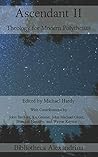
― Ascendant: Modern Essays on Polytheism and Theology
― Ascendant: Modern Essays on Polytheism and Theology
“Ultimately Postmodernism (and Paganism) cannot continue endlessly reducing reality to meaningless language games (Gibbons, 2017). Reality exists regardless of one’s experience of it. Postmodern approaches to Paganism will eventually give way to more material metaphysics — the question is how will we define our own myths and ontologies to engage in these questions of faith in the present world once Postmodernism is finally usurped?”
― Ascendant: Modern Essays on Polytheism and Theology
― Ascendant: Modern Essays on Polytheism and Theology
“For instance, Thoth existing prior to the material world highlights his choice to enter the created world and play a part in the courts of the various gods. What does this imply about the role of language and writing? What does Thoth’s principle role in the court of Osiris at the judgment of the dead say about his relation to Ra and the material world?”
― Ascendant: Modern Essays on Polytheism and Theology
― Ascendant: Modern Essays on Polytheism and Theology
“Sallust gives a rather succinct definition of this when he defines a god as “immutable, without Generation, eternal, incorporeal, and [without] Subsistence in Place.”
― Ascendant: Modern Essays on Polytheism and Theology
― Ascendant: Modern Essays on Polytheism and Theology