Goodreads helps you follow your favorite authors. Be the first to learn about new releases!
Start by following Susan Krauss Whitbourne.

Showing 1-6 of 6
“You don't have to be in your later quarter of life to benefit from a future time perspective. Unplugging yourself from the present and projecting your dreams into the future can help you reach fulfillment at any age.”
―
―
“Life is about shifting the balance in favor of change, and try as we might to hold on forever to the best of moments, it's simply impossible.”
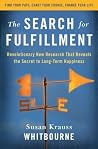
― The Search for Fulfillment: Revolutionary New Research That Reveals the Secret to Long-term Happiness
― The Search for Fulfillment: Revolutionary New Research That Reveals the Secret to Long-term Happiness
“What is it about a future time perspective that is so beneficial? Researchers believe that people who can project themselves into the future are more optimistic, have a stronger sense of purpose, and are able to press past petty disappointments. They see the big picture and avoid being weighed down by the strains of their present circumstances. As in the study of college students, they feel more engaged in what they're doing because they see where it's leading them.”
―
―
“Finding the pathway that best expresses our true selves is a process that can continue throughout life and needn't be locked into a particular decade.”
―
―
“Our results lend scientific support to a frequent claim voiced by women, sometimes dismissed as paranoia: that people would have listened to her impassioned argument, had she been a man' (Salerno & Peter-Hagene p. 11).
Participants were more likely to doubt their initial judgments after hearing what an angry male holdout had to say, but were more confident in their own judgments after reading the angry woman’s arguments. Everything in the two conditions was the same—except the holdout’s gender.
As Salerno and Peter-Hegene observed (p. 9), 'Expressing anger created a gender gap in influence that did not exist before the holdout started expressing anger or when the holdouts expressed fear or no emotion.' This effect was specific to anger, not fear. Further analyses revealed the reason for this gender gap: Participants regarded an angry woman as more emotional, which made them more confident in their own opinion (and dismissive of hers) . . . For men, on the other hand, expressing anger made them seem more credible, which, in turn, led participants to become less confident in their own verdict.
The Hillarys of the world may feel the need to keep stifling their anger when people ask annoying questions, while the Donalds can let their rants go unchecked. And the ordinary woman who wishes to be heard may have to suppress her passion, no matter how strongly she feels about her point of view.”
―
Participants were more likely to doubt their initial judgments after hearing what an angry male holdout had to say, but were more confident in their own judgments after reading the angry woman’s arguments. Everything in the two conditions was the same—except the holdout’s gender.
As Salerno and Peter-Hegene observed (p. 9), 'Expressing anger created a gender gap in influence that did not exist before the holdout started expressing anger or when the holdouts expressed fear or no emotion.' This effect was specific to anger, not fear. Further analyses revealed the reason for this gender gap: Participants regarded an angry woman as more emotional, which made them more confident in their own opinion (and dismissive of hers) . . . For men, on the other hand, expressing anger made them seem more credible, which, in turn, led participants to become less confident in their own verdict.
The Hillarys of the world may feel the need to keep stifling their anger when people ask annoying questions, while the Donalds can let their rants go unchecked. And the ordinary woman who wishes to be heard may have to suppress her passion, no matter how strongly she feels about her point of view.”
―
“As tempting as it is, you can't put a naturally occurring phenomenon such as the life of a person or a country into discrete units.”
― The Search for Fulfillment: Revolutionary New Research That Reveals the Secret to Long-term Happiness
― The Search for Fulfillment: Revolutionary New Research That Reveals the Secret to Long-term Happiness