Goodreads helps you follow your favorite authors. Be the first to learn about new releases!
Start by following Paul O..

Showing 1-30 of 123
“Amazingly, parents of these children have learned to lead more comfortable, more productive lives by becoming active, enthusiastic, participating, long-term members of Al-Anon. And subsequently their children have often dramatically recovered from the above situations. But this happened only after the parents got out of the way, stopped putting energy into the problem, stopped “helping” their children, stopped doing what wasn’t working and became willing to try something different.”
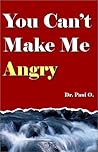
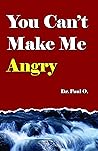
― You Can't Make Me Angry
― You Can't Make Me Angry
“Still, we may hesitate to accept an unpleasant reality because we feel that by accepting, we condone something that is intolerable. But this is not the case. As it says so eloquently in One Day at a Time in Al-Anon (ODAT), Acceptance does not mean submission to a degrading situation.”
― You Can't Make Me Angry
― You Can't Make Me Angry
“I had given Max a written declaration of emotional independence stating that she was no longer responsible for my feelings. Thereafter, I could no longer tell her, “You made me angry,” or “I feel bad and it’s your fault because of what you did (or said).” I also explained how, as a corollary, I was no longer responsible for her feelings. We both agreed that from now on we are each responsible for our own feelings.”
― You Can't Make Me Angry
― You Can't Make Me Angry
“If I give away my emotional independence and allow any other person to control my emotions, then they control not only my emotional sobriety but possibly also my physical sobriety.”
― You Can't Make Me Angry
― You Can't Make Me Angry
“Am I now going to mimic that person’s bad attitude and make the situation worse, or am I going to be the person I want to be?”
― You Can't Make Me Angry
― You Can't Make Me Angry
“This requires a great deal of emotional independence.”
― You Can't Make Me Angry
― You Can't Make Me Angry
“Indeed, Robyn Dawes, after criticizing much of modern psychiatric theory, ends her book House of Cards6 with the statement, “Most important of all, there is no evidence that for the majority of people a change of internal state and feeling is necessary prior to behaving in a beneficial way. There is, in contrast, good evidence that changing our behavior will change our internal state and feelings. Just do it.” (Emphasis added.)”
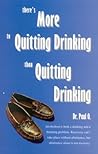
― There's More to Quitting Drinking than Quitting Drinking
― There's More to Quitting Drinking than Quitting Drinking
“An attitude of total acceptance and peace of mind doesn’t come naturally to me. I must remain diligently on guard to prevent my feelings, thoughts and actions from being controlled by people and circumstances. My serenity, like finely spun glass, is extremely fragile. My natural tendency is to find fault, see the defect, disapprove, then not accept what I see. I completely forget that acceptance does not imply approval.”
― You Can't Make Me Angry
― You Can't Make Me Angry
“Do this every time the thought comes back. After a while, Fox insists, it will recur less and less often until you forget it completely.”
― You Can't Make Me Angry
― You Can't Make Me Angry
“Similarly, Thompson urges his readers to not allow the aggressive words and manner of an adversary to have their intended harmful effect.”
― You Can't Make Me Angry
― You Can't Make Me Angry
“Concerning feelings, the most important point to remember is that everyone has them, and we should never be ashamed nor apologize for feeling the way we do. Feelings have no moral value.”
― You Can't Make Me Angry
― You Can't Make Me Angry
“From this moment on, it is entirely His. You are completely free of it. It is gone, done, finished, over. It is as if it never happened. Through the Love of God, you and the other person are both now and forever free.”
― You Can't Make Me Angry
― You Can't Make Me Angry
“Regardless of the cause of our emotional disturbances, there is always something we can do about our feelings. In fact, we are the only one who can do something about them.”
― You Can't Make Me Angry
― You Can't Make Me Angry
“With increasing awareness of both how we feel at any particular moment, and why we have chosen to feel that way, we develop the ability to change our emotional state if we wish to do so. We generate an awareness of whether we have chosen our current feelings or have allowed them to be implanted by an outside person or circumstance.”
― You Can't Make Me Angry
― You Can't Make Me Angry
“It is a spiritual axiom that every time we are disturbed, no matter what the cause, there is something wrong with us.” I take this to mean that we need to take our eyes off what the other person has done to us and look at what we have done to ourselves.”
― You Can't Make Me Angry
― You Can't Make Me Angry
“Without emotional independence, I can’t have emotional sobriety.”
― You Can't Make Me Angry
― You Can't Make Me Angry
“We trust in God’s will knowing that, in general, we are far more efficient and effective when we respond calmly and in an unhurried manner than when we explode in unthinking anger.”
― You Can't Make Me Angry
― You Can't Make Me Angry
“When an alcoholic eliminates the allergy problem by removing the alcohol, he or she then faces the same problem as the Al-Anon member, that of not allowing others to determine how they feel.”
― You Can't Make Me Angry
― You Can't Make Me Angry
“I forget that my greatest defense lies in my defenselessness. Being basically powerless, I have no defense. Having no defense, I choose to rise above the immediate situation rather than lower myself to that person’s standard of behavior.”
― You Can't Make Me Angry
― You Can't Make Me Angry
“tells people how to recognize and deal with their feelings, and how to help others do the same thing by working through their mutual communications problems. Like Hendrix, he places great emphasis on listening. He lists three phases of ethical persuasion: First, exploring the other’s position (listening), then explaining your viewpoint, and finally creating resolution.”
― You Can't Make Me Angry
― You Can't Make Me Angry
“He stopped going to meetings, and no longer follows his exercise program.”
― You Can't Make Me Angry
― You Can't Make Me Angry
“Sobriety must come before everything else.”
― You Can't Make Me Angry
― You Can't Make Me Angry
“early in sobriety I routinely threw my sobriety at other drivers on the freeway, people who didn’t even want it.”
― You Can't Make Me Angry
― You Can't Make Me Angry
“sobriety is extremely jealous. If the spouse, children, car, house, job, money, sex or anything else achieves greater importance to the alcoholic than his or her sobriety, sobriety leaves.”
― You Can't Make Me Angry
― You Can't Make Me Angry
“children who themselves have learned the art of manipulation and control, and you have the setup for chaos.”
― You Can't Make Me Angry
― You Can't Make Me Angry
“Chronic victims aren’t up to that challenge, and their resentments are their excuse for staying emotionally where they are.”
― You Can't Make Me Angry
― You Can't Make Me Angry
“allow the offending person to “make” them feel bad today. Such situations result in self pity, an emotion with absolutely no redeeming social value, but which obviously feels good, at least for a brief interval, or it wouldn’t be so popular.”
― You Can't Make Me Angry
― You Can't Make Me Angry
“I repeatedly tell him that if he wants to feel differently, he has to act differently. He must change his behavior, not hers. I tell him if he changes drastically enough and long enough, she will very likely change. She may temporarily get worse before she gets better, but she will change.”
― You Can't Make Me Angry
― You Can't Make Me Angry
“Thus, my life is essentially an on-going communication exercise—a continuous test of my communication skills. This is true for all of us—particularly when it comes to interpersonal relationships.”
― You Can't Make Me Angry
― You Can't Make Me Angry
“Al-Anon members to live life comfortably and emotionally sober no matter what the alcoholic, or anyone else, is doing or not doing.”
― You Can't Make Me Angry
― You Can't Make Me Angry