Goodreads helps you follow your favorite authors. Be the first to learn about new releases!
Start by following Bas Aarts.

Showing 1-4 of 4
“It is because the verb BE has a plain form which does not share its shape with any of the present tense forms that we need to distinguish the plain form as a distinct inflectional form. And if we do so for BE we should do so for all verbs.”
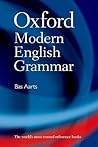
― Oxford Modern English Grammar
― Oxford Modern English Grammar
“23 furious > furiously (class-changing: adjective to adverb) 24 happy > happiness (class-changing: adjective to noun) 25 regular > regularize /-ise (class-changing: adjective to verb) 26 relate > relation (class-changing: verb to noun) 27 spite > spiteful (class-changing: noun to adjective) 28 work > workable (class-changing: verb to adjective) 29 yellow > yellowish (class-maintaining: adjective) In Table 2.10 a number of common derivational suffixes are shown.”
― Oxford Modern English Grammar
― Oxford Modern English Grammar
“As users of English we often need a grammatical device to make reference to the way a particular event unfolds in time. This is called aspect.”
― Oxford Modern English Grammar
― Oxford Modern English Grammar
“Aspect is a grammatical notion, which refers to the way the associated semantic notion of aspectuality is implemented linguistically.”
― Oxford Modern English Grammar
― Oxford Modern English Grammar