Goodreads helps you follow your favorite authors. Be the first to learn about new releases!
Start by following Bill James.

Showing 1-30 of 33
“If you can't learn to do something well, learn to enjoy doing it badly.”
―
―
“I always admire people who have the courage to confront the conventional wisdom - I mean, people within the system. Those of us on the outside, it's easy for us to say whatever we think, because there are no consequences to it. It's much harder to say, "I think the conventional wisdom is full of beans, and I'm not going to go along with it," when you're inside the system and exposed to the possibility of actual failure. I think the people who do this drive the world to get better, whereas the people who snipe at anybody who dares suggest that the conventional wisdom is malarkey are, in my view, gutless conspirators in the mediocrity of the universe.”
―
―
“I learned to write because I am one of those people who somehow cannot manage the common communications of smiles and gestures, but must use words to get across things that other people would never need to say.”
―
―
“Let's try to find ten good things to say about Albert Belle:
10. So far as we know, he's never killed anyone.
9. He is handsome, and built like a God.
8. He played every game.
7. He has never appeared on the Jerry Springer Show.
6. He was an underrated base runner who was rarely caught stealing.
5. He hasn't been arrested in several years.
4. He is very bright.
3. He works hard.
2. He has never spoken favorably about Adolf Hitler, Saddam Hussein, or any other foreign madman.
1. The man could hit.”
―
10. So far as we know, he's never killed anyone.
9. He is handsome, and built like a God.
8. He played every game.
7. He has never appeared on the Jerry Springer Show.
6. He was an underrated base runner who was rarely caught stealing.
5. He hasn't been arrested in several years.
4. He is very bright.
3. He works hard.
2. He has never spoken favorably about Adolf Hitler, Saddam Hussein, or any other foreign madman.
1. The man could hit.”
―
“He was called "Pancho" because people at that time didn't have enough sense to be offended by stuff like that.”
―
―
“The search for understanding, wherever it roams, is a search for better simplifications. Simplifications which explain more and distort less... All human understanding is based on simplifications of more complex realities.”
―
―
“And then you come to the 1910 to 1912 era, and . . . Jesus H. Christ, what is happening here? Axe murders start appearing like dandelions. Murdering your neighbors with an axe became the nation’s fourth-largest sport.”
― The Man from the Train: The Solving of a Century-Old Serial Killer Mystery
― The Man from the Train: The Solving of a Century-Old Serial Killer Mystery
“What happens in many of these cases is that, in the absence of evidence, the crime is pinned on a person of low social standing who is known to be in the vicinity of the crime. We have seen this repeatedly.”
― The Man from the Train: The Solving of a Century-Old Serial Killer Mystery
― The Man from the Train: The Solving of a Century-Old Serial Killer Mystery
“Words are useful, sir. That's from the communicating point of view. They come into their own then. When you think about it, even Morse code, which seems to be only dots and dashes, is actually dots and dashes signifying letters, and letters that go to make words. I don't know where we'd be without them. For instance, I wouldn't be able to say "I don't know where we'd be without them" if we were without them....
But for myself, I admit I find words quite handy, especially during, for instance, speech or writing. Yes, I think I'd find both of those tricky without words.”
―
But for myself, I admit I find words quite handy, especially during, for instance, speech or writing. Yes, I think I'd find both of those tricky without words.”
―
“He was who he was; it was how he thought about himself. He was the man with the secret that nobody could ever get to. You guys look at me and you see nothing- this is how he thought; you see a small and dirty man who doesn't amount to anything, but I know that I can do things and I have done things that you cannot imagine. I am the very Monster of whom you live in terror- and you have no idea that it is Me.”
― The Man from the Train: The Solving of a Century-Old Serial Killer Mystery
― The Man from the Train: The Solving of a Century-Old Serial Killer Mystery
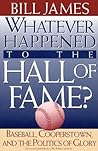
“What happened in Prohibition? What happens to you when you put on a few pounds, and decide to get rid of them with a crash diet? What happened to the, ah, romantic content of movies after public criticism forced the adoption of a rating code? What happens to a daughter whose father forbids her to date? Unwanted efforts to apply a strict standard will almost always backfire, and bring about the very result which they seek to prevent.”
― Whatever Happened to the Hall of Fame? Baseball, Cooperstown, and the Politics of Glory
― Whatever Happened to the Hall of Fame? Baseball, Cooperstown, and the Politics of Glory
“One of the great rules of life is that we all establish 'policies', although we call them habits or preferences or beliefs or techniques, which are useful to us, but which we continue to use after the reason for them has evaporated. We have a hard time seeing things as they are because we can never get what they were out of our heads.”
― This Time Let's Not Eat the Bones: Bill James Without the Numbers
― This Time Let's Not Eat the Bones: Bill James Without the Numbers
“The period from 1910 to 1912 was the era of the axe murderer. It is not a silly argument to say that this era came about because of The Man from the Train, that he was the man who spread the idea across the country. He was the Typhoid Mary of the Axe Murder Epidemic.”
― The Man from the Train: The Solving of a Century-Old Serial Killer Mystery
― The Man from the Train: The Solving of a Century-Old Serial Killer Mystery
“Chris Darden made a huge error in asking O.”
― Popular Crime: Reflections on the Celebration of Violence
― Popular Crime: Reflections on the Celebration of Violence
“Each one roars by us for a few days, is remarked upon in casual conversation and filed away as something less than a memory.”
― Popular Crime: Reflections on the Celebration of Violence
― Popular Crime: Reflections on the Celebration of Violence
“Could you break into a stranger’s house with an axe, and beat the entire family to death, and then go on about your life the same as before? No, of course you could not, and I could not. I would be terrified. I would shake in my boots; I would pee in my pants. I couldn’t do it; not that I would want to, but I could not. It required a self-possession, a clarity of purpose, and a suppression of fear that is beyond anything normal. Is it accurate to say that the man who could do this was a coward?”
― The Man from the Train: The Solving of a Century-Old Serial Killer Mystery
― The Man from the Train: The Solving of a Century-Old Serial Killer Mystery
“The Copeland Killings, was written by Tom Miller, a local reporter. The book is OK, straightforward and inoffensive.”
― Popular Crime: Reflections on the Celebration of Violence
― Popular Crime: Reflections on the Celebration of Violence
“by refusing to make any moral judgment here, even the most modest one, people are missing something obvious about the time: that there was a revolutionary fervor in that era fueled not by racial injustice, as Doctorow presented it in Ragtime, but by hatred of the rich, which was fueled in turn by the fact that rich people”
― Popular Crime: Reflections on the Celebration of Violence
― Popular Crime: Reflections on the Celebration of Violence
“This book is almost entirely about people who lived in small towns a hundred years ago. As much about how they died as about how they lived. But the flash of death illuminated the lifes the victims have lived.”
― The Man from the Train: The Solving of a Century-Old Serial Killer Mystery
― The Man from the Train: The Solving of a Century-Old Serial Killer Mystery
“From Hurley, Virginia, to Beckley, West Virginia, is eighty-two miles, a little bit less as the crow flies, but you can’t get there as the crow flies unless you are a crow.”
― The Man from the Train: The Solving of a Century-Old Serial Killer Mystery
― The Man from the Train: The Solving of a Century-Old Serial Killer Mystery
“I’m sort of a baseball agnostic; I make it a point never to believe anything just because it is widely known to be so.”
―
―
“Later, after Rule became famous, she stopped writing those kind of books and started writing about a different kind of true-crime case. She started writing about real-life gothic soap operas, dream-come-true husbands who turn out to have a dark past and crap. I don’t have any interest in those crimes or those books, which I think are written for women, and I haven’t been able to read anything she’s written in 25 years, although I keep trying.”
― Popular Crime: Reflections on the Celebration of Violence
― Popular Crime: Reflections on the Celebration of Violence
“The Warren Court swung the balance of power toward the accused—and the counterbalance of skepticism moved the other way. Trials were once spontaneous, quick and dramatic; now they are rehearsed, endless and often boring, interminable bullshit from professional witnesses who have practiced their skills at sparring with defense attorneys. The jury looks upon the accused as if he must be guilty, or why would he be here?”
― Popular Crime: Reflections on the Celebration of Violence
― Popular Crime: Reflections on the Celebration of Violence
“There will always be people who are ahead of the curve, and people who are behind the curve. But knowledge moves the curve”
―
―
“My wife makes 99% of the rules in our house, but one rule I insisted on, when the kids were small, is that I wasn’t going to have “pets” in the house that aren’t really pets. Fish, birds, cats, dogs… that’s fine. No spiders, ferrets, snakes, gerbils, hamsters; if you would kill the thing if it came into the house on its own, that’s not a pet.”
― Fools Rush Inn: More Detours on the Way to Conventional Wisdom
― Fools Rush Inn: More Detours on the Way to Conventional Wisdom
“The capacity of mankind to misunderstand the world is without limit.”
― Popular Crime: Reflections on the Celebration of Violence
― Popular Crime: Reflections on the Celebration of Violence
“Until about 1970 when parents beat their children to death they very often escaped punishment. They would be prosecuted if it was clear and deliberate murder, but if a parent slapped or shook a child and the child died and the parent said the kid fell down the steps, the police virtually never followed up.”
― Popular Crime: Reflections on the Celebration of Violence
― Popular Crime: Reflections on the Celebration of Violence
“Let me suggest some other things that I think may have contributed. Police officers are much more professional now than they were a hundred years ago. Police officers a hundred years ago were often not respected by juries because, in truth, they very often were not worthy of much respect. They are better educated now; they have better uniforms and better PR guys. This probably causes juries to give them more credence. This is perhaps unfortunate. Professionals lie just as often as amateurs, only more skillfully.”
― Popular Crime: Reflections on the Celebration of Violence
― Popular Crime: Reflections on the Celebration of Violence
“That said, Fatal Vision does have a major virtue. McGinniss is genuinely obsessed with his story … with that story. That’s the flaw of the book; McGinniss is so obsessed with his material that he doesn’t know when to shut up about it.”
― Popular Crime: Reflections on the Celebration of Violence
― Popular Crime: Reflections on the Celebration of Violence
“Fatal Vision was a very successful book that a lot of people like, but the problem with it is that you could edit out 75% of the book without losing a single fact or insight.”
― Popular Crime: Reflections on the Celebration of Violence
― Popular Crime: Reflections on the Celebration of Violence