Goodreads helps you follow your favorite authors. Be the first to learn about new releases!
Start by following Brenda Wineapple.

Showing 1-30 of 41
“We talk of literature as if it were a mere matter of rule and measurement, a series of processes long since brought to mechanical perfection: but it would be less incorrect to say that it all lies in the future; tried by the outdoor standard, there is as yet no literature, but only glimpses and guideboards; no writer has yet succeeded in sustaining, through more than some single occasional sentence, that fresh and perfect charm. If by the training of a lifetime one could succeed in producing one continuous page of perfect cadence, it would be a life well spent, and such a literary artist would fall short of Nature’s standard in quantity only, not in quality.”
― White Heat
― White Heat
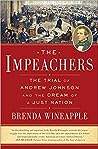
“Impeaching a President implies that we make mistakes, grave ones, in electing or appointing officials, and that these elected men and women might be not great but small—unable to listen to, never mind to represent, the people they serve with justice, conscience, and equanimity. Impeachment suggests dysfunction, uncertainty, and discord—not the discord of war, which can be memorialized as valorous, purposeful, and idealistic, but the far less dramatic and often squalid, sad, intemperate conflicts of peace, partisanship, race, and rancor. Impeachment implies a failure—a failure of government of the people to function, and of leaders to lead. And presidential impeachment means failure at the very top.”
― The Impeachers: The Trial of Andrew Johnson and the Dream of a Just Nation
― The Impeachers: The Trial of Andrew Johnson and the Dream of a Just Nation
“consolation of a theocracy—a nation of Christians that legally enforced moral behavior and could thereby revive the values that he associated with a white, rural, decent and upstanding America.”
― Keeping the Faith: God, Democracy, and the Trial That Riveted a Nation
― Keeping the Faith: God, Democracy, and the Trial That Riveted a Nation
“DeBow’s Review noted with contempt. “It is a melancholy exemplification of the facility with which a philanthropist, who devotes himself exclusively to the eradication of one form of evil, can deceive himself, and come to regard any means justifiable, in the pursuance of a supposed good end,” the reviewer said. “That subtle analyst of character, Nathaniel Hawthorne, has ably dissected this species of delusion in the Blithedale romance.” He recommended that Stowe”
― Ecstatic Nation: Confidence, Crisis, and Compromise, 1848-1877
― Ecstatic Nation: Confidence, Crisis, and Compromise, 1848-1877
“Though he knew little about science and even less about evolution, Bryan intuited with stunning accuracy the frustration and anger and anxiety of the people he represented and claimed to speak for, particularly the religious Fundamentalists. Confident of his mission and sure of himself,”
― Keeping the Faith: God, Democracy, and the Trial That Riveted a Nation
― Keeping the Faith: God, Democracy, and the Trial That Riveted a Nation
“Doubt was the beginning of wisdom, and the fear of God was the end of wisdom.”
― Keeping the Faith: God, Democracy, and the Trial That Riveted a Nation
― Keeping the Faith: God, Democracy, and the Trial That Riveted a Nation
“The fundamental bedrock of liberty is tolerance,” he said in July 1925. And as if he could darkly anticipate the implications of the Scopes trial not just for Bryan, or Tennessee, or 1925, but for the future of a nation that was said to cherish liberty, he explained, “Tolerance means a willingness to let other people do, think, act and live as we think is not right; the antithesis of this is intolerance and means we demand the right to make others live as we think is right, not as they think is right.” Otherwise, as he had declared, no one was safe.”
― Keeping the Faith: God, Democracy, and the Trial That Riveted a Nation
― Keeping the Faith: God, Democracy, and the Trial That Riveted a Nation
“To Darrow, there could be no democracy without reason, which is to say, without education and an educated people. For he imagined, or at least he hoped, that people might lead better, fairer, more just lives if they knew more.”
― Keeping the Faith: God, Democracy, and the Trial That Riveted a Nation
― Keeping the Faith: God, Democracy, and the Trial That Riveted a Nation
“No fluttering wings of doubt that would have brushed by another man’s eyes and made him stammer and hesitate in his climaxes, disturbed Bryan,” White observed. And there was something stubborn about him. “Facts never budged him,” White later recalled. “Wild horses could never drag him from a stand.”
― Keeping the Faith: God, Democracy, and the Trial That Riveted a Nation
― Keeping the Faith: God, Democracy, and the Trial That Riveted a Nation
“They had used the prerogatives of democracy to destroy the hopes of democracy.”
― Keeping the Faith: God, Democracy, and the Trial That Riveted a Nation
― Keeping the Faith: God, Democracy, and the Trial That Riveted a Nation
“And the black abolitionist James McCune Smith noted that even if Congress passed a constitutional amendment forbidding slavery, “the word slavery will, of course be wiped from the statute book, but the ‘ancient relation’ can be just as well maintained by cunningly devised laws.”
― Ecstatic Nation: Confidence, Crisis, and Compromise, 1848-1877
― Ecstatic Nation: Confidence, Crisis, and Compromise, 1848-1877
“Darrow leaned over to Arthur Hays to ask, as if with a sigh, “Isn’t it difficult to realize that a trial of this kind is possible in the twentieth century in the United States of America?”
― Keeping the Faith: God, Democracy, and the Trial That Riveted a Nation
― Keeping the Faith: God, Democracy, and the Trial That Riveted a Nation
“What, to the Slave, is the Fourth of July?” Douglass trenchantly asked in 1852. “To him, your celebration is a sham; your boasted liberty, an unholy license; your national greatness, swelling vanity; your sounds of rejoicing are empty and heartless; your denunciation of tyrants brass fronted impudence; your shout of liberty and equality, hollow mockery; your prayers and hymns, your sermons and thanks-givings, with all your religious parade and solemnity, are to him, mere bombast, fraud, deception, impiety, and hypocrisy—a thin veil to cover up crimes which would disgrace a nation of savages.”
― Ecstatic Nation: Confidence, Crisis, and Compromise, 1848-1877
― Ecstatic Nation: Confidence, Crisis, and Compromise, 1848-1877
“The size of the electorate, the impossibility of educating it sufficiently, the fierce ignorance of these millions of semi-literate, priest-ridden and parson-ridden people have gotten me to the point where I want to confine the actions of majorities.”
― Keeping the Faith: God, Democracy, and the Trial That Riveted a Nation
― Keeping the Faith: God, Democracy, and the Trial That Riveted a Nation
“No is the wildest word we consign to the language,”
― Ecstatic Nation: Confidence, Crisis, and Compromise, 1848-1877
― Ecstatic Nation: Confidence, Crisis, and Compromise, 1848-1877
“No subject possesses the minds of men like religious bigotry and hate,” Clarence Darrow said, “and these fires are being lighted today in America.”
― Keeping the Faith: God, Democracy, and the Trial That Riveted a Nation
― Keeping the Faith: God, Democracy, and the Trial That Riveted a Nation
“in all human beings, if only understanding be brought to the business, dignity will be found, and that dignity cannot fail to reveal itself, soon or late, in the words and phrases with which they make known the high hopes and aspirations and cry out against the intolerable meaninglessness of life.”
― Keeping the Faith: God, Democracy, and the Trial That Riveted a Nation
― Keeping the Faith: God, Democracy, and the Trial That Riveted a Nation
“No advantage,” Bryan rationalized, “is to be gained by ignoring race prejudice.”
― Keeping the Faith: God, Democracy, and the Trial That Riveted a Nation
― Keeping the Faith: God, Democracy, and the Trial That Riveted a Nation
“Neither the so-called modernists nor the Fundamentalists could see Darrow or Bryan whole.”
― Keeping the Faith: God, Democracy, and the Trial That Riveted a Nation
― Keeping the Faith: God, Democracy, and the Trial That Riveted a Nation
“I have been an agnostic to all creeds that have come before me, but am still seeking with an open mind, and I hope I may still find an answer. “We all live on hope,”
― Keeping the Faith: God, Democracy, and the Trial That Riveted a Nation
― Keeping the Faith: God, Democracy, and the Trial That Riveted a Nation
“Hence the deal: the Constitution would protect the African slave trade until 1808, when, presumably, Congress would regulate it. (James Madison, a slaveholder, gloomily predicted, “twenty years will produce all the mischief that can be apprehended from the liberty to import slaves.” He was right.)”
― Ecstatic Nation: Confidence, Crisis, and Compromise, 1848-1877
― Ecstatic Nation: Confidence, Crisis, and Compromise, 1848-1877
“All really educated men,” he would soon write, “whether they have studied in the halls of a University, or in a cottage or a work-shop, are essentially self-educated.”
― Hawthorne: A Life
― Hawthorne: A Life
“Mencken didn’t return the compliment. He had not forgotten the jailing of conscientious objectors or the arrest of German Americans before and during the war, or after it, the “Red Scare,” the deportations and harassments, all of which he associated with prohibitionists, fanatics, the Daughters of the American Revolution, Ku Kluxers—and William Jennings Bryan.”
― Keeping the Faith: God, Democracy, and the Trial That Riveted a Nation
― Keeping the Faith: God, Democracy, and the Trial That Riveted a Nation
“Prejudice is not unique to Tennessee; it is ubiquitous and not easily eradicated,” he added. “On its simplest level, prejudice means people are afraid of what they don’t know and don’t understand. By this criteria, who of us is not affected by prejudice?”
― Keeping the Faith: God, Democracy, and the Trial That Riveted a Nation
― Keeping the Faith: God, Democracy, and the Trial That Riveted a Nation
“So something greater was at stake than whether a young schoolteacher had taught from an authorized textbook that mentioned evolution.”
― Keeping the Faith: God, Democracy, and the Trial That Riveted a Nation
― Keeping the Faith: God, Democracy, and the Trial That Riveted a Nation
“The country was coming to be governed not by law,” Hays presciently declared, “but by threat of ruination made by various irresponsible groups of imposing title and supposedly pious purpose.”
― Keeping the Faith: God, Democracy, and the Trial That Riveted a Nation
― Keeping the Faith: God, Democracy, and the Trial That Riveted a Nation
“the constitutional amendment that abolished slavery also managed to perpetuate the fatal compromise of the Constitution, which had counted the slave as only three-fifths of a person, and that is no person at all.”
― Ecstatic Nation: Confidence, Crisis, and Compromise, 1848-1877
― Ecstatic Nation: Confidence, Crisis, and Compromise, 1848-1877
“in 1839 Adams had offered a doomed amendment to the Constitution declaring that from July 4, 1842, onward, there should be no hereditary slavery in the United States; that on that day and afterward, every child born in the United States should be free; and that no state should be admitted into the United States that tolerated slavery.”
― Ecstatic Nation: Confidence, Crisis, and Compromise, 1848-1877
― Ecstatic Nation: Confidence, Crisis, and Compromise, 1848-1877
“Liberty is always under threat,” Scopes concluded, “and it literally takes eternal vigilance to maintain it.” He quoted Clarence Darrow: “You can only be free if I am free.”
― Keeping the Faith: God, Democracy, and the Trial That Riveted a Nation
― Keeping the Faith: God, Democracy, and the Trial That Riveted a Nation
“Free thought is the most important issue that has been raised,” the British biologist Julian Huxley remarked during the trial. “That is the real danger to a young democracy that has not got to the full pitch of its development—that it is likely to be swayed by crowd psychology and violence in expressing its opinions and forcing them on other people.”
― Keeping the Faith: God, Democracy, and the Trial That Riveted a Nation
― Keeping the Faith: God, Democracy, and the Trial That Riveted a Nation