Goodreads helps you follow your favorite authors. Be the first to learn about new releases!
Start by following Reginald A. Ray.

Showing 1-24 of 24
“Truth makes little sense and has no real impact if it is merely a collection of abstract ideas. Truth that is living experience, on the other hand, is challenging, threatening, and transforming. The first kind of truth consists of information collected and added, from a safe distance, to our mental inventory. The second kind involves risking our familiar and coherent interpretation of the world -it is an act of surrender, of complete and embodied cognition that is seeing, feeling, intuiting, and comprehending all at once. Living truth leads us ever more deeply into the unknown territory of what our life is.”
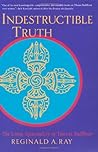
― Indestructible Truth: The Living Spirituality of Tibetan Buddhism
― Indestructible Truth: The Living Spirituality of Tibetan Buddhism
“According to the teachings of buddha nature, each of us possesses, at our very root and core, a profound and irresistible longing. This is nothing other than a longing to become fully and completely who we are, to experience ourselves and our lives, fully and freely, without doubt, reservation, or holding back. This final realization of ourselves is described as all-loving and powerful—we discover ourselves as everything that we need to be and, because of that, we become completely available to the world and its suffering beings, and discover utter trust and confidence in life.”
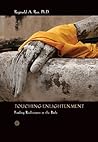
― Touching Enlightenment: Finding Realization in the Body
― Touching Enlightenment: Finding Realization in the Body
“Discursive thinking is basically a set of memories that we are now recycling as “us.” That’s why it’s such a problem. It’s coming from the past. We’ve picked it up from here, there, and everywhere. The only thing that is truly ours is the life that’s in our body that wants to unfold. Everything that we think, all our plans and all our values, all our projects, our self-image, our sense of personal identity—all of that is beside the point of what needs to happen right now.”
― Touching Enlightenment: Finding Realization in the Body
― Touching Enlightenment: Finding Realization in the Body
“Whatever arises in and through the body does so, as we have seen, in accordance with the operation of karma. Karma holds our locked-up awareness, the larger buddha nature, of which we are only partially aware. Whatever of our karmic totality has not made its way into conscious awareness abides in the body. At any given time, a certain aspect of that totality begins to press toward consciousness; the totality intends that this come to birth now. It might not be pressing toward awareness until just now because, before this moment, it was not ready to do so, having been held at some deep level of enfoldment. Again, it may not have appeared in consciousness because, though ready to emerge at a certain moment as a step in our development, we have resisted it and pushed it back into the body. Either way, at a certain point, there is a pressure from the body toward consciousness, to communicate whatever, in the mysterious timing of our existence, is needed or appropriate. If we resist what is appearing in the body, at the verge of our awareness—and most of us modern people do habitually resist in order to rigidly maintain ourselves—what is trying to arise is pushed back, denied, and again held at bay in the body. There it resides within the shadows of our somatic being, in an ever-increasing residue—as that which our consciousness is in the continual process of ignoring, resisting, and denying. Residing in the shadows, all those aspects of our totality that are being denied admittance into conscious awareness continue to function in a powerful but unseen way, being reflected in the nature, structure, and activity of our ego. This process roughly corresponds to the psychological concept of repression, but there are some important differences. For one thing, the activity of the ego in “repressing” experience is seen here as ultimately not negative, but dynamic and creative in function. In our life, the ego emerges out of the unconscious as the field of our conscious awareness, the immediate domain in which our experience can be received and integrated. At the same time, the ego moderates what it takes in, resisting that which it is unready and unable to receive. There is much intelligence in this. An ego that is too rigid and frozen cannot accommodate the experience that is needed in order for us to grow. But an ego that is simply overwhelmed and pushed aside by experience cannot integrate the needed experience either. Spirituality, it would seem, depends on an ego—a field of consciousness—that can change and grow with the needs of our journey toward wholeness. Thus it is that spirituality is not about “getting rid of” or obliterating the ego, but rather about enabling the ego into a process of openness, increasing experience, death, and rebirth, as it integrates more and more of the buddha nature and itself becomes more aligned with and in service to our own totality. A buddha is not a person who has eliminated or wiped away his or her ego, but someone in whom the ego has integrated so much that there is no longer any room for individual identity at all.”
― Touching Enlightenment: Finding Realization in the Body
― Touching Enlightenment: Finding Realization in the Body
“What we have to do is to become the damned—become that part of our self that has been rejected and cast out. We have to allow ourselves to enter whatever hell our despised experience has been cast into, taking on its full identity and reality, and its full human experience. Only when we are willing to do that is redemption possible. This, I think, is one of the profound insights of Christian spirituality. The example of Jesus shows us that only when we allow ourselves to fully experience the criminal, the condemned, the utterly banished and exiled within us, only when we are actually willing to surrender to and identify with all that darkness and all that hell, can salvation occur.”
― Touching Enlightenment: Finding Realization in the Body
― Touching Enlightenment: Finding Realization in the Body
“we find in the body an objective witness to our life that has no investment whatsoever in our skewed ego-versions of things. In addition, our Soma not only knows the truth of how it is with us, others, and the world, but it appreciates and, in a strange way, delights in everything. Even more, it wants to communicate this to us and provide mentoring. Our Soma is literally an infinite ocean of practical wisdom, and”
― The Awakening Body:: Somatic Meditation for Discovering Our Deepest Life
― The Awakening Body:: Somatic Meditation for Discovering Our Deepest Life
“For example, in the previously mentioned example of my leaving for work in a rush, being short with my wife, and then walking out with no further words, we can see that I am not relating with my experience in a complete way and that this is creating further karma. I am simply not present to the totality of my situation, of my feelings and my interactions with my wife. When I “rush,” I have disengaged; I am in a disembodied state. I am running from the painful feelings of my situation—of having gotten up late, not having left enough time to get ready, fearing being late for work—and from being with my wife, who looks for some basic level of decency and emotional presence from me. In my disembodied state, though the anxiety is coursing through my body, I am only dimly aware of feeling it. The anxiety has me by the throat, and I am trying to deal with it by ignoring it and everything it reflects. I do this by going faster and faster, as if I could outrun the situation and outrun my anxiety. So, driven by my fear, I am skimming the surface of my life, dropping my tube of toothpaste, leaving my pajamas on the floor (for my wife to pick up), stubbing my foot on the bedroom door, spilling my coffee, all capped off by being short with my wife. I am in a state of complete disembodiment and in such a mind of confusion that I am unconsciously acting as if being on time is of more consequence than respecting the tender and open feelings of my wife, my life partner and truest friend.”
― Touching Enlightenment: Finding Realization in the Body
― Touching Enlightenment: Finding Realization in the Body
“The body is now, I believe, our forest, our jungle, the “outlandish” expanse in which we are invited to let go of everything we think, allow ourselves to be stripped down to our most irreducible person, to die in every experiential sense possible and see what, if anything, remains.”
― Touching Enlightenment: Finding Realization in the Body
― Touching Enlightenment: Finding Realization in the Body
“THE BASIC LYING-DOWN POSTURE Begin by lying on your back on the floor or ground—a comfortable surface (firm, but not too hard)—with your knees up, your feet flat on the floor, and a yoga strap tied just above the knees. The strap should be tied tight enough so the knees are just touching or almost touching. We’re creating a triangle between the knees, the feet, and the floor, so that you can relax your thighs, lower back, and pelvic area. Your feet should be comfortably spread apart so that you feel stable and can fully relax. You may also want something supporting your head, such as a folded towel, a sweater, or a small pillow, to raise it slightly. Cross your hands at or over your lower belly with the left hand under the right hand, little fingers down toward the pubic bone, thumbs up toward the navel. This gathers your energy and awareness toward the core of the body. Feel the earth under you and let your body sink down as if into the earth. The more you can allow yourself to feel supported by the earth, the more fully you will be able to relax. Check the comfort of your position. You want to be really relaxed, so your body’s not being strained in any particular way. You should be holding yourself so you can completely relax the muscles in the lower back and the inner thighs and so there’s no effort of holding at all. You’re really relaxed: the triangle of your knees, two feet, and the floor should be very restful for you. Then, put your awareness in your body, and just let yourself continue to relax. Soon after you begin doing these practices, you’ll notice that any time you lie down in this way, in the same position with the intention to do body work, the body responds very quickly. This is the one time in our life when our body actually becomes the focus of attention. We’re not using the body for something else. We’re simply making a relationship with it as it is. It’s the only occasion when we ever do this, including in our sleep. The body begins to respond, to relax, to develop a sense of well-being, even in just taking this position. So just take a few minutes, and let your body completely relax. As you’re just lying there, you’ll notice that your body begins to let go. A muscle here, a muscle there, a tendon here, a joint there: it begins to release the tension in various places. It’s a very living situation. You might think, “Why am I here? There’s not much happening.” That’s not true at all. As long as you’re attentive and you put your awareness into your body, there’s a very dynamic, very lively process of relaxation that the body goes through. But you have to be present. You have to be in your body. You have to be intentionally and deliberately feeling your body for this to work.”
― Touching Enlightenment: Finding Realization in the Body
― Touching Enlightenment: Finding Realization in the Body
“Buddhism invites us to take seriously our entire human existence, to take everything in our life “as the path.” It proposes that everything that ever happens to us is part of our journey toward realization. There is finally nothing that leads us away, no possibility of true regression, no actual mistake; everything is learning, opening, and moving forward, even when the opposite seems to be the case.”
― Touching Enlightenment: Finding Realization in the Body
― Touching Enlightenment: Finding Realization in the Body
“If to be fully embodied means to be completely present and at one with who and what we are, then modern people are the most disembodied people who have ever lived, because we are not fully present to, or at one with, anything. We are always separate and separating, always trying to find what we seek somewhere else.”
― Touching Enlightenment: Finding Realization in the Body
― Touching Enlightenment: Finding Realization in the Body
“There is a dimension to the accumulation of merit that can only be called magical. We begin to exert ourselves in performing acts of kindness and love toward others. With the help of meditation, we begin to tone down some of our sharper and more aggressive edges. And strangely, the complexion of our world begins to change. We begin to find ourselves softer, more open, and more able to work our way through the extremes of our own self-absorption. And in the external world, we notice doors opening that had seemed firmly shut in the way of time, opportunities, and encouragement for practice. This change cannot be quantified. But it is also undeniable, as if the world had heard our attempts at helping others as itself a call for help; and as if the world responded with its own, much vaster outpouring of love.”
― Indestructible Truth: The Living Spirituality of Tibetan Buddhism
― Indestructible Truth: The Living Spirituality of Tibetan Buddhism
“Karma, then, is the arrangement of our life so that we learn. It is not some impersonal mechanism that just lands on us. In this sense, we go through everything we go through because something very deep within us requires it, in order for us to become who we ultimately are and need to be. It is, always, the ultimate reality of the universe flowing through us, being us, and coming to its own fruition in and through us.”
― Touching Enlightenment: Finding Realization in the Body
― Touching Enlightenment: Finding Realization in the Body
“we are attempting to practice meditation and to follow a spiritual path in a disembodied state, and this is inevitably doomed to failure.”
― Touching Enlightenment: Finding Realization in the Body
― Touching Enlightenment: Finding Realization in the Body
“Religious traditions are usually necessary for providing an understanding of our inborn potential and for showing us how to realize it. But when they claim proprietary ownership of that which we seek, they betray themselves and get in our way.”
― Touching Enlightenment: Finding Realization in the Body
― Touching Enlightenment: Finding Realization in the Body
“In Buddhist philosophy, the “holding tank” that the body represents is called the alaya, the universal unconscious. As the unconscious, the body holds all the karmic seeds that we ourselves have sown and that must, on our journey to realization, eventually ripen into the light of consciousness to be fully engaged, felt, and thus worked through and completed.”
― Touching Enlightenment: Finding Realization in the Body
― Touching Enlightenment: Finding Realization in the Body
“We have a wild, passionate, rampant ; for experience, for being alive, for the tasting and touching of our world. It is completely unhinged. It’s reckless, this love we have.”
―
―
“Because who we ultimately are is an open, ongoing, and finally ineffable process, the buddha nature is described as “empty”: it does not possess any invariable, definable marks or characteristics. It is, we might say, the darkness or mystery that is continually unfolding as our life. As mentioned, the buddha nature is behind everything that happens, and needs to happen, on our journey. Whatever happens to us, and within us, is the expression of the buddha nature, pushing us forward in our own unfolding. There is nothing in our life or experience that is outside of it. The buddha nature thus may be referred to as the “totality.” As we progress along the path to our own self-discovery, our awakening and realization, our relationship with “our” buddha nature naturally develops and matures, and this relationship is ultimately “engineered” by the buddha nature itself.”
― Touching Enlightenment: Finding Realization in the Body
― Touching Enlightenment: Finding Realization in the Body
“From the Nyingma perspective, without emphasis on realization in this life, Buddhism will produce good people but not awakened saints. Thus their critique of a life consisting primarily of study and ethical behavior: when a religion is composed only of “good” and learned people without the freedom, wildness, and accuracy of awakened ones, it can become stuck.”
― Indestructible Truth: The Living Spirituality of Tibetan Buddhism
― Indestructible Truth: The Living Spirituality of Tibetan Buddhism
“To approach the world by objectifying it, to reside mainly in the head, is to put ourselves in a position of domination, mastery, and control. We domesticate the world by filtering it through our concepts, and this enables us to own and possess it, to make it subservient to our agendas and wants.”
― Touching Enlightenment: Finding Realization in the Body
― Touching Enlightenment: Finding Realization in the Body
“In other words, our spiritual journey occurs not in spite of the ambiguous and problematic experience of our actual life but because of it.”
― The Awakening Body:: Somatic Meditation for Discovering Our Deepest Life
― The Awakening Body:: Somatic Meditation for Discovering Our Deepest Life
“The process of meditation involves gradually shedding our multitude of opinions-built-upon-opinions of how things are, and becoming more and more aware of the literal, non-conceptual substratum of all our thinking—the substratum which is reality itself.”
― Touching Enlightenment: Finding Realization in the Body
― Touching Enlightenment: Finding Realization in the Body
“It has been estimated that out of every million parts of information received and processed by our body, we humans only admit thirteen parts into our conscious awareness. That means we only allow ourselves to be conscious of .000013 percent of the data, of experience, known to our body. That”
― The Awakening Body:: Somatic Meditation for Discovering Our Deepest Life
― The Awakening Body:: Somatic Meditation for Discovering Our Deepest Life
“As understood in Tibet, the king’s particular function is to join heaven and earth. Heaven refers to the sphere of spiritual truth and reality, including the world of unseen beings as well as the realm of ultimate reality itself. Earth is the realm of practicality. The king, then, is supposed to provide the connecting link, bringing spiritual reality down and making it real in this world. He is to rule over human society in such a way that it reflects and respects “the ways things are” in the largest sense. Tibetans say that their first kings originated in the mists of prehistory. Originally, these rulers were sacred beings who came from heaven and returned there at the end of their lives.”
― Indestructible Truth: The Living Spirituality of Tibetan Buddhism
― Indestructible Truth: The Living Spirituality of Tibetan Buddhism