Goodreads helps you follow your favorite authors. Be the first to learn about new releases!
Start by following David VanDrunen.

Showing 1-22 of 22
“Believers themselves are the point of continuity between creation and the new creation.”
― Living in God's Two Kingdoms: A Biblical Vision for Christianity and Culture
― Living in God's Two Kingdoms: A Biblical Vision for Christianity and Culture
“Christians should pursue cultural activities not with a spirit of triumph and conquest over their neighbors but with a spirit of love and service toward them. Far too often Christian writers and leaders imbue their audience with a drive to take over- to take over politices, education, the courts, and whatever else or maybe it is put in more platable terms such as taking back instead of taking over as if Christians are the rightful owners of everything and are simply reclaiming what is already theirs.”
― Living in God's Two Kingdoms: A Biblical Vision for Christianity and Culture
― Living in God's Two Kingdoms: A Biblical Vision for Christianity and Culture
“This two-kingdoms doctrine strongly affirms that God has made all things, that sin corrupts all aspects of life, that Christians should be active in human culture, that all lawful cultural vocations are honorable, that all people are accountable to God in every activity, and that Christians should seek to live out the implications of their faith in their daily vocations. A Christian, however, does not have to adopt a redemptive vision of culture in order to affirm these important truths.”
― Living in God's Two Kingdoms: A Biblical Vision for Christianity and Culture
― Living in God's Two Kingdoms: A Biblical Vision for Christianity and Culture
“God is not redeeming the cultural activities and institutions of this world, but is preserving them through the covenant he made with all living creatures through Noah in Genesis 8:20–9:17.”
― Living in God's Two Kingdoms: A Biblical Vision for Christianity and Culture
― Living in God's Two Kingdoms: A Biblical Vision for Christianity and Culture
“...I begin with three features of Calvin's thought that highlight the preeminence of the church in his theology. First, Calvin asserted the right of the church to regulate its own discipline and government...Second, Calvin had a high view of the ministry of word and sacrament in the church...Third, Calvin in accord with his doctrine of the two kingdoms, identified the church alone with the spiritual kingdom of Christ”
― Always Reformed: Essays in Honor of W. Robert Godfrey
― Always Reformed: Essays in Honor of W. Robert Godfrey
“Our earthly bodies are the only part of the present world that Scripture says will be transformed and taken up into the world-to-come. Believers themselves are the point of continuity between this creation and the new creation. The New Jerusalem is the bride of Christ (Rev. 21:2). Asserting that anything else in this world will be transformed and taken up into the world-to-come is speculation beyond Scripture.”
― Living in God's Two Kingdoms: A Biblical Vision for Christianity and Culture
― Living in God's Two Kingdoms: A Biblical Vision for Christianity and Culture
“The Reformers established a trajectory that will surely not lead us astray. Against the perennial temptation to elevate our own words above God’s and to pursue everlasting life by our own deeds, the Reformers called the church back to Scripture alone, to faith alone, to grace alone, and to Christ alone, and by so doing they reminded us that all glory belongs to God and not to ourselves.”
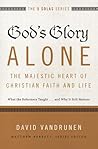
― God's Glory Alone---The Majestic Heart of Christian Faith and Life: What the Reformers Taught...and Why It Still Matters
― God's Glory Alone---The Majestic Heart of Christian Faith and Life: What the Reformers Taught...and Why It Still Matters
“When discussing God’s glory, Bavinck draws together many of the themes we have observed in previous pages: The ‘glory of the Lord’ is the splendor and brilliance that is inseparably associated with all of God’s attributes and his self-revelation in nature and grace, the glorious form in which he everywhere appears to his creatures. This glory and majesty . . . appeared to Israel . . . It filled the tabernacle and the temple . . ., and was communicated to all the people. . . . This glory is above all manifested in Christ, the only-begotten Son . . . and through him in the church . . ., which is looking for ‘the blessed hope and the manifestation of the glory of our great God and Savior, Jesus Christ (Titus 2:13).17”
― God's Glory Alone---The Majestic Heart of Christian Faith and Life: What the Reformers Taught...and Why It Still Matters
― God's Glory Alone---The Majestic Heart of Christian Faith and Life: What the Reformers Taught...and Why It Still Matters
“Until that day of ultimate fulfillment, the covenant of grace and the redemptive kingdom find their penultimate fulfillment in the church of the Lord Jesus Christ. When Christ came, he did not establish the state, or the family, or a school, or a business venture. These things already existed and were governed and preserved under the covenant with Noah. The Lord Jesus Christ established one thing: his church.”
― Living in God's Two Kingdoms: A Biblical Vision for Christianity and Culture
― Living in God's Two Kingdoms: A Biblical Vision for Christianity and Culture
“Such rich features of Calvin's ecclesiology highlight how his work of reform was in large respect a reform of ecclesiastical culture. One can only imagine how differently the citizen of Geneva must have experienced the church before and after its reformation. Under Calvin's vision, as implemented in Geneva, Christianity now entailed a very different kind of worship, a very different place of word and sacraments, a very different idea of ecclesiastical discipline, and a very different conception of ecclesiastical government. This was a reformed Christianity, and a reformed Christianity meant a reformed church.”
― Always Reformed: Essays in Honor of W. Robert Godfrey
― Always Reformed: Essays in Honor of W. Robert Godfrey
“This notion of the centrality of the church...could hardly be more pertinent to the perennial question of "Christian culture" and our evaluation of the great figures such as Calvin and Kuyper. Hearing the words "Christian culture" may evoke visions of godly emperors, medieval Madonnas, or Bach cantatas. None of which are really about the church. Or perhaps the phrase "Christian culture" resonates with contemporary Reformed buzzwords like "world and life view," "transformation," and "kingdom vision"---all of which, I fear, are often enlisted in the service of convincing Reformed youth that it is a mistake to think of the church as central to the Christian life.”
― Always Reformed: Essays in Honor of W. Robert Godfrey
― Always Reformed: Essays in Honor of W. Robert Godfrey
“Christ alone, and no other redeemer, is the mediator of our salvation. Grace alone, and not any human contribution, saves us. Faith alone, and no other human action, is the instrument by which we’re saved. Scripture, and no merely human word, is our ultimate standard of authority. God’s glory alone, and that of no creature, is the supreme end of all things.”
― God's Glory Alone---The Majestic Heart of Christian Faith and Life: What the Reformers Taught...and Why It Still Matters
― God's Glory Alone---The Majestic Heart of Christian Faith and Life: What the Reformers Taught...and Why It Still Matters
“Though Kuyper's views on special and common grace and sphere sovereignty are a source of difficult questions about the broader "Christian culture" issue, it is important to note that they also underline important aspects of his ecclesiology. Kuyper believed that common grace, under the lordship of the eternal Son of God, preserved this world with its natural activities and institutions. Special grace, on the other hand, under the lordship of the incarnate Son of God, bestowed saving blessing and thereby ushered in something new. The ministry of the saving grace belong particularly to the institutional church and its means of grace. The idea of sphere sovereignty, for Kuyper, indicated that the authority and activity of the church has a monopoly , as it were, over its distinctive work of ministering special , saving, recreating grace to god's people through its word, sacraments, government, and discipline. Kuyper's terms and categories may have been innovative, bu the larger idea of the church's preeminence in the outworking of Christ's redemptive work should have been familiar to those nurtured in the Reformed tradition.”
― Always Reformed: Essays in Honor of W. Robert Godfrey
― Always Reformed: Essays in Honor of W. Robert Godfrey
“This is absolutely essential for issues of Christianity and culture! If Christ is the last Adam, then we are not new Adams. To understand our own cultural work as picking up and finishing Adam’s original task is, however unwittingly, to compromise the sufficiency of Christ’s work.”
― Living in God's Two Kingdoms: A Biblical Vision for Christianity and Culture
― Living in God's Two Kingdoms: A Biblical Vision for Christianity and Culture
“The New Testament announces that until this covenant of grace comes to ultimate fulfillment in the new heaven and new earth, it finds penultimate fulfillment in the work of Christ and his church. The church, united to Christ its Savior, is the covenant community that reaps the benefits of Christ’s work in fulfilling the promises made to Abraham. In the present day the church, and no other institution, can claim this privilege. The church is the community where salvation and eternal life are bestowed.”
― Living in God's Two Kingdoms: A Biblical Vision for Christianity and Culture
― Living in God's Two Kingdoms: A Biblical Vision for Christianity and Culture
“The glory of God dwelled among us, yet “he had no beauty or majesty to attract us to him, nothing in his appearance that we should desire him. . . . Like one from whom people hide their faces he was despised, and we held him in low esteem” (Isa 53:2–3).”
― God's Glory Alone---The Majestic Heart of Christian Faith and Life: What the Reformers Taught...and Why It Still Matters
― God's Glory Alone---The Majestic Heart of Christian Faith and Life: What the Reformers Taught...and Why It Still Matters
“Instead, Jesus explains that his kingdom is about forgiveness, reconciliation, and restoration”
― Living in God's Two Kingdoms: A Biblical Vision for Christianity and Culture
― Living in God's Two Kingdoms: A Biblical Vision for Christianity and Culture
“Here, then, is a major clue as to what Christian life in the two kingdoms ought to look like today. Abraham and his descendants were “sojourners” and “strangers” (Gen. 12:10; 15:13; 20:1; 21:34; 23:4; Heb. 11:13), precisely what Christians today are called to be (1 Pet. 2:11). As participants in the Noahic covenant, they joined in cultural activities with their pagan neighbors in the common kingdom. As participants in the Abrahamic covenant, they were simultaneously citizens of the redemptive kingdom, remaining radically separate from their neighbors in their religious commitment as they trusted in the true God for justification (Gen. 15:6) and eternal life (Heb. 11:13–16).”
― Living in God's Two Kingdoms: A Biblical Vision for Christianity and Culture
― Living in God's Two Kingdoms: A Biblical Vision for Christianity and Culture
“In this essay I reflect upon this topic of Christian culture in its relation to the church founded by our Lord Jesus Christ and to the heritage and future of the Reformed Christianity so energetically championed by Calvin and Kuyper. Contrary to much contemporary Reformed wisdom--though consistent, I believe, with the spirit of what I learned from Bob Godfrey--I suggest that we have good biblical reason to speak of "Christian culture" with respect to the church and to reassert boldly the preeminence of the church for our understanding of Christian piety. A consideration of Calvin and Kuyper compels us to ponder whether we are seeking a Christianity that is primarily of our own extrapolation (in our cultural endeavors of commerce, art, science, etc.) or that is primarily of Christ's own giving (in the life, ministry, and worship of the church). The better answer, I argue, is the latter.”
― Always Reformed: Essays in Honor of W. Robert Godfrey
― Always Reformed: Essays in Honor of W. Robert Godfrey
“Mike Horton, Lance Kinzer,”
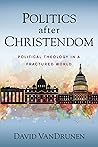
― Politics after Christendom: Political Theology in a Fractured World
― Politics after Christendom: Political Theology in a Fractured World
“Before the second Adam no one accomplished the task of the first Adam, and after the second Adam no one needs to accomplish it. The last Adam has completed it once and for all. Christians will attain the original destiny of life in the world-to-come, but we do so not by picking up the task where Adam left off but by resting entirely on the work of Jesus Christ, the last Adam who accomplished the task perfectly.”
― Living in God's Two Kingdoms: A Biblical Vision for Christianity and Culture
― Living in God's Two Kingdoms: A Biblical Vision for Christianity and Culture
“Few things are more important for the two-kingdoms doctrine than a proper view of the kingdom of God that Jesus announced. In this chapter I will defend a crucial claim: the church is the only institution or community in the present world that can be identified with the kingdom proclaimed by Christ. In the work of Christ and the establishment of the church, God has brought the covenant with Abraham and the redemptive kingdom to penultimate fulfillment.”
― Living in God's Two Kingdoms: A Biblical Vision for Christianity and Culture
― Living in God's Two Kingdoms: A Biblical Vision for Christianity and Culture