Goodreads helps you follow your favorite authors. Be the first to learn about new releases!
Start by following Robert P. Crease.

Showing 1-10 of 10
“In the ancient and medieval world, the exploration of physical influences among heavenly bodies, and between the heavenly bodies and objects on earth, was generally called ‘astrology.’ But we must not confuse this with the current socially acceptable form of bigotry that seems to entitle the human beings who believe in it to prejudge the character of others based solely on their dates of birth.”
― The Great Equations: Breakthroughs in Science from Pythagoras to Heisenberg
― The Great Equations: Breakthroughs in Science from Pythagoras to Heisenberg
“Nature and Nature’s Laws lay hid in Night; God said “Let Newton be!” and All was Light.”
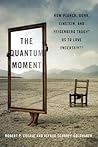
― The Quantum Moment: How Planck, Bohr, Einstein, and Heisenberg Taught Us to Love Uncertainty
― The Quantum Moment: How Planck, Bohr, Einstein, and Heisenberg Taught Us to Love Uncertainty
“(Conviction, Nietzsche said, is a greater enemy of truth than lies.)”
― The Great Equations: Breakthroughs in Science from Pythagoras to Heisenberg
― The Great Equations: Breakthroughs in Science from Pythagoras to Heisenberg
“What can we know? How we should act? What might we hope for?”
― The Quantum Moment: How Planck, Bohr, Einstein, and Heisenberg Taught Us to Love Uncertainty
― The Quantum Moment: How Planck, Bohr, Einstein, and Heisenberg Taught Us to Love Uncertainty
“We will never stop being discontent, never stop anticipating, never stop organizing inquiry. Science could not happen in any other way, or it would be trivial or impossible.”
― The Great Equations: Breakthroughs in Science from Pythagoras to Heisenberg
― The Great Equations: Breakthroughs in Science from Pythagoras to Heisenberg
“Trust made the discrepancy meaningful, and directed his suspicion to the right place. This was not the first time that trust played a central role in a major scientific discovery, nor will it be the last.”
― The Great Equations: Breakthroughs in Science from Pythagoras to Heisenberg
― The Great Equations: Breakthroughs in Science from Pythagoras to Heisenberg
“Modern astrologers seem strangely untroubled by, and even ignorant of, the fact that constellations do not come in neat packages— and that the sun and planets pass by them, and sometimes by entirely different constellations, at different times than confidently asserted by the dates given in newspaper horoscopes. Someone ought to file a malpractice claim.”
― The Great Equations: Breakthroughs in Science from Pythagoras to Heisenberg
― The Great Equations: Breakthroughs in Science from Pythagoras to Heisenberg
“Foucault calculated that the number of degrees through which the pendulum’s plane of oscillation would shift in twenty-four hours would be 360 degrees times the sine of the latitude—which thus provided a way to determine the person’s north-south location on the globe.”
― The Prism and the Pendulum: The Ten Most Beautiful Experiments in Science
― The Prism and the Pendulum: The Ten Most Beautiful Experiments in Science
“It has the funny kind of incomplete, semiabstract reality that scripts or scores have—they are programs, as it were, for real things in the world (the produced play, the performed music) that require adding a context, and decisions about that context affect the whole of the abstract object.”
― The Great Equations: Breakthroughs in Science from Pythagoras to Heisenberg
― The Great Equations: Breakthroughs in Science from Pythagoras to Heisenberg
“He never become a true professional, though, and fell into traps of the sort that enthusiastic amateurs often do. These included pursuing impossible problems like trying to square the circle, trisect an angle, and double a cube, each of which Hobbes erroneously thought he had achieved.”
― The Great Equations: Breakthroughs in Science from Pythagoras to Heisenberg
― The Great Equations: Breakthroughs in Science from Pythagoras to Heisenberg