Goodreads helps you follow your favorite authors. Be the first to learn about new releases!
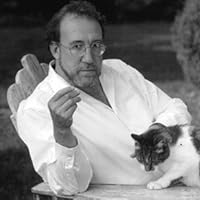
Start by following Richard Ben Cramer.
Showing 1-30 of 42
“It's like a drug, the feeling you could make a difference....”
―
―
“The white men on the Brinkley set were trying not to grin, like cheap lawyers at a ten-car pileup: Uh, did that mean Senator Dole didn’t think all the facts were out? Didn’t he believe the White House, that North and Poindexter were the only ones who knew? The Bobster dropped an eyebrow and rasped: “Aghh, don’t think Ripley’d believe that.”
― What It Takes: The Way to the White House
― What It Takes: The Way to the White House
“Kennebunkport, all the “cottages,” and Walker’s Point in particular, had to do with America’s substitute for class—that is, money and power. The stern gentlemen in their wing collars and boater hats who built these oceanfront mansions were not the idle rich of their day. They were men of big works and large affairs ... they’d catch the State o’ Maine sleeper Friday night from New York and, forty-eight hours later, they’d kiss their children goodbye again for the overnight trip back to Wall Street or midtown. Kennebunkport was their creation, for lives of the most rapacious striving.”
― What It Takes: The Way to the White House
― What It Takes: The Way to the White House
“Anyway, the job didn’t call for deep thinking: if you thought too much, brought your insight and intellect to bear on the problems of the nation, you’d get out front of the President, or worse still, off to the side. That’s the surest way down the trash chute in the White House. There’s only one question that the Vice President needs to ask: “What’s the President saying on this?” Anything else is begging for trouble, and George Bush had brains enough to figure that out.”
― What It Takes: The Way to the White House
― What It Takes: The Way to the White House
“The fact was, the Senate’s “advise and consent” was intended, from the start, to forestall the President from remaking the Court in his image. The Senate had, for most of its two hundred years, scrutinized the philosophy and politics of nominees—not just their competence, or honesty. And when a President picked a justice for reasons of ideology, it was the Senate’s duty to examine that ideology.”
― What It Takes: The Way to the White House
― What It Takes: The Way to the White House
“That’s what made it worse, in the end ... when he found out. Nixon had lied to him, personally.”
― What It Takes: The Way to the White House
― What It Takes: The Way to the White House
“And he got to this woman, came up from behind ... (“So, folks, look me over. If you like what you see ...”) and gently, but decidedly, he put his hands on her. In Council Bluffs, Iowa! He got both hands onto her shoulders, while he talked to the crowd over her head, like it was her and him, through thick and thin.”
― What It Takes: The Way to the White House
― What It Takes: The Way to the White House
“with loyalty oaths waving as weapons in the hands of the know-nothing right, the values of liberal education seemed to hang in the balance in 1952.”
― What It Takes: The Way to the White House
― What It Takes: The Way to the White House
“The ministerial students were the worst—they were maybe one-third to one-half of each class, and this was their trade school. They came to learn the right words, all the proper formulae ... which they wrote down and memorized from the lectures of their profs.”
― What It Takes: The Way to the White House
― What It Takes: The Way to the White House
“Father Diny interrupted to tell Joe a story about the World War II pilot with this slogan on his plane: Non illegitimi carborundum. Biden looked at him quizzically ... he didn’t remember much Latin. “Loosely translated,” Father Diny continued, “it means: Don’t let the bastards get you down.”
― What It Takes: The Way to the White House
― What It Takes: The Way to the White House
“And, together, we can make America great, and strong again.”
― What It Takes: The Way to the White House
― What It Takes: The Way to the White House
“Anyway, there were no bigger fans in town than Chet and Bub Dawson. (Chet was a diehard K-State fan. He’d claim: “If KU was playin’ Russia, I’d root for Russia.”)”
― What It Takes: The Way to the White House
― What It Takes: The Way to the White House
“And there’d be no point: Why would he give his life over to this, if it were not for the notion that he could do something great?”
― What It Takes: The Way to the White House
― What It Takes: The Way to the White House
“And Bush knew he had to keep it up to the end not just blood-roar, but the full measure, till the cup was dry, till he, too, was brainless. The system demanded totality. That's why this system of picking the chief retained its defenders, who'd concede right away that it was long-horrible, in fact; it cheapened the issues, or ignored them; it dumbed down the dialogue to noise; it was spendthrift, exhausting, hurtful, and it savaged its protagonists... that's why the savants would get those dreamy looks at the end of the talk shows, and say it wasn't such a bad way to pick a President–a stress test that was a match for the job. In the end, we have only one nonnegotiable demand for a President, the man we hire to watch the world at our backs: that is totality. We may differ on our seven-point plans for child care, the six-hundred-ship Navy, one-man-one-vote for Namibia. But every adult in the country knows instinctively: that job in the White House is brutal, and the bastard who gets it works for us. We will not allow anything to be put ahead of it-not friends, family, nor certainly rosy self-regard... nor ease, restoration of self-forget it! Gary Hart admitted adultery and asked us to forgive his sin. But unforgivable was his assumption that he was supposed to have any life "outside." Whatever he did with that lovely girl, he put his enjoyment ahead of our good opinion, and he was erased from consideration. He would not concede that his life was our chattel.”
― What It Takes: The Way to the White House
― What It Takes: The Way to the White House
“Anyway, everybody was busy writing serious-minded feminist nosebleed on Mrs. Dole’s “controversial” resignation. The idea was that we should all (harrrumph!) ... examine the assumptions of a society where a (umph! umph!) woman ... would give up her job in the Cabinet of the United States ... to help her (hocchhh!) HUSBAND! What about HER CAREER? What all the earnest anguish ignored was that Bob was much more a part of her career than the next report on the next airliner to blow up in the sky over Pascagoula ... that Elizabeth Dole would no more drop her career than would Bob Dole (or Barbara Bush) ... that she was making a career decision ... and anyone who did not know that being wife to the President of the United States is a better and more powerful job than being Secretary of Transportation was too dumb to work for government—though, alas, not too dumb to write for magazines.”
― What It Takes: The Way to the White House
― What It Takes: The Way to the White House
“GEORGE BUSH WAS HAVING a snowball fight with the press in a parking lot outside the Clarion.”
― What It Takes: The Way to the White House
― What It Takes: The Way to the White House
“Once, on the phone, Hart asked what I thought about the "business with Tower." I answered with my newest, hottest, wise-guy whispers about two Senators, two votes, that Bush could turn around-just a phone call ... but he wouldn't play hardball!
There was silence on the phone, until Hart said, in a tone reserved for worms: "You gave me a Washington answer." Of course, it came clear instantly: Hart saw the Tower mess as the government's, the nation's, bitter harvest ... poisoned... by the same blight that ruined him. Hart thought the sickness stemmed from a dangerous fallacy—Americans think they can know (have a right to know!) everything about their leaders. But that certainty of knowledge is not available. People can't be tied down, reduced to facts. More dangerous still, politicians try to toe the line. Hart quoted, from his friend Warren Beatty: "When forced to show all, people become all show.”
― What It Takes: The Way to the White House
There was silence on the phone, until Hart said, in a tone reserved for worms: "You gave me a Washington answer." Of course, it came clear instantly: Hart saw the Tower mess as the government's, the nation's, bitter harvest ... poisoned... by the same blight that ruined him. Hart thought the sickness stemmed from a dangerous fallacy—Americans think they can know (have a right to know!) everything about their leaders. But that certainty of knowledge is not available. People can't be tied down, reduced to facts. More dangerous still, politicians try to toe the line. Hart quoted, from his friend Warren Beatty: "When forced to show all, people become all show.”
― What It Takes: The Way to the White House
“No one in his family could remember talking about it. Must have been dreadful, they agreed. And, being Walkers, and Bushes, they didn't bring it up.
It was only years later, when he got into politics and had to learn to retail bits of his life, that he ever tried to put words around the war.
His first attempts, in the sixties, were mostly about the cahm-rah-deree and the spirit of the American Fighting Man. The Vietnam War was an issue then, and Bush was for it. (Most people in Texas were.) He said he learned "a lot about life" from his years in the Navy—but he never said what the lessons were.
Later, when peace was in vogue, Bush said the war had "sobered" him with a grave understanding of the cost of conflict—he'd seen his buddies die. The voters could count on him not to send their sons to war, because he knew what it was.
Still later, when he turned Presidential prospect, and every bit of his life had to be melted down to the coin of the realm–character–Bush had to essay more thoughts about the war, what it meant to him, how it shaped his soul. But he made an awful hash of it, trying to be jaunty. He told the story of being shot down. Then he added: "Lemme tell ya, that'll make you start to think about the separation of church and state .
Finally, in a much-edited transcript of an interview with a minister whom he hired as liaison to the born-again crowd, Bush worked out a statement on faith and the war: something sound, to cover the bases. It wasn't foxhole Christianity, and he couldn't say he saw Jesus on the water—no, it was quieter than that.... But there, on the Finback, he spent his time standing watch on deck in the wee hours, silent, reflective, under the bright stars...
"It was wonderful and energizing, a time to talk to God.
"One of the things I realized out there all alone was how much family meant to me. Having faced death and been given another chance to live, I could see just how important those values and principles were that my parents had instilled in me, and of course how much I loved Barbara, the girl I knew I would marry…”
That was not quite how he was recalled by the men of the Finback. Oh, they liked him: a real funny guy. And they gave him another nickname, Ellie. That was short for Elephant. What they recollected was Bush in the wardroom, tossing his head and emitting on command the roaring trumpeted squeal of the enraged pachyderm; it was the most uncanny imitation of an elephant.
Nor were "sobered" or "reflective" words that leapt to Bar's mind when she remembered George at that time. The image she recalled was from their honeymoon, when she and George strolled the promenades, amid the elderly retirees who wintered at that Sea Island resort. All at once, George would scream "AIR RAID! AIR RAID!" and dive into the shrubs, while Bar stood alone and blushing on the path, prey to the pitying glances of the geezers who clucked about "that poor shell-shocked young man."
But there was, once, a time when he talked about the war, at night, at home, to one friend, between campaigns, when he didn't have to cover any bases at all.
"You know," he said, "it was the first time in my life I was ever scared.
"And then, when they came and pulled me out ..." (Him, Dottie Bush's son, out of a million miles of empty ocean!)
"Well." Bush trailed off, pleasantly, just shaking his head.”
― What It Takes: The Way to the White House
It was only years later, when he got into politics and had to learn to retail bits of his life, that he ever tried to put words around the war.
His first attempts, in the sixties, were mostly about the cahm-rah-deree and the spirit of the American Fighting Man. The Vietnam War was an issue then, and Bush was for it. (Most people in Texas were.) He said he learned "a lot about life" from his years in the Navy—but he never said what the lessons were.
Later, when peace was in vogue, Bush said the war had "sobered" him with a grave understanding of the cost of conflict—he'd seen his buddies die. The voters could count on him not to send their sons to war, because he knew what it was.
Still later, when he turned Presidential prospect, and every bit of his life had to be melted down to the coin of the realm–character–Bush had to essay more thoughts about the war, what it meant to him, how it shaped his soul. But he made an awful hash of it, trying to be jaunty. He told the story of being shot down. Then he added: "Lemme tell ya, that'll make you start to think about the separation of church and state .
Finally, in a much-edited transcript of an interview with a minister whom he hired as liaison to the born-again crowd, Bush worked out a statement on faith and the war: something sound, to cover the bases. It wasn't foxhole Christianity, and he couldn't say he saw Jesus on the water—no, it was quieter than that.... But there, on the Finback, he spent his time standing watch on deck in the wee hours, silent, reflective, under the bright stars...
"It was wonderful and energizing, a time to talk to God.
"One of the things I realized out there all alone was how much family meant to me. Having faced death and been given another chance to live, I could see just how important those values and principles were that my parents had instilled in me, and of course how much I loved Barbara, the girl I knew I would marry…”
That was not quite how he was recalled by the men of the Finback. Oh, they liked him: a real funny guy. And they gave him another nickname, Ellie. That was short for Elephant. What they recollected was Bush in the wardroom, tossing his head and emitting on command the roaring trumpeted squeal of the enraged pachyderm; it was the most uncanny imitation of an elephant.
Nor were "sobered" or "reflective" words that leapt to Bar's mind when she remembered George at that time. The image she recalled was from their honeymoon, when she and George strolled the promenades, amid the elderly retirees who wintered at that Sea Island resort. All at once, George would scream "AIR RAID! AIR RAID!" and dive into the shrubs, while Bar stood alone and blushing on the path, prey to the pitying glances of the geezers who clucked about "that poor shell-shocked young man."
But there was, once, a time when he talked about the war, at night, at home, to one friend, between campaigns, when he didn't have to cover any bases at all.
"You know," he said, "it was the first time in my life I was ever scared.
"And then, when they came and pulled me out ..." (Him, Dottie Bush's son, out of a million miles of empty ocean!)
"Well." Bush trailed off, pleasantly, just shaking his head.”
― What It Takes: The Way to the White House
“Even a year later, Bush remarked to a friend, with uncharacteristic bluntness: “I wouldn’t care if I never see Richard Nixon again.”
― What It Takes: The Way to the White House
― What It Takes: The Way to the White House
“In fact, Reagan couldn’t remember his grandchildren’s names, and he had no friends, only the husbands of Nancy’s friends.”
― What It Takes: The Way to the White House
― What It Takes: The Way to the White House
“Yeah, they told me, just be yourself ... so I did. Maybe that was the problem.”
― What It Takes: The Way to the White House
― What It Takes: The Way to the White House
“A Governor could make all the difference in a state: KEAN: BUSH VISIT MEANS N.J. HAS A FRIEND IN WHITE HOUSE That would be the headline from Trenton, if the Governor, like Tom Kean, was a friend who’d billboard Bush’s day in the Garden State—his visit to that toxic-waste cleanup site, all the help he’d offered on that Superfund. ... Of course, if the Governor wasn’t a friend, then his appointed State Police Chief might find time to take a couple of press calls. ... That would be a different headline: BUSH VISIT WILL COST $200,000 IN OVERTIME”
― What It Takes: The Way to the White House
― What It Takes: The Way to the White House
“(Wide open! Some of these North Dakota towns made Russell, Kansas, look urban.)”
― What It Takes: The Way to the White House
― What It Takes: The Way to the White House
“Couple of weeks back, he was up in New Hampshire—nighttime, a living room, late already and it wasn’t the last event—and some guy stood up and asked Joe about his education. Not his education plan ... his own goddam education, like he wanted to make sure Biden went to college. Anyway, that’s how Joe heard it ... and he blew: he started yelling how he’d graduated with three degrees, went to law school on scholarship, clawed his way up from the bottom of his class—or some bullshit—he offered to compare IQs ... all with the chin out, the hectoring voice, like ... I may be stupid, but I’m Einstein next to you! ... And Ruthie Berry and Jill, who were sitting, resting, in the next room, had to scurry in and steer Joe out of there.”
― What It Takes: The Way to the White House
― What It Takes: The Way to the White House
“Well, there never was a county attorney like Bob Dole. People said it was probably because he had a question in his own mind-- could he do it-- that he worked so hard. There never was a time that he wasn't working.”
― What It Takes: The Way to the White House
― What It Takes: The Way to the White House
“In the bad old seventies, when Mondale was Veep, and the government still worried about things like fuel and noise, the Vice President flew on small, efficient DC-9S.”
― What It Takes: The Way to the White House
― What It Takes: The Way to the White House
“--America’s substitute for class—that is, money and power.”
― What It Takes: The Way to the White House
― What It Takes: The Way to the White House
“Of course, that made the papers, too. Well, what of it? ... He didn’t say the guy’s name! ... Gaghhd! Come on! What had the guy ever done—that hadn’t been handed to him? ... Dole never could figure what they saw in George Bush.”
― What It Takes: The Way to the White House
― What It Takes: The Way to the White House
“Then he dipped his finger into Dole’s shredded jacket, and with Dole’s blood traced an “M” on his forehead. That’d let the medics know he’d had a shot—another would kill him, overdose ... if a medic ever got there ... if McBryar could spot one”
― What It Takes: The Way to the White House
― What It Takes: The Way to the White House
“People in this country look at politicians like doctors–solve the problem.." That's the way Dick talked about his discovery. "They don't really know about the gall bladder. so they want to know something about the doctor."
This wasn't like his other campaigns. It was not just more doorsteps–this was something else. He would have to be something else. There were millions of people out there, going to pick their President. It didn't matter how hard Dick worked—he was not going to lock the baby blues on their faces and listen to them all. They weren't going to get in a room with Dick and figure out what they wanted to do. They wanted one guy, at the front of the room, to tell them what they were going to do, at least, what he meant to do.”
― What It Takes: The Way to the White House
This wasn't like his other campaigns. It was not just more doorsteps–this was something else. He would have to be something else. There were millions of people out there, going to pick their President. It didn't matter how hard Dick worked—he was not going to lock the baby blues on their faces and listen to them all. They weren't going to get in a room with Dick and figure out what they wanted to do. They wanted one guy, at the front of the room, to tell them what they were going to do, at least, what he meant to do.”
― What It Takes: The Way to the White House