Goodreads helps you follow your favorite authors. Be the first to learn about new releases!
Start by following Bill Whitten.

Showing 1-4 of 4
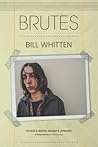
“It was a painting of the unfolding of time. Time was merely another color in the painter’s palette. Rudoph II once owned it. Its shapes sang to him. Exhausted men swung scythes, women carried bundles in the distance. On a hillside covered in chest-high, golden wheat, the peasants carried out tasks they had performed a thousand times. The sky was yellow with light. The painting, almost a manual on how to harvest, had neither beginning nor end. Jason had stood before it one hundred times and assumed that the secret to his own existence could be revealed if he approached it from the right angle. At other times he felt the painting was suffocating, monstrous. It was a hymn to death: the infinity of the barren sky, the corporeality of the peasants, the cut wheat on the ground, waiting for workers to bind it. He imagined the painter, brush stroking the wooden panel, believed himself capable of seeing the entirety of the universe.”
― Brutes
― Brutes
“In my experience, love was like an unstable republic; regimes were constantly overthrown, dictators deposed, revolutions carried out or quashed. No matter what, there was always bloodshed. Whatever good thing a lover might believe he or she had worked tirelessly toward, or more likely, stumbled into, this good thing would inevitably come to an end, at neither the time nor the place of the lover’s choosing.”
― Brutes
― Brutes
“From what she’d told me, she was unkillable, practically immortal. There were overdoses, car wrecks. She’d been clinically dead in Paris for four minutes, comatose in Ravenna for three weeks. Her grand tour took her through the hospitals, the casualty wards of Europe’s capitals. The death of her older brother had sent her over the edge...”
― Brutes
― Brutes
“Lesser is back in New York. He’d been in Paris for two months working as a gofer for the film director Maurice Barraque.
To Lesser and his fellow Francophile cineastes, every one of Barraque’s films is a revelation. Beginning in the late sixties Barraque had directed and starred in his own films, all made for nothing, in circumstances that were as haphazard as they were abject. His best works were bolts of genius quickly written, hastily shot and never revised. He was a beautiful drug addict, a poet and painter of light and sound. Onscreen, he was as luminous a presence as the great beauties of European cinema who played opposite him. They worked for nothing, they expected nothing - half of his films were never finished. It was a career famous for disappointment and disaster: Cinema is haunted. We do not watch it, it watches us. But suddenly, late in life he’d had an improbable, unexpected renaissance and began churning out, year after year, small-scale diary-like films. He became almost respectable. All he required was a 16-mm camera, a handful of actors, a few rooms for them to move about in. And, of course, the streets of Paris.”
― Brutes
To Lesser and his fellow Francophile cineastes, every one of Barraque’s films is a revelation. Beginning in the late sixties Barraque had directed and starred in his own films, all made for nothing, in circumstances that were as haphazard as they were abject. His best works were bolts of genius quickly written, hastily shot and never revised. He was a beautiful drug addict, a poet and painter of light and sound. Onscreen, he was as luminous a presence as the great beauties of European cinema who played opposite him. They worked for nothing, they expected nothing - half of his films were never finished. It was a career famous for disappointment and disaster: Cinema is haunted. We do not watch it, it watches us. But suddenly, late in life he’d had an improbable, unexpected renaissance and began churning out, year after year, small-scale diary-like films. He became almost respectable. All he required was a 16-mm camera, a handful of actors, a few rooms for them to move about in. And, of course, the streets of Paris.”
― Brutes