Goodreads helps you follow your favorite authors. Be the first to learn about new releases!
Start by following Bruce E. Levine.

Showing 1-13 of 13
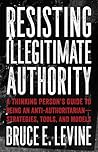
“Standard school teaches compliance with hierarchy; obedience to authorities for whom one does not necessarily respect; and regurgitation of meaningless material for a high grade. The standard classroom socializes students to be passive; to be directed by others; to take seriously the rewards and punishments of authorities; to pretend to care about things that they don’t care about; and that one is impotent to change one’s dissatisfying situation.”
― Resisting Illegitimate Authority: A Thinking Person's Guide to Being an Anti-Authoritarian—Strategies, Tools, and Models
― Resisting Illegitimate Authority: A Thinking Person's Guide to Being an Anti-Authoritarian—Strategies, Tools, and Models
“In a corporatocracy, corporations and the wealthy elite directly and indirectly finance candidates, who are then indebted to them. It’s common for these indebted government officials to appoint to key decision-making roles those friendly to corporations, including executives from these corporations. And it’s routine for high-level government officials to be rewarded with high-paying industry positions when they exit government. It’s common and routine for former government officials to be given high-paying lobbying jobs so as to use their relationships with current government officials to ensure that corporate interests will be taken care of.”
― Get Up, Stand Up: Uniting Populists, Energizing the Defeated, and Battling the Corporate Elite
― Get Up, Stand Up: Uniting Populists, Energizing the Defeated, and Battling the Corporate Elite
“In elections in a corporatocracy, it’s in the interest of the governing class to maintain the appearance that the people have a say, so more than one candidate is offered up. It’s in the interest of corporations and the wealthy elite that the winning candidate is beholden to them, so they financially support both Democrats and Republicans. It’s in the interest of corporations and the wealthy elite that there are only two viable parties—this cuts down on costs. And it’s in the interest of these two parties that they are the only parties with a chance of winning.”
― Get Up, Stand Up: Uniting Populists, Energizing the Defeated, and Battling the Corporate Elite
― Get Up, Stand Up: Uniting Populists, Energizing the Defeated, and Battling the Corporate Elite
“Alienated anti-authoritarian adults are often diagnosed with anxiety and depression. Often a major pain of their lives that fuels their anxiety and/or depression is fear that noncompliance with illegitimate authorities will cause them to be financially and socially marginalized; but they fear that compliance with such illegitimate authorities will result in humiliation and loss of integrity. All this can result in anxiety and depression—created not by biochemical defects but by existential realities.”
― Resisting Illegitimate Authority: A Thinking Person's Guide to Being an Anti-Authoritarian—Strategies, Tools, and Models
― Resisting Illegitimate Authority: A Thinking Person's Guide to Being an Anti-Authoritarian—Strategies, Tools, and Models
“When people are demoralized, they lack the energy to heal the source of their fear. So they fight their fear or surrender to it. Either way, the focus is on fear. Without healing, fear overcomes them, and they sink into depression and immobilization. Since the fear is often quite reasonable, a distraction from it is what I call wise unreasonableness.”
― Surviving America's Depression Epidemic: How to Find Morale, Energy, and Community in a World Gone Crazy
― Surviving America's Depression Epidemic: How to Find Morale, Energy, and Community in a World Gone Crazy
“For guardians of the status quo, there is nothing genuinely or fundamentally wrong with the prevailing order and its dominant institutions, which are viewed as just. Therefore, anyone claiming otherwise—especially someone sufficiently motivated by that belief to take radical action—must, by definition, be emotionally unstable and psychologically disabled. Put another way, there are, broadly speaking, two choices: obedience to institutional authority or radical dissent from it. The first is a sane and valid choice only if the second is crazy and illegitimate. . . . Radical dissent is evidence, even proof, of a severe personality disorder.” —Glenn Greenwald, No Place to Hide: Edward Snowden, the NSA, and the U.S. Surveillance State, 2014”
― Resisting Illegitimate Authority: A Thinking Person's Guide to Being an Anti-Authoritarian—Strategies, Tools, and Models
― Resisting Illegitimate Authority: A Thinking Person's Guide to Being an Anti-Authoritarian—Strategies, Tools, and Models
“There are revolving doors of employment in what are now commonly called industrial complexes. Most famously, the term military-industrial complex was coined by Dwight Eisenhower, who devoted his Farewell Address in 1961 to its “grave implications.” There is also the “energy-industrial complex,” the “agriculture-industrial complex,” and—as many Americans recently discovered—the “financial-industrial complex,” with one of the most well-publicized door revolvers being George W. Bush’s last Treasury secretary, Henry Paulson, who had previously been CEO of Goldman Sachs. However, this is not just a Republican thing. Prior to becoming President Barack Obama’s chief economic adviser, Lawrence Summers4 in 2008 received $5.2 million from hedge fund D. E. Shaw; and Obama’s number two man at Treasury, Neal Wolin,was previously an executive at the Hartford Financial Services Group.5 In 2010, Mother Jones magazine (“The Bankers on Obama’s Team”) listed nine other high-level members of the Obama administration who have been part of the corporate elite in the financial industry.”
― Get Up, Stand Up: Uniting Populists, Energizing the Defeated, and Battling the Corporate Elite
― Get Up, Stand Up: Uniting Populists, Energizing the Defeated, and Battling the Corporate Elite
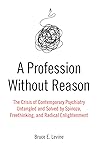
“In studying logic or the theory of knowledge . . . we explicitly recognize that most of our so-called knowledge does not reflect the true order of causes in the Universe, but is only a logically confused association of ideas, reflecting our individual reaction to our limited environment.”
― A Profession Without Reason: The Crisis of Contemporary Psychiatry—Untangled and Solved by Spinoza, Freethinking, and Radical Enlightenment
― A Profession Without Reason: The Crisis of Contemporary Psychiatry—Untangled and Solved by Spinoza, Freethinking, and Radical Enlightenment
“Owing to my involvement in mental health treatment reform, the industrial complex that I am most familiar with is the “pharmaceutical-industrial complex.” Two high-profile politicians who have revolved between the doors of government and pharmaceutical corporations are Billy Tauzin and Mitch Daniels.6 When in Congress, Billy Tauzin, a Democrat turned Republican, played a key role in shepherding the Medicare prescription drug law into passage in ways that it would become a financial bonanza for Big Pharma. Tauzin fought hard—and won—the battle to ensure that the federal government would be prohibited from negotiating discounts with drug companies. The law was signed by George W. Bush in December 2003. A few months later, Tauzin announced that he was retiring from Congress to take the job as director of Pharmaceutical Research and Manufacturers of America (PhRMA), a trade group representing giant pharmaceutical corporations. Through February 2010, Tauzin received an estimated annual salary of $2 million as head of PhRMA, where he became, essentially, Big Pharma’s leading lobbyist.”
― Get Up, Stand Up: Uniting Populists, Energizing the Defeated, and Battling the Corporate Elite
― Get Up, Stand Up: Uniting Populists, Energizing the Defeated, and Battling the Corporate Elite
“When you think of the long and gloomy history of man, you will find more hideous crimes have been committed in the name of obedience than have ever been committed in the name of rebellion.”
― Resisting Illegitimate Authority: A Thinking Person's Guide to Being an Anti-Authoritarian—Strategies, Tools, and Models
― Resisting Illegitimate Authority: A Thinking Person's Guide to Being an Anti-Authoritarian—Strategies, Tools, and Models
“A corporate-government partnership that governs society is a corporatocracy. In direct democracy, the people directly rule. In a republic, people have power through representatives, who actually represent them. In a corporatocracy, while there are elections, the reality is corporations and the wealthy elite rule in a way to satisfy their own self-interest.”
― Get Up, Stand Up: Uniting Populists, Energizing the Defeated, and Battling the Corporate Elite
― Get Up, Stand Up: Uniting Populists, Energizing the Defeated, and Battling the Corporate Elite
“Most people, at least much of the time, live in a state of defensiveness. Chronic defensiveness not only fatigues us, it also keeps us from being in a state of openness to healing and receiving more energy.”
― Surviving America's Depression Epidemic: How to Find Morale, Energy, and Community in a World Gone Crazy
― Surviving America's Depression Epidemic: How to Find Morale, Energy, and Community in a World Gone Crazy
“Eli Lilly received even more attention from the national media on January 15, 2009, when it pled guilty to charges that it had illegally marketed its blockbuster antipsychotic drug Zyprexa for unapproved uses to children and the elderly (two populations especially vulnerable to its dangerous side effects). Former Lilly sales representative Robert Rudolph, one of the eight whistle-blowers in this case, wanted jail time for executives, arguing, “You have to remember, with Zyprexa people lost their lives.” Lilly pled guilty to a misdemeanor charge and agreed to pay $615 million to end the criminal investigation and approximately $800 million to settle the civil case. CBS reporter Sharyl Attkisson commented, “Eli Lilly has pled guilty to marketing the sometimes dangerous drug Zyprexa in ways never proven safe or effective . . . Lilly has agreed to pay $1.4 billion . . . Ironically, that’s about as much as the company’s Zyprexa sales in the first quarter last year.” While the mass media, at various times, has reported on each of the above details, the mass media does not connect the dots to reveal the corporatocracy. In fact, mass media is a major part of the corporatocracy: Much of it is owned by a handful of large corporations, and all of it is dependent on corporate advertising. Still, polls show that most people know government, corporations, and the wealthy elite work together to ensure their own self-interest,”
― Get Up, Stand Up: Uniting Populists, Energizing the Defeated, and Battling the Corporate Elite
― Get Up, Stand Up: Uniting Populists, Energizing the Defeated, and Battling the Corporate Elite