Goodreads helps you follow your favorite authors. Be the first to learn about new releases!
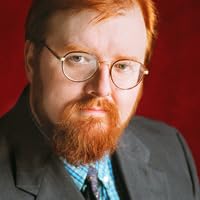
Start by following Jimmy Akin.
Showing 1-30 of 53
“Statues of Saints CHALLENGE “The Catholic use of statues of saints is idolatry.” DEFENSE Idolatry involves worshipping a statue as a god. That's not what Catholics do with statues. Statues of saints do not represent gods. They represent human beings or angels united with God in heaven. Even the least learned practicing Catholics are aware that statues of saints are not gods, and neither are the saints they represent. If you point to a statue of the Virgin Mary and ask, “Is this a goddess?” or “Is the Virgin Mary a goddess?” you should receive the answer “no” in both cases. If this is the case for the Virgin Mary, the same will be true of any saint. As long as one is not confusing a statue with a god, it is not an idol, and the commandment against idolatry is not violated. This was true in the Bible. At various points, God commanded the Israelites to make statues and images for religious use. For example, in the book of Numbers the Israelites were suffering from a plague of poisonous snakes, and God commanded Moses to make a bronze serpent and set it on a pole so that those bitten by the snakes could gaze upon the bronze serpent and live (Num. 21:6–9). The act of looking at a statue has no natural power to heal, so this was a religious use. It was only when, centuries later, people began to regard the statue as a god that it was being used as an idol and so was destroyed (2 Kings 18:4). God also commanded that his temple, which represented heaven, be filled with images of the inhabitants of heaven. Thus he originally ordered that craftsmen work images of cherubim (a kind of angel) into curtains of the Tent of Meeting (Exod. 26:1). Later, carvings of cherubim were made on the walls and doors of the temple (1 Kings 6:29–35). Statues were also made. The lid of the Ark of the Covenant included two statues of cherubim that spread their wings toward each other (Exod. 25:18–20), and the temple included giant, fifteen-foot tall statues of cherubim in the holy of holies (1 Kings 6:23–28). Since the Ascension of Christ, the saints have joined the angels in heaven (CCC 1023), making images of them in church appropriate as well.”
― A Daily Defense: 365 Days ( plus one) to Becoming a Better Apologist
― A Daily Defense: 365 Days ( plus one) to Becoming a Better Apologist
“[She believes] in one God, the Father Almighty, maker of heaven, and earth, and the sea, and all things that are in them; and in one Christ Jesus, the Son of God [Against Heresies 1:10:1 (c. A.D. 189)].”
― The Fathers Know Best: Your Essential Guide to the Teachings of the Early Church
― The Fathers Know Best: Your Essential Guide to the Teachings of the Early Church
“This is essential: the Christian ethic is not born from a system of commandments but is a consequence of our friendship with Christ. This friendship influences life; if it is true it incarnates and fulfills itself in love for neighbor. For this reason, any ethical decay is not limited to the individual sphere but it also weakens personal and communal faith from which it derives and on which it has a crucial effect. Therefore let us allow ourselves to be touched by reconciliation, which God has given us in Christ, by God’s “foolish” love for us; nothing and no one can ever separate us from his love (cf. Rom. 8:39). We live in this certainty. It is this certainty that gives us the strength to live concretely the faith that works in love.”
― The Drama of Salvation: How God Rescues You from Your Sins and Brings You to Eternal Life
― The Drama of Salvation: How God Rescues You from Your Sins and Brings You to Eternal Life
“ST. BASIL OF CAESAREA The woman who purposely destroys her unborn child is guilty of murder. With us there is no nice enquiry as to its being formed or unformed. In this case it is not only the being about to be born who is vindicated, but the woman in her attack upon herself; because in most cases women who make such attempts die. The destruction of the embryo is an additional crime, a second murder, at all events if it is done with intent. The punishment, however, of these women should not be for life, but for the term of ten years. And let their treatment depend not on mere lapse of time, but on the character of their repentance [Letters 188:2 (A.D. 374)].”
― The Fathers Know Best: Your Essential Guide to the Teachings of the Early Church
― The Fathers Know Best: Your Essential Guide to the Teachings of the Early Church
“The Law of Moses, indeed, punishes with due penalties the man who shall cause abortion [Ex 21:22–24] [ibid., 37].”
― The Fathers Know Best: Your Essential Guide to the Teachings of the Early Church
― The Fathers Know Best: Your Essential Guide to the Teachings of the Early Church
“Indeed, the others were also what Peter was [i.e., apostles], but a primacy is given to Peter, by which it is made clear that there is one Church and one chair. . .”
― The Fathers Know Best: Your Essential Guide to the Teachings of the Early Church
― The Fathers Know Best: Your Essential Guide to the Teachings of the Early Church
“For it is a matter of necessity that every church agree with this church, on account of its preeminent authority, that is, the faithful everywhere, in so far as the apostolic Tradition has been preserved continuously by those [faithful men] who exist everywhere [Against Heresies 3:3:2 (c. A.D. 189)].”
― The Fathers Know Best: Your Essential Guide to the Teachings of the Early Church
― The Fathers Know Best: Your Essential Guide to the Teachings of the Early Church
“During the first centuries of the Church, there were hundreds of other writings besides those which the Church later determined were to be included in the inspired canon of Sacred Scripture”
― The Fathers Know Best: Your Essential Guide to the Teachings of the Early Church
― The Fathers Know Best: Your Essential Guide to the Teachings of the Early Church
“EUSEBIUS OF CAESAREA And while [the Emperor Constantine] was praying with fervent entreaty, a most marvelous sign appeared to him from heaven, which might have been hard to believe had it been related by anyone else. But since the victorious emperor himself long afterwards declared it to the writer of this history [Eusebius], when he was honored with his acquaintance and society, and confirmed his statement by an oath, who could fail to credit the story, especially since the testimony of subsequent time has established its truth? He said that at about noon, when the day was already beginning to decline, he saw a trophy of a cross of light in the heavens, above the sun, and bearing the inscription, “Conquer by This.” He was struck with amazement, and his whole army also, which had followed him on this expedition and witnessed the miracle. He said [to me], moreover, that he did not know the meaning of this apparition. And while he continued to ponder and reason on it, night suddenly came on; then in his sleep the Christ of God appeared to him with the same sign he had seen in the heavens, and commanded him to make a likeness of that sign and to use it as a safeguard in all engagements with his enemies. . . . [B]eing struck with amazement at the extraordinary vision, and resolving to worship no other God save him who had appeared to him, he sent for those who were acquainted with the mysteries of [God’s] doctrines and inquired who that God was and what was intended by the sign of the vision he had seen [Life of Constantine 1:28–32 (c. A.D. 337)].”
― The Fathers Know Best: Your Essential Guide to the Teachings of the Early Church
― The Fathers Know Best: Your Essential Guide to the Teachings of the Early Church
“What then? Do not we offer every day? We offer indeed, but making a remembrance of his death, and this [remembrance] is one and not many. How is it one and not many? Because that [sacrifice] was once for all offered, [and] carried into the holy of holies. This is a figure of that [sacrifice] and a remembrance. For we always offer the same, not one sheep now and tomorrow another, but always the same thing: so that the sacrifice is one. And yet by this reasoning, since the offering is made in many places, are there many Christs? But Christ is one everywhere, being complete here and complete there also, one body. Even while offered in many places, he is one body and not many bodies; so also [he is] one sacrifice [Homilies on Hebrews 17:6 (c. A.D. 403)].”
― The Fathers Know Best: Your Essential Guide to the Teachings of the Early Church
― The Fathers Know Best: Your Essential Guide to the Teachings of the Early Church
“For they were not so called as not to be elected, in respect of which it is said, “For many are called but few are elected” [Mt 20:16]; but because they were called according to the purpose, they are surely also elected by the election of grace, not of any precedent merits of theirs, because to them grace is all merit [ibid., 13].”
― The Fathers Know Best: Your Essential Guide to the Teachings of the Early Church
― The Fathers Know Best: Your Essential Guide to the Teachings of the Early Church
“although he assigns a like power to all the apostles, yet he founded a single chair [cathedra], and he established by his own authority a source and an intrinsic reason for that unity.”
― The Fathers Know Best: Your Essential Guide to the Teachings of the Early Church
― The Fathers Know Best: Your Essential Guide to the Teachings of the Early Church
“DIDACHE And the second commandment of the teaching: You shall not commit murder, you shall not commit adultery [Ex 20:13–14], you shall not commit pederasty, you shall not commit fornication, you shall not steal [Ex 20:15], you shall not practice magic, you shall not practice witchcraft, you shall not murder a child by abortion nor kill what is begotten. You shall not covet the things of your neighbor [Ex 20:17], you shall not forswear yourself [Mt 5:34], you shall not bear false witness [Ex 20:16] [Didache 2 (c. A.D. 50)].”
― The Fathers Know Best: Your Essential Guide to the Teachings of the Early Church
― The Fathers Know Best: Your Essential Guide to the Teachings of the Early Church
“We must not become morbidly fixated on our sins any more than we should become morbidly fixated on the death of a loved one. At some point, one must move on. But that point is not immediately after the sins have been committed or immediately after a loved one has died. There is a natural process that needs to take place.”
― The Drama of Salvation: How God Rescues You from Your Sins and Brings You to Eternal Life
― The Drama of Salvation: How God Rescues You from Your Sins and Brings You to Eternal Life
“ST. CYRIL OF JERUSALEM And [Simon Magus] so deceived the city of Rome that Claudius set up his statue, and wrote beneath it, in the language of the Romans, “Simoni Deo Sancto,” which being interpreted signifies, “To Simon the Holy God.” As the delusion was extending, Peter and Paul, a noble pair, chief rulers of the Church, arrived and set the error right; and when the supposed god Simon wished to show himself off, they immediately showed him as a corpse. For Simon promised to rise aloft to heaven, and came riding in a demons’ chariot on the air; but the servants of God fell on their knees, and having shown that agreement of which Jesus spoke, that if two of you shall agree concerning anything that they shall ask, it shall be done unto them [Mt 18:19], they launched the weapon of their concord in prayer against Magus, and struck him down to the earth. And marvelous though it was, yet no marvel. For Peter was there, who carries the keys of heaven: and nothing wonderful, for Paul was there, who was caught up to the third heaven, and into paradise, and heard unspeakable words, which it is not lawful far a man to utter [Catechetical Lectures 6:14–15 (c. A.D. 350)].”
― The Fathers Know Best: Your Essential Guide to the Teachings of the Early Church
― The Fathers Know Best: Your Essential Guide to the Teachings of the Early Church
“Are all our sins—past, present, and future—forgiven once and for all when we become Christians? Not according to the Bible, or the early Church Fathers. Scripture nowhere states that our future sins are forgiven; instead, it teaches us to pray for ongoing forgiveness: “And forgive us our debts, as we also have forgiven our debtors” (Mt 6:12). The means by which God forgives sins after baptism is confession: “If we confess our sins, he is faithful and just, and will forgive our sins and cleanse us from all unrighteousness” (1 Jn 1:9). Minor or venial sins can be confessed directly to God, but for grave or mortal sins (see chapter 31), which destroy the spiritual life of the soul, God has instituted a different means for obtaining forgiveness: the sacrament known as confession, penance, or reconciliation. Since it is not possible to confess all our many daily faults, sacramental reconciliation is required only for mortal sins—but it is required (at least for those who are able to go to confession), or Christ would not have commanded it.”
― The Fathers Know Best: Your Essential Guide to the Teachings of the Early Church
― The Fathers Know Best: Your Essential Guide to the Teachings of the Early Church
“The doctrine of the Real Presence asserts that in the Holy Eucharist, Jesus is present—body and blood, soul and divinity—under the appearances of bread and wine. This teaching is based on a variety of Scriptural passages (see 1 Cor 10:16–17; 11:23–29; and, especially, Jn 6:32–71). The early Church Fathers interpreted these passages literally.”
― The Fathers Know Best: Your Essential Guide to the Teachings of the Early Church
― The Fathers Know Best: Your Essential Guide to the Teachings of the Early Church
“The Catechism of the Catholic Church refers to Christ’s Church as “the universal sacrament of salvation” (CCC 774–76). It states: “The Church in this world is the sacrament of salvation, the sign and the instrument of the communion of God and men” (CCC 780).”
― The Fathers Know Best: Your Essential Guide to the Teachings of the Early Church
― The Fathers Know Best: Your Essential Guide to the Teachings of the Early Church
“[A]mong surgeons’ tools there is a certain instrument formed with a nicely adjusted flexible frame for opening the uterus and keeping it open; it is further furnished with an annular blade, by means of which the limbs within the womb are dissected with anxious but unfaltering care; its last appendage being a blunted or covered hook, with which the entire fetus is extracted by a violent delivery. There is also a copper needle or spike, by which the actual death is managed in this furtive robbery of life: from its infanticide function, they give it the name of embruosphaktê, the slayer of the infant, which was of course alive. Such apparatus was possessed both by Hippocrates, and Asclepiades, and Erasistratus, and Herophilus, that dissector of adults, and the milder Soranus himself, who all knew well enough that a living being had been conceived, and pitied this most luckless infant state, which had first to be put to death, to escape being tortured alive [Treatise on the Soul 25 (c. A.D. 210)].”
― The Fathers Know Best: Your Essential Guide to the Teachings of the Early Church
― The Fathers Know Best: Your Essential Guide to the Teachings of the Early Church
“THEODORE OF MOPSUESTIA When [Christ] gave the bread he did not say, “This is the symbol of my body,” but, “This is my body.” In the same way, when he gave the cup of his blood he did not say, “This is the symbol of my blood,” but, “This is my blood.” For he wanted us to look upon the [eucharistic elements] after their reception of grace and the coming of the Holy Spirit not according to their nature, but to receive them as they are, the body and blood of our Lord. We ought . . . not to see [the elements] merely as bread and cup, but as the body and blood of the Lord, into which they were transformed by the descent of the Holy Spirit [Catechetical Homilies 5:1 (c. A.D. 410)].”
― The Fathers Know Best: Your Essential Guide to the Teachings of the Early Church
― The Fathers Know Best: Your Essential Guide to the Teachings of the Early Church
“ST. JEROME Heretics bring sentence upon themselves since by their own choice they withdraw from the Church, a withdrawal that, since they are aware of it, constitutes damnation. Between heresy and schism there is this difference: heresy involves perverse doctrine, while schism separates one from the Church on account of disagreement with the bishop. Nevertheless, there is no schism that does not trump up a heresy to justify its departure from the Church [Commentaries on Titus 3:10–11 (c. A.D. 386)].”
― The Fathers Know Best: Your Essential Guide to the Teachings of the Early Church
― The Fathers Know Best: Your Essential Guide to the Teachings of the Early Church
“DIDACHE Assemble on the Lord’s day, and break bread and offer the Eucharist; but first make confession of your faults, so that your sacrifice may be pure. Anyone who has a difference with his fellow is not to take part until he has been reconciled, so as to avoid profaning your sacrifice [Mt 5:23–24]. For this is the offering of which the Lord said, “Everywhere and always bring me a sacrifice that is undefiled, for I am a great king, says the Lord, and my name is the wonder of nations” [Mal 1:11, 14] [Didache 14 (c. A.D. 50)].”
― The Fathers Know Best: Your Essential Guide to the Teachings of the Early Church
― The Fathers Know Best: Your Essential Guide to the Teachings of the Early Church
“though they were good spirits. For the presence of good or evil can easily be distinguished with the help of God. The vision of the holy ones is not fraught with distraction, “For they will not strive, nor cry, nor shall anyone hear their voice” [Mt 12:19; see also Is 42:2]. But they come quietly and gently so that an immediate joy, gladness, and courage arise in the soul. For the Lord who is our joy is with them, and the power of God the Father [Athanasius, Life of St. Anthony 35 (c. A.D. 359)].”
― The Fathers Know Best: Your Essential Guide to the Teachings of the Early Church
― The Fathers Know Best: Your Essential Guide to the Teachings of the Early Church
“DIDACHE In the church you shall acknowledge your transgressions, and you shall not come near for your prayer with an evil conscience. This is the way of life. . . . But every Lord’s day gather yourselves together and break bread and give thanksgiving after having confessed your transgressions, that your sacrifice may be pure [Didache 4, 14 (c. A.D. 50)].”
― The Fathers Know Best: Your Essential Guide to the Teachings of the Early Church
― The Fathers Know Best: Your Essential Guide to the Teachings of the Early Church
“The Eucharist is not only a commemorative meal but a sacrifice. The Catechism of the Catholic Church explains: Because it is the memorial of Christ’s Passover, the Eucharist is also a sacrifice. The sacrificial character of the Eucharist is manifested in the very words of institution: “This is my body which is given for you” and “This cup which is poured out for you is the New Covenant in my blood.” In the Eucharist Christ gives us the very body which he gave up for us on the cross, the very blood which he “poured out for many for the forgiveness of sins.”
― The Fathers Know Best: Your Essential Guide to the Teachings of the Early Church
― The Fathers Know Best: Your Essential Guide to the Teachings of the Early Church
“Now we allow that life begins with conception, because we contend that the soul also begins from conception; life taking its commencement at the same moment and place that the soul does [ibid., 27].”
― The Fathers Know Best: Your Essential Guide to the Teachings of the Early Church
― The Fathers Know Best: Your Essential Guide to the Teachings of the Early Church
“Let those who will, laugh and mock. I will not be silent or conceal the signs and wonders that were shown to me by the Lord many years before they came to pass, since he knows all things even before the world’s beginnings [ibid., 45].”
― The Fathers Know Best: Your Essential Guide to the Teachings of the Early Church
― The Fathers Know Best: Your Essential Guide to the Teachings of the Early Church
“In 1995 Pope John Paul II declared that the Church’s teaching on abortion “is unchanged and unchangeable. Therefore, by the authority which Christ conferred upon Peter and his successors . . . I declare that direct abortion, that is, abortion willed as an end or as a means, always constitutes a grave moral disorder, since it is the deliberate killing of an innocent human being. This doctrine is based upon the natural law and upon the written word of God, is transmitted by the Church’s tradition and taught by the ordinary and universal magisterium. No circumstance, no purpose, no law whatsoever can ever make licit an act which is intrinsically illicit, since it is contrary to the law of God which is written in every human heart, knowable by reason itself, and proclaimed by the Church” (Evangelium Vitae 62).”
― The Fathers Know Best: Your Essential Guide to the Teachings of the Early Church
― The Fathers Know Best: Your Essential Guide to the Teachings of the Early Church
“ST. AUGUSTINE OF HIPPO [ N]othing could have been devised more likely to instruct and benefit the pious reader of sacred Scripture than that, besides describing praiseworthy characters as examples, and blameworthy characters as warnings, it should also narrate cases where good men have gone back and fallen into evil, whether they are restored to the right path or continue irreclaimable; and also where bad men have changed, and have attained to goodness, whether they persevere in it or relapse into evil; in order that the righteous may not be lifted up in the pride of security, nor the wicked hardened in despair of a cure [Reply to Faustus the Manichean 22:96 (A.D. 400)].”
― The Fathers Know Best: Your Essential Guide to the Teachings of the Early Church
― The Fathers Know Best: Your Essential Guide to the Teachings of the Early Church
“ST. JEROME For seeing that a man baptized in the name of the Father and the Son and the Holy Spirit becomes a temple of the Lord, and that while the old abode is destroyed a new shrine is built for the Trinity, how can you say that sins can be remitted among the Arians without the coming of the Holy Spirit? How is a soul purged from its former stains that does not have the Holy Spirit? [Dialogue Against the Luciferians 6 (c. A.D. 382)].”
― The Fathers Know Best: Your Essential Guide to the Teachings of the Early Church
― The Fathers Know Best: Your Essential Guide to the Teachings of the Early Church