Goodreads helps you follow your favorite authors. Be the first to learn about new releases!
Start by following John M. Frame.

Showing 1-30 of 50
“There is a circularity here I do not doubt. I am defending the Bible by the Bible. Circularity of a kind is unavoidable when one seeks to defend an ultimate standard of truth, for one's defense must itself be accountable to that standard.”
― The Doctrine of the Word of God
― The Doctrine of the Word of God
“In the preaching of the kingdom, law and gospel come together. The coming of the kingdom is the coming of a King to enforce his law on a disobedient world, that is, to enforce his covenant against covenant-breakers. But the King who comes is full of love and forgiveness. So his coming is good news, gospel, not only because he judges the wicked, but because he brings redemption, forgiveness, and reward to his redeemed people.”
― Systematic Theology: An Introduction to Christian Belief
― Systematic Theology: An Introduction to Christian Belief
“So I offer my definition of theology: theology is the application of Scripture, by persons, to every area of life.11”
― Systematic Theology: An Introduction to Christian Belief
― Systematic Theology: An Introduction to Christian Belief
“God is a logical, rational being, though he does not necessarily conform to the laws of any human system of logic. The laws of logic are an aspect of his own character. Being logical is his nature and his pleasure. So the fact that he cannot be illogical is not a weakness. It may not be fairly described as a lack of power. Indeed it is a mark of his great power that he always acts and thinks consistently, that he can never be pushed into the inconsistencies that plague human life.”
― Systematic Theology: An Introduction to Christian Belief
― Systematic Theology: An Introduction to Christian Belief
“Our conduct is not the basis for our salvation, but is influenced by our salvation.”
― Apologetics: A Justification of Christian Belief
― Apologetics: A Justification of Christian Belief
“Getting the past wrong is almost as problematic as not getting the past into our minds at all.”
― A History of Western Philosophy and Theology
― A History of Western Philosophy and Theology
“We need theology in addition to Scripture because God has authorized teaching in the church, and because we need that teaching to mature in the faith.”
― Systematic Theology: An Introduction to Christian Belief
― Systematic Theology: An Introduction to Christian Belief
“If we can agree that the sky is blue, for example, how is it that such agreement is possible? If the world is a world of chance, how could anybody agree on anything? Agreement presupposes a world made by God, designed to be orderly and designed to be known by rational minds. You can see that this kind of argument is presuppositional. It’s appealing to the true knowledge of God that the unbeliever has but suppresses (Rom. 1)—a knowledge that he has in common with the believer. To argue this way is very different from saying, “Let’s assume that the Bible can be false, and let’s judge its truth on the higher authority of our senses and logic.” Now”
― Apologetics: A Justification of Christian Belief
― Apologetics: A Justification of Christian Belief
“People do not risk their lives in the face of persecution to uphold a view they believe to be in error or only somewhat probable.”
― Christianity Considered: A Guide for Skeptics and Seekers
― Christianity Considered: A Guide for Skeptics and Seekers
“To cut ourselves off from the past is to rob ourselves from understanding the present.”
― A History of Western Philosophy and Theology
― A History of Western Philosophy and Theology
“Indeed, the dirty secret of Christian apologetics is this: there is no human argument that is guaranteed to overcome unbelief.”
― Christianity Considered: A Guide for Skeptics and Seekers
― Christianity Considered: A Guide for Skeptics and Seekers
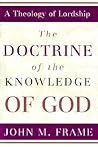
“God is not a vague abstract principle or force but a living person who fellowships with His people.”
― The Doctrine of the Knowledge of God
― The Doctrine of the Knowledge of God
“In any case, the church should seek music that does not leave its congregation cold-music that enhances its praises, preaching, and prayer; music that really edifies the people. That music should be contemporary at least in the sense of being meaningful to modern people, in the sense of not leaving most of them cold. It should leave them with the sense that the Word of God has been made more vivid, more memorable, not less, by the music...But I do believe that most congregations will find worship more intelligible if they sing and hear some music of our own time.”
― Contemporary Worship Music: A Biblical Defense
― Contemporary Worship Music: A Biblical Defense
“Students are welcome at such schools to study historical and contemporary theology, and to relate these to auxiliary disciplines such as philosophy and literary criticism. But they are not taught to seek ways of applying Scripture for the edification of God’s people. Rather, professors encourage each student to be “up to date” with the current academic discussion and to make “original contributions” to that discussion, out of his autonomous reasoning. So when the theologian finishes his graduate work and moves to a teaching position, even if he is personally evangelical in his convictions, he often writes and teaches as he was encouraged to do in graduate school: academic comparisons and contrasts between this thinker and that, minimal interaction with Scripture itself.”
― Systematic Theology: An Introduction to Christian Belief
― Systematic Theology: An Introduction to Christian Belief
“In the Bible, "will" is used in three ways.”
― Salvation Belongs to the Lord: An Introduction to Systematic Theology
― Salvation Belongs to the Lord: An Introduction to Systematic Theology
“Everything in Scripture has the force of law. What it teaches we are to believe; what it commands, we are to do. We should take its wisdom to heart, imitate its heroes, laugh at its jokes, trust its promises, and sing its songs.”
―
―
“In a truly free society, people in every field would be free to express their views whether called religious or not, and the marketplace of ideas would be free to sort them out.”
― A History of Western Philosophy and Theology
― A History of Western Philosophy and Theology
“Pero la libertad humana sí existe y es importante para la responsabilidad ética. Cuando Dios juzga las obras humanas, a veces toma en consideración lo que somos capaces y lo que no somos capaces de hacer. En Lucas 12:47-48 leemos:”
― La salvación es del Señor: Una introducción a la teología sistemática
― La salvación es del Señor: Una introducción a la teología sistemática
“The philosopher must argue for sense experience by appealing to sense experience. What choice does he have? If he appeals to something else as his final authority, he is simply being inconsistent. But this is the case with any basic commitment. When we are arguing on behalf of an absolute authority, then our final appeal must be to that authority and to no other. A proof of the primacy of reason must appeal to reason; a proof of the necessity of logic must appeal to logic;”
― A History of Western Philosophy and Theology
― A History of Western Philosophy and Theology
“significa que Él está en todos lados; la eternidad, que está por encima del tiempo; y la inmensidad, que está por encima del espacio.”
― La salvación es del Señor: Una introducción a la teología sistemática
― La salvación es del Señor: Una introducción a la teología sistemática
“Mientras avanzamos, puede sorprenderte escucharme debatir sobre atributos tales como la infinidad, la eternidad y la inmensidad como poderes divinos.”
― La salvación es del Señor: Una introducción a la teología sistemática
― La salvación es del Señor: Una introducción a la teología sistemática
“Some have taught that the way to holiness is to “let go and let God.”1258 But that idea is not biblical. In the first place, we don’t need to “let God,” for God is sovereign and does not need to wait for us to let go before he can work. And we should not let go, for God commands us to fight in the spiritual battle.”
― Systematic Theology: An Introduction to Christian Belief
― Systematic Theology: An Introduction to Christian Belief
“Our goal must be, not to gain a divine knowledge of reality, but to obtain a human knowledge sufficient to carry out whatever calling God has given each of us.”
― We Are All Philosophers: A Christian Introduction to Seven Fundamental Questions
― We Are All Philosophers: A Christian Introduction to Seven Fundamental Questions
“El error viene del engaño (decir mentiras)”
― La salvación es del Señor: Una introducción a la teología sistemática
― La salvación es del Señor: Una introducción a la teología sistemática
“The Two Kingdoms view maintains that the kingdom came in Jesus and will come again in Jesus’ return, but that it is confined to the church in the period between Jesus’ two advents. That view goes against the passages cited above. Clearly, the kingdom has in fact deeply affected human culture over the centuries: in the sciences, the arts, the treatment of orphans and widows, education, and every other area of importance to human beings.”
― Systematic Theology: An Introduction to Christian Belief
― Systematic Theology: An Introduction to Christian Belief
“Aunque pensaron que entendían el texto bíblico, no lo aplicaron a su propia vida ni a su experiencia del mismo Hijo de Dios que vivió en medio de ellos (Mt 16:1-4; 22:29; Jn 5:39-40).”
― La salvación es del Señor: Una introducción a la teología sistemática
― La salvación es del Señor: Una introducción a la teología sistemática
“The post-Reformation theology is more academic, more detailed, more argumentative. It makes more use of philosophy and therefore is often described by the phrase Protestant Scholasticism.266 That is appropriate in a way, because one of their main interests was to present a version of Protestant theology suitable for academic study and therefore academically respectable. This is not wrong in itself, and it has not been proved that this drive for academic respectability led the Protestant scholastics into any specific departure from the teaching of Luther and Calvin.”
― A History of Western Philosophy and Theology
― A History of Western Philosophy and Theology
“apologetics is also application of Scripture to unbelief. Unbelief is no respecter of persons. Both Christians and non-Christians wrestle with doubt and suspicion. A biblical apologetic targets unbelief wherever it may be found, strengthening the faith of Christians and calling unbelievers to repentance and faith in Christ. The”
― Apologetics: A Justification of Christian Belief
― Apologetics: A Justification of Christian Belief
“In Scripture, however, the goal of human life is to glorify God. Our dignity is to be found not in what we do, but in what God has done for us and in us. Our meaning and significance are to be found in the fact that God has created us in his image and redeemed us by the blood of his Son. The biblical writers, therefore, are not horrified, as modern writers tend to be, by the thought that we may be under the control of another. If the other is God, and he has made us for his glory, then we could not possibly ask for a more meaningful existence.”
― Systematic Theology: An Introduction to Christian Belief
― Systematic Theology: An Introduction to Christian Belief
“Lo mismo es cierto de la ética. Por ejemplo, la Biblia no menciona el aborto. Necesitamos aprender lo que es el aborto de fuentes extrabíblicas. Las Escrituras dicen algunas cosas acerca del asesinato y acerca de la vida humana antes de nacer. Cuando unimos los principios bíblicos con nuestro conocimiento extrabíblico de lo que es el aborto, llega a ser obvio que “no matarás” implica “no abortarás”.”
― La salvación es del Señor: Una introducción a la teología sistemática
― La salvación es del Señor: Una introducción a la teología sistemática