Goodreads helps you follow your favorite authors. Be the first to learn about new releases!
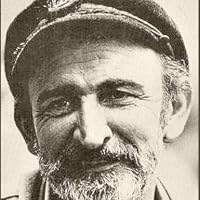
Start by following Tristan Jones.
Showing 1-14 of 14
“The only way to see true reality is in solitude. One of the tragedies of human existence is that reality cannot be shared. What's real to you may not be to someone else.”
― A Steady Trade: A Boyhood at Sea
― A Steady Trade: A Boyhood at Sea
“In Amsterdam there lives a maid (Mark well what I do say) In Amsterdam there lives a maid. And she is the mistress of her trade: I’ll go no more a-roving with you, fair maid! A-roving, a-roving, since roving’s been my ru-eye-in, I’ll go no more a-roving with you, fair maid! British seaman’s songearly seventeenth centuryMost seamen’s songs and chanties, from the sixteenthcentury on, were highly “permissive” when read aright.They were much bowdlerised in the nineteenth century,and many lost their original honesty and delight. Thisone, innocent except to the seamen’s ears, survived.(“Torove,” is the sailor’s term for the weft in canvas. It means”to insert”—”to pass through.” “Trade,” in English, hasalways had a sexual connotation.)”
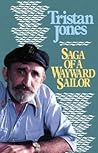
― Saga of a Wayward Sailor
― Saga of a Wayward Sailor
“But when things are obviously not right—wherever people are being overcharged and underserved, wherever sloth or downright discourtesy is offered—it is up to each and every one of us to protest.”
― Outward Leg
― Outward Leg
“Standards are the responsibility not only of those providing them but of those receiving them, too.”
― Outward Leg
― Outward Leg
“Is it a suspicion that perhaps the Venezuelans in general are a bit like the Colombians in general? Let there be no doubt about it, there are no two nationalities on the face of the earth who could be more different. There are no people in the whole of the Caribbean—in the whole of the tropics indeed—who are, on the whole, more honest and trustworthy than the average Venezuelan. There can be a very few tropical countries better policed, nor more incorrupt. There is no reason why anyone should not sail for Venezuela and cruise her coast with the utmost confidence in others, as long as he has the right charts and goes about it in a seamanlike manner, and pays his way.”
― Outward Leg
― Outward Leg
“Our first day’s run out of Pampatar was our best day’s run to date on the whole voyage from San Diego—171 miles. That’s over the twenty-four hours noon to noon. The second day’s run beat it—174 miles. On the evening of the third day out we were at anchor in Frederiksted, on the island of St. Croix. That’s 420 miles in sixty hours. That’s the crossing of the Caribbean Sea, from south to north, in two and a half days. That’s flying. Total fuel consumption—one pint of diesel oil to charge batteries. Breakages, nil; and that was a fully loaded trimaran—loaded to traditional, oceangoing monohull standards and more. There were, don’t forget, three months’ supplies of canned food for three men on board, plus the remaining dried and packaged food, say six weeks’ supply, plus eighty-two gallons of cheap diesel fuel and eighty-two gallons of fresh water, plus all our personal effects, the three of us, together with the ship’s equipment. That was a total payload of around four tons. I suggest that this is the most important statistic, besides the speed of the passage, in this account. I suggest that, together with the safety factors built into Outward Leg—the self-righting system, and the cool-tubes to prevent capsize—we realized at St. Croix that what we had under our feet was one of the fastest, and one of the safest, cruising vessels afloat under sail. Hitherto multihulls had been considered as either hair-shirt racing craft, for speed-drunk masochists with tiny appetites, or boxy floating sheds for short cruises and always downwind, because they were thought—and quite rightly in most instances—to have the windward ability of Carnegie Hall.”
― Outward Leg
― Outward Leg
“Ganges. On board, the otherwise unwanted lads of Britain—the waifs, the strays, the abandoned bastards, the untameable, the Artful Dodgers of Queen Victoria’s realm—the so-called scum of British earth, were bullied, beaten, bashed, scourged, half-starved, tormented, pummelled, lashed, keelhauled, cudgelled, thrashed, swinged, trounced, lambasted, hurt, manhandled, battered, thumped, scared and terrorized into a total submission to the almighty will of My Lords Commissioners of the Admiralty.”
― Heart of Oak
― Heart of Oak
“suggest that, together with the safety factors built into Outward Leg—the self-righting system, and the cool-tubes to prevent capsize—we realized at St. Croix that what we had under our feet was one of the fastest, and one of the safest, cruising vessels afloat under sail.”
― Outward Leg
― Outward Leg
“raining a Trafalgar, too!” “Merde!” He turned to go up the ladder. At the top, he turned again. “Bien, mon chef marin, bonne chance!” “Mercy buckets, M’sieur. See you next time.”
― Saga of a Wayward Sailor
― Saga of a Wayward Sailor
“That and rum and tobacco—and being boys, we were not entitled to the rum. ‘Rum, bum and baccy.’ And that was why ‘bum’ was included—that, and not buggery, as the landsmen thought.”
― Heart of Oak
― Heart of Oak
“Sometimes the light needs a bit of help to get through the dark clouds around us—and that’s up to you.”
― Outward Leg
― Outward Leg
“When in danger or in doubt hoist the sail and fuck off out. . . .”
― Outward Leg
― Outward Leg
“A deterrent must be known to exist, and to work.”
― Outward Leg
― Outward Leg
“More important though—live for others, just as much as for yourself. If you do that, their strength becomes, in some mysterious way, yours. There is always somebody, somewhere, who needs you. Never, for one minute, ever lose sight of that. If they are not with you, not near you now—go and find them, even if it means voyaging thousands of miles to do it.”
― Outward Leg
― Outward Leg