Goodreads helps you follow your favorite authors. Be the first to learn about new releases!
Start by following Jonathan Dollimore.

Showing 1-5 of 5
“See how (for instance) the cultural can be freed from the tyranny of the natural; gender from biology; how social change has occurred, and how it can change again; how to reveal and defend (without fetishizing) cultural difference; how to make visible the ‘political unconscious’ of our culture.”
―
―
“For Marcuse the death drive has the function of protesting against the injustice and deprivations of history: The descent toward death is an unconscious flight from pain and want. It is an expression of the eternal struggle against suffering and repression. And the death instinct itself seems to be affected by the historical changes which affect this struggle, (p. 29) The death drive and its derivatives, along with the sexual perversions,8 are an unconscious protest against the insufficiency of civilization; they testify to the destructiveness of what they attempt to destroy – that is, repression. There is therefore an implicit idealism in them: ‘they aim not only against the reality principle, at non-being, but also beyond the reality principle – at another mode of being’ (p. 109).”
― Death, Desire and Loss in Western Culture
― Death, Desire and Loss in Western Culture
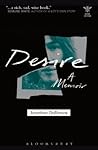
“Sometimes in life, and commonly in literature, desire undermines our resolve, drives us to obsession, illness, madness, or even death; or splits us into self-division, or contradictory moral evaluation, or wrecks us with the ambivalence of love and hate fused in the same desire.”
― Desire: A Memoir
― Desire: A Memoir
“So, of those who have influenced me here’s a few: Ecclesiastes, Seneca, Montaigne, Schopenhauer, Nietzsche, Marx and Freud. I don’t know what might connect them unless it be this: in very different ways all see human consciousness as alienated from the very reality which it strives to understand and for some of them that alienation becomes intrinsic to human desire. In a hesitant and incompetent way, I was discovering back then that philosophy was not only more important than the academic study of it allowed, but that as a subject it needed to be turned against the academy which diminished it. That became the basis of everything I subsequently wrote, and if it has had any merit, it’s because it grew out of a deep dissatisfaction with the way the academic world smothered, tamed and domesticated the subjects it controlled.”
― Desire: A Memoir
― Desire: A Memoir
“Never was the two cultures stand-off more apparent than here. In Gunn’s poem, a new neighbour (an outsider) wants them evicted because of their detrimental effect on property prices. She might well have been an academic: in more than thirty years in the humanities side of universities, the attitude towards those skills which I encountered was mainly one of ignorant, patronizing condescension. Just occasionally a student from the science side would dismantle a car in a campus car park only to be moved on by the authorities, as were Gunn’s auto freaks. Among the younger academics, disdain for this culture verged on contempt because of its supposedly obsolete ‘masculinist’ values. Those same academics were also the ones quick to brand any intense friendship between the men of this ‘masculinist’ culture as repressed homosexuality. In truth, sometimes it might have been, and yet sometimes it almost certainly wasn’t: some of the most loyal and selfless friendships I’ve ever known were between working-class young men who, insofar as anyone can ever be sure of these things, really were straight.”
― Desire: A Memoir
― Desire: A Memoir