Goodreads helps you follow your favorite authors. Be the first to learn about new releases!
Start by following Martin Williams.

Showing 1-30 of 68
“It is not too much to say that King George’s decision to follow in the footsteps of his lamented father confers upon the Turf a new lease of life,’ the paper crowed. ‘The King is dead. Long live the King!’4”
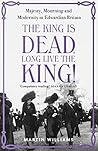
― The King is Dead, Long Live the King!: An enthralling account of majesty, mourning and modernity in Edwardian Britain
― The King is Dead, Long Live the King!: An enthralling account of majesty, mourning and modernity in Edwardian Britain
“Swept from his throne just before the Armistice in November 1918, the Kaiser was fortunate to escape with his life. He passed the remainder of his days in comfortable but ignominious exile in the Netherlands, never ceasing to rage against the legacy of his hated uncle, whose machinations had, he insisted, contributed to his downfall. ‘It is he who is the corpse and I who live on, but it is he who is the victor,’ Wilhelm snarled shortly before his death in 1941.14”
― The King is Dead, Long Live the King!: An enthralling account of majesty, mourning and modernity in Edwardian Britain
― The King is Dead, Long Live the King!: An enthralling account of majesty, mourning and modernity in Edwardian Britain
“In an essay on literature published in 1924, Virginia Stephen – since her marriage in 1912, Virginia Woolf – looked back over the preceding quarter-century to pinpoint December 1910 as its point of departure. It was then, she maintained, that ‘human character’ had changed, and with it very much else.13”
― The King is Dead, Long Live the King!: An enthralling account of majesty, mourning and modernity in Edwardian Britain
― The King is Dead, Long Live the King!: An enthralling account of majesty, mourning and modernity in Edwardian Britain
“In the meantime, the advantages of uniformity were sheepishly conceded. ‘I like black,’ one race-goer confessed, ‘because in it I can always say to anybody I don’t want to be bothered with, “I was looking for you everywhere, but, of course, it was quite impossible to find you.” ’34”
― The King is Dead, Long Live the King!: An enthralling account of majesty, mourning and modernity in Edwardian Britain
― The King is Dead, Long Live the King!: An enthralling account of majesty, mourning and modernity in Edwardian Britain
“Between 1870 and 1914, dozens of American women married into the British aristocracy: a cohort so numerous that, in time, 17 per cent of the peerage and 12 per cent of the baronetage could claim transatlantic connections.”
― The King is Dead, Long Live the King!: An enthralling account of majesty, mourning and modernity in Edwardian Britain
― The King is Dead, Long Live the King!: An enthralling account of majesty, mourning and modernity in Edwardian Britain
“Less than a month earlier, Edward’s coffin, followed by monarchs and princes, and watched by innumerable spectators clad in deepest black, had passed through the streets of the hushed capital. Now those same streets were filled again, only this time with tens of thousands of women moving to the sound of rousing music as colourful banners fluttered overhead. Indeed, after so many weeks of unremitting mourning, it was to be the procession’s colours that produced the strongest impression. Snaking all the way from Kensington to St James’s Palace, it was a walking rainbow of teachers and secretaries, nurses and shop assistants, factory workers and civil servants. In the front ranks more than six hundred women carried silver wands, which symbolised the time they had spent in prison in the service of the cause. Behind them were the so-called ‘pioneers’: elderly campaigners – one riding in a wheelchair – who had been active in the movement from its earliest days. At the other end of the spectrum, Votes for Women observed a group of girls aged between thirteen and twenty who ‘typified the devotion and thanks of the younger generation’.”
― The King is Dead, Long Live the King!: An enthralling account of majesty, mourning and modernity in Edwardian Britain
― The King is Dead, Long Live the King!: An enthralling account of majesty, mourning and modernity in Edwardian Britain
“Obituarists kept circling his all-conquering charm. It was, Lord Esher considered, ‘invincible. The individual man succumbed to it, and the multitude went down before it. When the King walked into a room everyone felt the glow of a personal greeting. When he smiled upon a vast assemblage everyone replied unconsciously.’9 Edward may have lived his life at the apex of an intensely hierarchical society, but he had possessed what Lord Fisher (the former First Sea Lord who had been raised to the peerage at the close of 1909) called an ‘astounding aptitude of appealing to the hearts of both High and Low’.10 To every domestic servant, he had expressed his appreciation. To every beggar, he had tipped his hat. G. K. Chesterton described the King ‘as a kind of universal uncle. His popularity in poor families was so frank as to be undignified; he was really spoken of by tinkers and tailors as if he were some gay and prosperous member of their own family. There was a picture of him upon the popular retina infinitely brighter and brisker than there is either of Mr Asquith or Mr Balfour.”
― The King is Dead, Long Live the King!: An enthralling account of majesty, mourning and modernity in Edwardian Britain
― The King is Dead, Long Live the King!: An enthralling account of majesty, mourning and modernity in Edwardian Britain
“In a climate of energy and optimism, Britain dilated. The pace of progress was staggering. Electricity and wireless, automobiles and aeroplanes: cutting-edge technology augured a future that would be bright, fast and safe. The capital of the greatest empire in history, London rose to dizzy heights of architectural magnificence. For its theatres, restaurants, department stores and grand hotels, they were golden years. Decorators, dressmakers and jewellers amassed fame and fortune in the service of the upper class. The elegance was extreme, the luxury overwhelming.”
― The King is Dead, Long Live the King!: An enthralling account of majesty, mourning and modernity in Edwardian Britain
― The King is Dead, Long Live the King!: An enthralling account of majesty, mourning and modernity in Edwardian Britain
“It was one of the ironies of the era that single girls were considered untouchable. No self-respecting gentleman would have dared seduce a debutante. Once wed, however, and provided she had furnished her husband with a couple of children indisputably his own, a lady was permitted to take a lover. All of Edward’s ‘official’ mistresses were safely married.”
― The King is Dead, Long Live the King!: An enthralling account of majesty, mourning and modernity in Edwardian Britain
― The King is Dead, Long Live the King!: An enthralling account of majesty, mourning and modernity in Edwardian Britain
“In the event, the most entrenched sceptics were forced to admit they were wrong about Edward. Not many years elapsed before he proved himself to be one of the most able and, moreover, popular monarchs Britain had ever known.”
― The King is Dead, Long Live the King!: An enthralling account of majesty, mourning and modernity in Edwardian Britain
― The King is Dead, Long Live the King!: An enthralling account of majesty, mourning and modernity in Edwardian Britain
“On Monday, 13 June, Lord Churchill had issued a stern reminder that clothing of unrelieved black would be mandatory in the Royal Enclosure. For men, that entailed only minor modifications. During the nineteenth century, colour had drained away from the male wardrobe. Quality of materials and perfection of cut, the latter ensured by the expertise of the world-renowned tailors of Savile Row, conspired to create an appearance of immaculate but unobtrusive sobriety.”
― The King is Dead, Long Live the King!: An enthralling account of majesty, mourning and modernity in Edwardian Britain
― The King is Dead, Long Live the King!: An enthralling account of majesty, mourning and modernity in Edwardian Britain
“Lady Duff Gordon had been promoting Ascot gowns made of textiles woven in American mills to the readers of the papers to which she contributed columns. It had been her intention that her designs should be executed in a floral palette of pinks, blues and mauves. Now that that was out of the question, she reassured clients that ‘the present styles lend themselves most gracefully to mourning costumes’ owing to the pliancy of their fabrics.23 The supple laces and chiffons she advocated imbued countless ensembles with what was approvingly described as ‘a lightness and indescribably cool finish’.24 Considerable mileage was derived from filmy silk voile, but there was an abundance of ninon de soie, mousseline de soie, charmeuse and foulard too. ‘One realised how exceedingly pretty and tasteful black can be made to look if used properly, and not too, too conscientiously,’ marvelled the Bystander. ‘So long as the outer material is black, it matters not how gossamer-like its transparency – and that is the whole point about it.”
― The King is Dead, Long Live the King!: An enthralling account of majesty, mourning and modernity in Edwardian Britain
― The King is Dead, Long Live the King!: An enthralling account of majesty, mourning and modernity in Edwardian Britain
“In Oxford, where he spent a spell as a student at Christ Church, Dean Liddell found Edward to be ‘the nicest fellow possible, so simple, naïve, ingenuous and modest, and moreover with extremely good wits; possessing also the Royal faculty of never forgetting a face’.”
― The King is Dead, Long Live the King!: An enthralling account of majesty, mourning and modernity in Edwardian Britain
― The King is Dead, Long Live the King!: An enthralling account of majesty, mourning and modernity in Edwardian Britain
“In 1920, Mrs Keppel’s younger daughter, Sonia, made a suitable marriage to Lord Ashcombe’s son, the Honourable Roland Cubitt. In 1947, Sonia’s granddaughter, Camilla Shand, was born two months before Alice’s death. Married to Andrew Parker Bowles in 1973, Camilla was divorced in 1995. Today, she is Queen Consort to Edward’s great-great-grandson, King Charles III.”
― The King is Dead, Long Live the King!: An enthralling account of majesty, mourning and modernity in Edwardian Britain
― The King is Dead, Long Live the King!: An enthralling account of majesty, mourning and modernity in Edwardian Britain
“So were the days of ‘unknown Americans, of the nouveaux riches, and of the Hebrew persuasion’, observed the Tatler, snobbishly.3 Under the open-minded Edward, the perimeters of Society had been rolled back to accommodate his insatiable appetite for amusement. Now the arrivistes found themselves on the wrong side of the impenetrable ‘wall of steel’ surrounding the sovereign and his famously reserved consort. From hence, preference was to be given to representatives of the ‘old families’ of the British aristocracy, who prized lineage, dignity and discretion over wealth, wit and glamour. The shift was not lost on Max Beerbohm, who drew a group of Jewish financiers – among them Alfred and Leopold de Rothschild, Arthur Sassoon and Sir Ernest Cassel – creeping nervously along a corridor at Buckingham Palace. The caption read, ‘Are we as welcome as ever?’ Unwritten but tacitly acknowledged, the answer was ‘No’.”
― The King is Dead, Long Live the King!: An enthralling account of majesty, mourning and modernity in Edwardian Britain
― The King is Dead, Long Live the King!: An enthralling account of majesty, mourning and modernity in Edwardian Britain
“As salutes thundered in Hyde Park and at the Tower of London – one gun for each year of Edward’s life – John Mackenzie-Rogan, the Bandmaster of the Coldstream Guards, was simultaneously exhilarated and terrified. He was determined that the transferral of the King’s coffin from Buckingham Palace to Westminster Hall should be marked ‘in such a way that it would leave an impression on our countrymen which would never be forgotten’.11 Central to his vision was the drum: an instrument ‘of great potentialities when used not merely as a supplement to the rest of the orchestra, but as a separate and individual thing – an instrument that would, in its primitive and barbaric way, move the human heart even as the organ and violin move it’.12”
― The King is Dead, Long Live the King!: An enthralling account of majesty, mourning and modernity in Edwardian Britain
― The King is Dead, Long Live the King!: An enthralling account of majesty, mourning and modernity in Edwardian Britain
“As ubiquitous in Biarritz as he was everywhere else was the wire-haired fox terrier Caesar. Bred by the Duchess of Newcastle and presented to the King in 1903, he was adored by his master. Noisy and ill-disciplined, he ruthlessly exploited Edward’s affection, safe in the knowledge he would never be punished for his many misdemeanours. At most, the King would ineffectually shake his stick and admonish him with the words, ‘You naughty dog, you naughty, naughty dog.’24 Dismissed by Lady Fingall as a ‘horrid little snob’,25 he was one of the most pampered animals in Europe. In 1907, Fritz Ponsonby had had to dissuade Edward from rushing a vet from London to Marienbad at the cost of £200 a day to attend to Caesar, who had been taken ill there. Restored to health, he was modelled by Fabergé in white chalcedony with cabochon rubies for eyes and a gold collar embossed, as in life, with the legend ‘I Belong to the King’. On their picnic excursions, Caesar liked to settle himself in Violet Keppel’s lap; for her, a dubious honour, as she claimed he smelt. His attentions were more warmly received by Sonia. The terrier had, she remembered, ‘a fine disregard for the villa’s curtains and chair-legs, but a close personal regard for me’.”
― The King is Dead, Long Live the King!: An enthralling account of majesty, mourning and modernity in Edwardian Britain
― The King is Dead, Long Live the King!: An enthralling account of majesty, mourning and modernity in Edwardian Britain
“By then, the suffragettes’ militant campaign was at fever-pitch. The previous year, Emily Davison had been fatally injured at the Epsom Derby when she threw herself beneath the hoofs of the King’s horse in full view of thousands of stunned spectators. Now, the police took no chances. Even in the Royal Enclosure, female race-goers were subjected to body-searches, lest their swirling capes should conceal hammers or bombs. It was a far cry from the subdued decorum of Black Ascot. Edward VII would have wondered what the world was coming to.”
― The King is Dead, Long Live the King!: An enthralling account of majesty, mourning and modernity in Edwardian Britain
― The King is Dead, Long Live the King!: An enthralling account of majesty, mourning and modernity in Edwardian Britain
“With the clock close to 11 p.m., Carrington had gone home and McDonnell was just putting on his cloak when the gates of New Palace Yard were flung open and a caravan of motor-cars puttered through. Out of the first scrambled the Home Secretary, Winston Churchill, and his wife, Clementine. The others disgorged Churchill’s mother and stepfather; his brother and sister-in-law; and Captain Hugh Warrender and the 9th Duke of Marlborough. Together, they advanced to the door. Churchill had made himself quite obnoxious in the days after Edward’s death. In one of his first meetings with the new King, he had tactlessly picked up where he had left off with his father, insisting that ‘a great change was necessary in the Constitution’. George had icily responded that he was ‘averse to violent changes’. Now, on the very eve of Edward’s funeral, the Home Secretary insisted on his right to a private viewing of the coffin. McDonnell refused point-blank. Churchill attempted to pull rank. Unwavering, McDonnell retorted that if he were not satisfied, he could go and rouse Carrington, who was asleep in a nearby house, and solicit a second opinion. For several minutes, the two men bickered on the threshold until the Home Secretary, thoroughly bested, flounced off with his relations. It was, the incandescent McDonnell wrote, ‘an amazing instance of vulgarity and indecency of which I should not have thought that even Churchill was capable’.”
― The King is Dead, Long Live the King!: An enthralling account of majesty, mourning and modernity in Edwardian Britain
― The King is Dead, Long Live the King!: An enthralling account of majesty, mourning and modernity in Edwardian Britain
“Contemplating provisions that Balfour, the leader of the Opposition, deplored as ‘vindictive, inequitable [and] based on no principle’26, the Lords embarked upon a counter-offensive. First into the fray were the dukes, the most senior-ranking peers, whose prestige was inextricably bound up with their great estates. To the Duke of Rutland, the Liberals were nothing but ‘a crew of piratical tatterdemalions’. The Duke of Beaufort expressed his desire to see Lloyd George set upon by ‘twenty couple of dog-hounds’. In anticipation of the state of poverty into which the Budget would throw him, the Duke of Buccleuch stopped his guinea subscription to the Dumfriesshire Football Club. The Duke of Somerset withdrew all his charitable subscriptions and sacked a number of his workers. Really, remarked an incredulous Margot Asquith, ‘the speeches of our Dukes have given us a very unfair advantage’.”
― The King is Dead, Long Live the King!: An enthralling account of majesty, mourning and modernity in Edwardian Britain
― The King is Dead, Long Live the King!: An enthralling account of majesty, mourning and modernity in Edwardian Britain
“The sentimental public interpreted Caesar’s behaviour in a different light. His starring role in the funeral procession had transformed him into the most famous dog in the world. All that summer, and well into the autumn, he was big business. The Illustrated London News commissioned the artist Maud Earl to paint Caesar with his head resting forlornly upon Edward’s empty armchair. Entitled Silent Sorrow, copies were advertised for sale: five shillings for a photogravure plate, or ten shillings and sixpence for a limited-edition India proof. Itself a relatively recent addition to the Edwardian nursery, the teddy-bear temporarily took a back seat to the toy Caesars manufactured by the German firm of Steiff. Fashioned out of shaggy mohair with glass eyes, jointed legs and leather collars replete with embossed brass tags, the endearing animals were soon flying off the shelves. Most popular of all was the anonymously authored Where’s Master?, which narrated the events surrounding Edward’s death from Caesar’s perspective. Dedicated to Alexandra (who was called ‘She’ throughout) and published by Hodder & Stoughton, it was guaranteed to raise a lump in the most stoic throat: She says I can go if I am very good and follow close behind Master, and walk very slowly, and never move from the middle of the road. Oh, how glad and thankful I am. I wonder if Master knows, and is pleased that, after all, his little dog is going with him on his last journey.35”
― The King is Dead, Long Live the King!: An enthralling account of majesty, mourning and modernity in Edwardian Britain
― The King is Dead, Long Live the King!: An enthralling account of majesty, mourning and modernity in Edwardian Britain
“The menu at dinner was always extensive. At a minimum, there would be a hot and a cold soup, a hot and a cold fish (each with a suitable sauce), an entrée, a sorbet, a roast, a sweet, a savoury, and fruit.”
― The King is Dead, Long Live the King!: An enthralling account of majesty, mourning and modernity in Edwardian Britain
― The King is Dead, Long Live the King!: An enthralling account of majesty, mourning and modernity in Edwardian Britain
“Old age, which Alexandra had defied for so long, caught up with her at last. Her deafness became almost total. Unable to reconcile herself to the loss of her fabled good looks, she secluded herself at Sandringham, where she repined her own decrepitude. ‘Ugly old woman,’ she said. ‘Nobody likes me any more.’26 King George and Queen Mary were unfailingly kind and attentive, but they were greatly saddened by her deterioration. ‘It is so hard to see that beautiful woman come to this,’ Mary said.27 On 19 November 1925, Alexandra had a heart attack. Her son and daughter-in-law were with her when she died the following day.”
― The King is Dead, Long Live the King!: An enthralling account of majesty, mourning and modernity in Edwardian Britain
― The King is Dead, Long Live the King!: An enthralling account of majesty, mourning and modernity in Edwardian Britain
“Forty-five years old, he was the product, his son believed, of an era in which ‘the Englishman’s tweeds had become a sort of contemporary version of the toga of ancient Rome, and a five-pound note was the best passport in any country’.”
― The King is Dead, Long Live the King!: An enthralling account of majesty, mourning and modernity in Edwardian Britain
― The King is Dead, Long Live the King!: An enthralling account of majesty, mourning and modernity in Edwardian Britain
“Against a backdrop of wars and revolutions, jazz and talking pictures, the General Strike and the rise of Hitler, George V and Queen Mary reigned for a quarter of a century. In 1913, Buckingham Palace was at last remodelled using funds left over from the Victoria Memorial. The new façade – architecturally uninspired but dignified – was a symbol of a particular vision of the monarchy. Mary, for whom the word ‘majestic’ might have been coined, wore a barely modified version of Edwardian dress well into the 1940s. Even when there were no guests, she invariably donned a tiara for dinner. The King wore his orders and decorations.”
― The King is Dead, Long Live the King!: An enthralling account of majesty, mourning and modernity in Edwardian Britain
― The King is Dead, Long Live the King!: An enthralling account of majesty, mourning and modernity in Edwardian Britain
“Mrs Pankhurst led a delegation to Downing Street, where they attempted to storm Number 10. Although they were not able to gain access to the residence, they did manage to subject Asquith, who arrived unannounced, to some rough handling of their own. Bundled into a taxi, he was whisked away, but not before the cab window was smashed. Edith, who had so far evaded injury, was on that occasion left badly shaken and took to her bed for a period of recuperation. Glass was shattered at the homes of Churchill and Sir Edward Grey, as well as that of ‘Loulou’ Harcourt, who had recently left the Office of Works to become Secretary of State for the Colonies. The militant campaign was once again in full swing.”
― The King is Dead, Long Live the King!: An enthralling account of majesty, mourning and modernity in Edwardian Britain
― The King is Dead, Long Live the King!: An enthralling account of majesty, mourning and modernity in Edwardian Britain
“No such regret accompanied the pretext afforded by Ascot for the wearing of an astounding quantity of jewels. Wealthy Edwardians were passionate about pearls, which, as luck would have it, were considered appropriate ornaments for periods of bereavement.”
― The King is Dead, Long Live the King!: An enthralling account of majesty, mourning and modernity in Edwardian Britain
― The King is Dead, Long Live the King!: An enthralling account of majesty, mourning and modernity in Edwardian Britain
“All eyes were fixed on Alexandra, who, in defiance of protocol, followed on the arm of the King. Stately and erect in her black gown and flowing veil, the blue sash of the Garter across her breast, she lent what Margot Asquith called a ‘thrilling touch of beauty & pathos’ to what had, until then, been a fairly shambolic scene. Throughout her married life, Alexandra’s inexhaustible appeal to the hearts and imaginations of the British people had inspired love, and even adulation. Her last moments with her husband of almost half a century were to be her apotheosis. ‘She has the finest carriage and walks better than any one of our time,’ marvelled Margot, ‘& not only has grace, charm and real beauty, but all the atmosphere of a fascinating female queen for whom men & women die.”
― The King is Dead, Long Live the King!: An enthralling account of majesty, mourning and modernity in Edwardian Britain
― The King is Dead, Long Live the King!: An enthralling account of majesty, mourning and modernity in Edwardian Britain
“Alice Keppel’s withdrawal in the wake of the King’s death was a smart move. When at last she reappeared, Society welcomed her with open arms. Establishing herself in a new house on Grosvenor Street, where she could indulge what Osbert Sitwell described as her ‘instinct for splendour’,21 the former favourite was admired and respected by almost all. She never forsook her policy of discretion and, unlike many of her contemporaries, she never published her memoirs. Her view of the Abdication Crisis, when Edward’s grandson Edward VIII gave up his throne for the love of Wallis Simpson, was revealing. ‘Things were done much better in my day,’ she sighed.”
― The King is Dead, Long Live the King!: An enthralling account of majesty, mourning and modernity in Edwardian Britain
― The King is Dead, Long Live the King!: An enthralling account of majesty, mourning and modernity in Edwardian Britain
“The Bloomsbury Group continued to weave its complicated web of literary, artistic and sexual relations. In 1911, Roger Fry began an affair with Vanessa Bell. Vanessa eventually transferred her affections to one of the Dreadnought hoaxers, Duncan Grant, who was predominantly gay, but who fathered a daughter by her in 1918. The child, Angelica, was raised by Vanessa’s husband, Clive, as his own. In 1916, Vanessa and Grant acquired a Sussex farmhouse, Charleston, which they shared with Grant’s lover, David Garnett, whom Angelica married in 1942. By then, Vanessa’s younger sister, Virginia, was dead. Plagued with bouts of mental illness throughout her life – 1910 was a particularly bad year – she had drowned herself in the River Ouse in 1941.”
― The King is Dead, Long Live the King!: An enthralling account of majesty, mourning and modernity in Edwardian Britain
― The King is Dead, Long Live the King!: An enthralling account of majesty, mourning and modernity in Edwardian Britain