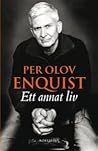
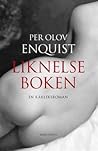
Goodreads helps you follow your favorite authors. Be the first to learn about new releases!
Start by following Per Olov Enquist.

Showing 1-17 of 17
“One day we shall die. But all the other days we shall be alive.”
―
―
“Is it the darkness that is light, or the luminous that is dark? A choice must be made. The same is true of history; people choose what to see, what is light and what is darkness.”
― The Royal Physician's Visit
― The Royal Physician's Visit
“Once upon a time a castle stood here. That’s how it has to be said: Here it stood, and here it was swallowed up by the Danish revolution. And nothing is left of it. Hirschholm Castle was situated on an island. The castle was surrounded by water, it stood in the middle of a lake, and at night the water was covered with the sleeping birds she loved so much, especially when they slept wrapped in their dreams. It took half a century to build the castle, and it wasn’t actually completed until 1746. It was magnificent and beautiful, a Nordic Versailles, but the same thing happened to the castle as happens to very brief dreams: it lasted only one summer, the summer of 1771. After that the dream was over, and the castle stood alone and deserted and slowly sank into decay. It”
― The Royal Physician's Visit
― The Royal Physician's Visit
“En människa kan leva utan syn, en blind är också människa. Men blir man inte sedd, då är man ingenting.”
― Nedstörtad ängel
― Nedstörtad ängel
“She stood motionless on the shore, waiting for the dream to continue, for a solution to become visible, but nothing happened. Then she awoke and thought maybe that was how Pierre had died. Like a bird that takes off and ascends and is suddenly gone.
Free, she thought, released. Then she thought:alone.
She stared at the ceiling. No beauty whatsoever, no freedom; she remembered that Pierre was dead and felt ordinary despair and grief pour in through the dawn. The dream dispersed. Suddenly she was unsure.
Maybe the dream wasn't about Pierre but about herself.”
― The Book About Blanche and Marie
Free, she thought, released. Then she thought:alone.
She stared at the ceiling. No beauty whatsoever, no freedom; she remembered that Pierre was dead and felt ordinary despair and grief pour in through the dawn. The dream dispersed. Suddenly she was unsure.
Maybe the dream wasn't about Pierre but about herself.”
― The Book About Blanche and Marie
“Pjäsen handlade, sa Konungen till mig, om att ondskan funnes i så hög grad hos dessa människor vid hovet att de liknade apor eller djävlar; de gladde sig åt andras olyckor och sörjde över deras framgångar, detta vore det som druidernas tid kallades Kannibalism, Anthropophagie. Därför befunno vi oss bland Kannibaler.”
― The Royal Physician's Visit
― The Royal Physician's Visit
“Det hade jag emot Människosonen. Man ville ju inte säga det rakt ut, men man kunde inte riktigt lita på honom. Han hade liksom för många att ta hand om. Man hade hela tiden en känsla av att när det var som värst, då var det någon annan som kanske hade det värre. Och då blev man ju efterlämnad.”
― Captain Nemo's library
― Captain Nemo's library
“By this he seems to have meant that acuity and spirituality were not bestowed on human beings by some higher being but were shaped by our life experiences. It was our obligations to others that gave meaning to everything, that created inner satisfaction, that gave life its purpose, and that ought to determine a person’s actions.”
― The Royal Physician's Visit
― The Royal Physician's Visit
“Hij schijnt hiermee bedoeld te hebben dat scherpzinnigheid en spiritualiteit de mens niet door een hoger wezen geschonken waren, maar dat ze door onze levenservaringen worden gevormd. Het was de plicht jegens de naaste, die zin aan alles verleende en die een innerlijke tevredenheid teweegbracht, die het leven zin gaf en de handelingen van de mens diende te bepalen”
― The Royal Physician's Visit
― The Royal Physician's Visit
“Människan var inte en maskin, men befann sig inne i maskinen. Det var det som var konsten. Att bemästra maskinen. Då skulle ansikten han tecknade le tacksamt och välvilligt mot honom. Men det svåra, det riktigt svåra var att de inte tycktes tacksamma. Att människornas små elaka huvuden mellan punkterna, de som avbockats! blivit klara! lösta!!!, att dessa ansikten som tittade fram var ondskefulla och illvilliga och otacksamma. Framför allt var de inte hans vänner. Samhället var en maskin, och ansiktena illvilliga. Nej, ingen klarhet längre.”
― The Royal Physician's Visit
― The Royal Physician's Visit
“THE INTERNATIONAL BESTSELLER THE Royal Physician’s Visit PER OLOV ENQUIST Translated from the Swedish by Tiina Nunnally Set in Denmark in the 1760s, The Royal Physician’s Visit magnificently recasts the dramatic era of Danish history when Johann Friedrich Struensee, a German doctor from Altona, student of Enlightenment philosophers Diderot and Voltaire, and court physician to mad young King Christian, stepped through the aperture history had opened for him and became for two years the holder of absolute power in Denmark. Dr. Struensee, tall, handsome, and charismatic, introduced hundreds of reforms, many of which would become hallmarks of the French Revolution twenty years later, including freedom of the press and improvement of the treatment of the peasantry. He also took young Queen Caroline Mathilde—unsatisfied by her unstable, childlike husband—as his mistress. He was a brilliant intellectual and brash reformer, yet Struensee lacked the cunning and subtlety of a skilled politician and, most tragically, lacked the talent to choose the right enemies at court, a flaw which would lead to his torture and execution. An international sensation sold in twenty countries, The Royal Physician’s Visit is a view from the seat of absolute power, a gripping tale, vividly and entertainingly told. Enquist’s talent is in full force as he brilliantly explores the connections that will always run between political theory and practice, power, sex, love, and the life of the mind. “A great book, a powerful book—it effortlessly and self-confidently surmounts the standard works of fiction.” —Die Zeit “Incomparably exciting in its uncompromising lucidity and at the same time unsettling.” —Suddeutsche Zeitung “Time and time again the story takes to the air on the wings of fantasy … a magnificent adventure.” —Upsala Nya Tidning “The erotic scenes are among the most beautiful I have read in modern literature.” —Kvällsposten”
― The Royal Physician's Visit
― The Royal Physician's Visit
“Förr hade jag hemliga drömmar att det vore möjligt att lägga ihop allting, så att allting blev färdigt, tillslutet. Att till sist kunna säga: så var det, det var så det gick till, detta är hela historien. Men det vore ju mot bättre vetande.”
― Kapten Nemos bibliotek
― Kapten Nemos bibliotek
“Det gives alltid något bättre än döden”
― Musikanternas uttåg
― Musikanternas uttåg
“Самое краткое известное мне определение того, что значит быть человеком: право желать смерти.”
― The Magnetist's Fifth Winter
― The Magnetist's Fifth Winter
“Человек может жить без зрения, слепой тоже человек. Но если тебя не видят, то ты – ничто.”
― The Magnetist's Fifth Winter
― The Magnetist's Fifth Winter
“Het moest de Duivel zijn die het gereedschap om het goede te doen uitkoos. Hij nam daarvoor de nobele mensen die vrees konden kennen. Maar als de goeden konden doden noch vernietigen dan was het goede hulpeloos.”
― The Royal Physician's Visit
― The Royal Physician's Visit
“Morfar hade sagt att varenda människa hade några speciella egenskaper som ingen annan hade. Och om man bara använde dem så kunde man försätta berg.”
― De tre grottornas berg & Den tredje grottans hemlighet
― De tre grottornas berg & Den tredje grottans hemlighet