Goodreads helps you follow your favorite authors. Be the first to learn about new releases!
Start by following Mel Thompson.

Showing 1-13 of 13
“Reading some traditional or fundamentalist religious material today is like visiting a bunker. Yes, from the inside you see the logic of what is being said, and the attempt to protect values and ideas that are held dear from what is perceived to be an external threat of nihilism or devilry. You can admire the thickness of the theological or biblical concrete that has been assembled, but the place is stifling and there is a sense that an explosion down here will bring the whole edifice crashing down.”
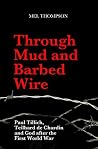
― Through Mud and Barbed Wire: Paul Tillich, Teilhard de Chardin and God after the First World War
― Through Mud and Barbed Wire: Paul Tillich, Teilhard de Chardin and God after the First World War
“The Great War was a moment of change, a fulcrum upon which were balanced so many questions and choices in the way we think about life, religion and the future. It set an agenda through which we have yet to work our way. It threw up questions with which we still wrestle. In particular, it threw into question the meaning of ‘God’ and the relevance of religion. We learn from it what we may.”
― Through Mud and Barbed Wire: Paul Tillich, Teilhard de Chardin and God after the First World War
― Through Mud and Barbed Wire: Paul Tillich, Teilhard de Chardin and God after the First World War
“I want to suggest that the development in the 20th century of a fundamentalist and literalist approach to religious ideas is just such a quest for a comforting illusion in the face of the shaking of life’s foundations, and that it finds a parallel with the bizarre story of Fort Douaumont.”
― Through Mud and Barbed Wire: Paul Tillich, Teilhard de Chardin and God after the First World War
― Through Mud and Barbed Wire: Paul Tillich, Teilhard de Chardin and God after the First World War
“The problem is, once separated from science, philosophy, sociology, psychology and commonsense, religious ideas are free to impose an authoritative interpretation on anything and everything, however irrational that interpretation may be.”
― Through Mud and Barbed Wire: Paul Tillich, Teilhard de Chardin and God after the First World War
― Through Mud and Barbed Wire: Paul Tillich, Teilhard de Chardin and God after the First World War
“In the quest for understanding present reality, metanarratives are the enemy. Communism, capitalism, rationalism, fundamentalism, humanism, along with most religious movements all spell intellectual doom for those on an open quest. They offer certainty and manageable solutions to our existential dilemmas. But they do not and cannot offer truth.”
― Through Mud and Barbed Wire: Paul Tillich, Teilhard de Chardin and God after the First World War
― Through Mud and Barbed Wire: Paul Tillich, Teilhard de Chardin and God after the First World War
“In the process of natural selection winners cannot emerge unless there are losers.”
― Through Mud and Barbed Wire: Paul Tillich, Teilhard de Chardin and God after the First World War
― Through Mud and Barbed Wire: Paul Tillich, Teilhard de Chardin and God after the First World War
“It therefore came as a shock to me to find that parts of it seemed both logical and realistic, from a narrowly nationalistic point of view, and not a million miles from arguments that are still presented by the right wing of European politics.”
― Through Mud and Barbed Wire: Paul Tillich, Teilhard de Chardin and God after the First World War
― Through Mud and Barbed Wire: Paul Tillich, Teilhard de Chardin and God after the First World War
“In most other circumstances, nations borrow to invest or repay earlier debts; in war, nations borrow to waste,”
― Through Mud and Barbed Wire: Paul Tillich, Teilhard de Chardin and God after the First World War
― Through Mud and Barbed Wire: Paul Tillich, Teilhard de Chardin and God after the First World War
“The longing for security and certainty had led to the growth of fundamentalist religion and also to totalitarian regimes. Both Protestantism and the Enlightenment had put the burden of thought and choice upon the individual; for many, it proved more than they were willing to accept, finding it easier to commit to an external source of authority,”
― Through Mud and Barbed Wire: Paul Tillich, Teilhard de Chardin and God after the First World War
― Through Mud and Barbed Wire: Paul Tillich, Teilhard de Chardin and God after the First World War
“If you take the existentialist route, then the battles between atheist and theist fundamentalists are shown to be utterly superficial. Religion is real, but it is a human reality. It can be helpful or harmful, creative or damaging; but that is to be expected, because it is subject to all the normal failings of a human enterprise.”
― Through Mud and Barbed Wire: Paul Tillich, Teilhard de Chardin and God after the First World War
― Through Mud and Barbed Wire: Paul Tillich, Teilhard de Chardin and God after the First World War
“Vicious as his views are, they represent an extreme form of a more general tendency, present today as strongly as between the wars, to seek scapegoat groups – particularly now immigrants – as responsible for internal failures within society.”
― Through Mud and Barbed Wire: Paul Tillich, Teilhard de Chardin and God after the First World War
― Through Mud and Barbed Wire: Paul Tillich, Teilhard de Chardin and God after the First World War
“Atheistic humanism, as a creed, is as threatened by the horror of deliberate human self-destruction as is theism.”
― Through Mud and Barbed Wire: Paul Tillich, Teilhard de Chardin and God after the First World War
― Through Mud and Barbed Wire: Paul Tillich, Teilhard de Chardin and God after the First World War
“Asked if he believed in God, Jung said that he did not believe, he knew. For him, as for Tillich, God was not the sort of reality about which discussions of existence made any sense. What Jung knew was a religious truth, a way of looking at the world and giving it value and meaning. It was not a scientific hypothesis, nor a conclusion to be reached on the basis of available evidence.”
― Through Mud and Barbed Wire: Paul Tillich, Teilhard de Chardin and God after the First World War
― Through Mud and Barbed Wire: Paul Tillich, Teilhard de Chardin and God after the First World War