Goodreads helps you follow your favorite authors. Be the first to learn about new releases!
Start by following Clayborne Carson.

Showing 1-23 of 23
“It's not quite as valuable as if it had been written in 1929, when Martin Luther King was born.”
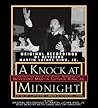
― A Knock at Midnight: Inspiration from the Great Sermons of Reverend Martin Luther King, Jr.
― A Knock at Midnight: Inspiration from the Great Sermons of Reverend Martin Luther King, Jr.
“But America, as I look at you from afar, I wonder whether your moral and spiritual progress has been commensurate with your scientific progress. It seems to me that your moral progress lags behind your scientific progress. Your poet Thoreau used to talk about “improved means to an unimproved end.” How often this is true. You have allowed the material means by which you live to outdistance the spiritual ends for which you live. You have allowed your mentality to outrun your morality. You have allowed your civilization to outdistance your culture. Through your scientific genius you have made of the world a neighborhood, but through your moral and spiritual genius you have failed to make of it a brotherhood. So America, I would urge you to keep your moral advances abreast with your scientific advances.”
― A Knock at Midnight: Inspiration from the Great Sermons of Reverend Martin Luther King, Jr.
― A Knock at Midnight: Inspiration from the Great Sermons of Reverend Martin Luther King, Jr.
“It has been my conviction ever since reading Rauschenbusch that any religion that professes concern for the souls of men and is not equally concerned about the slums that damn them, the economic conditions that strangle them, and the social conditions that cripple them is a spiritually moribund religion only waiting for the day to be buried. It well has been said: “A religion that ends with the individual, ends.”
― The Autobiography of Martin Luther King, Jr.
― The Autobiography of Martin Luther King, Jr.
“Whenever the church, consciously or unconsciously, caters to one class it loses the spiritual force of the “whoso-ever will, let him come” doctrine, and is in danger of becoming little more than a social club with a thin veneer of religiosity.”
― The Autobiography of Martin Luther King, Jr.
― The Autobiography of Martin Luther King, Jr.
“We are prone to judge success by the index of our salaries or the size of our automobiles, rather than by the quality of our service and relationship to humanity.”
― The Autobiography of Martin Luther King, Jr.
― The Autobiography of Martin Luther King, Jr.
“The ultimate tragedy of Birmingham was not the brutality of the bad people, but the silence of the good people.”
― The Autobiography of Martin Luther King, Jr.
― The Autobiography of Martin Luther King, Jr.
“I often say that if we , as a people, had as much religion in our hearts and souls as we have in our legs and feet, we could change the world. (p.15)
It is my opinion that sincerity is not enough for preaching ministry. The minister must be both sincere and intelligent. (p.18)”
― The Autobiography of Martin Luther King, Jr.
It is my opinion that sincerity is not enough for preaching ministry. The minister must be both sincere and intelligent. (p.18)”
― The Autobiography of Martin Luther King, Jr.
“if Richard Nixon is not sincere, he is the most dangerous man in America.”
― The Autobiography of Martin Luther King, Jr.
― The Autobiography of Martin Luther King, Jr.
“capitalism is always in danger of inspiring men to be more concerned about making a living than making a life. We are prone to judge success by the index of our salaries or the size of our automobiles, rather than by the quality of our service and relationship to humanity.”
― The Autobiography of Martin Luther King, Jr.
― The Autobiography of Martin Luther King, Jr.
“noncooperation with evil is just as much a moral duty as is cooperation with good. So”
― The Autobiography of Martin Luther King, Jr.
― The Autobiography of Martin Luther King, Jr.
“I have been gravely disappointed with the white moderate. I have almost reached the regrettable conclusion that the Negro’s great stumbling block in his stride toward freedom is not the White Citizen’s Counciler or the Ku Klux Klanner, but the white moderate, who is more devoted to “order” than to justice;”
― The Autobiography of Martin Luther King, Jr.
― The Autobiography of Martin Luther King, Jr.
“Constructive ends can never give absolute moral justification to destructive means,”
― The Autobiography of Martin Luther King, Jr.
― The Autobiography of Martin Luther King, Jr.
“I became convinced that noncooperation with evil is as much a moral obligation as is cooperation with good.”
― The Autobiography of Martin Luther King, Jr.
― The Autobiography of Martin Luther King, Jr.
“But I had to look at something else beyond the man—the people who surrounded him—and I felt that Kennedy was surrounded by better people. It was on that basis that I felt that Kennedy would make the best president.”
― The Autobiography of Martin Luther King, Jr.
― The Autobiography of Martin Luther King, Jr.
“For Martin, social justice would not “roll in on the wings of inevitability” but would come through struggle and sacrifice. *”
― A Call to Conscience: The Landmark Speeches of Dr. Martin Luther King, Jr.
― A Call to Conscience: The Landmark Speeches of Dr. Martin Luther King, Jr.
“We must rapidly begin the shift from a thing-oriented society to a person-oriented society. When machines and computers, profit motives and property rights, are considered more important than people, the giant triplets of racism, extreme materialism, and militarism are incapable of being conquered.”
― The Autobiography of Martin Luther King, Jr.
― The Autobiography of Martin Luther King, Jr.
“it gave me a new appreciation for objective appraisal”
― The Autobiography of Martin Luther King, Jr.
― The Autobiography of Martin Luther King, Jr.
“Man is not made for the state; the state is made for man. To deprive man of freedom is to relegate him to the status of a thing, rather than elevate him to the status of a person. Man must never be treated as a means to the end of the state, but always as an end within himself.”
― The Autobiography of Martin Luther King, Jr.
― The Autobiography of Martin Luther King, Jr.
“And I am not doing any thing that I would not do in front of you.”
― The Autobiography of Martin Luther King, Jr.
― The Autobiography of Martin Luther King, Jr.
“He continues by emphasizing that, 'the problem facing our people here in America is bigger than all other personal or organizational differences. Therefore, as leaders, we must stop worrying about the threat that we seem to think we pose to each other's personal prestige, and concentrate our united efforts toward solving the unending hurt that is being done daily to our people here in America.”
― Malcolm X: The FBI File
― Malcolm X: The FBI File
“For King, the essence of democracy is the belief that each person is created in the image of God. “We will know one day that God made us to live together as brothers and to respect the dignity and worth of every man,” he affirms.”
― A Knock at Midnight: Inspiration from the Great Sermons of Reverend Martin Luther King, Jr.
― A Knock at Midnight: Inspiration from the Great Sermons of Reverend Martin Luther King, Jr.
“He does 'not pretend to be a divine man,' he says, nor is he an educated man, or 'an expert in any particular field . . . but I am sincere,' he adds, 'and my sincerity are my my credentials.”
― Malcolm X: The FBI File
― Malcolm X: The FBI File
“He said he would be willing to meet with any group, white or black, if they are willing and are honestly sincere in trying to find the problem and present a solution to the racial problem. He said the lack of education for the white as well as the black is one of the causes for the social problem in the United States. He said education will replace deficiency in the Negro and deficiency in the white person. Negro leaders have to accept the fact that there are problems between the white and black people and they must be sincere in trying to obtain a solution to their problems.”
― Malcolm X: The FBI File
― Malcolm X: The FBI File