Goodreads helps you follow your favorite authors. Be the first to learn about new releases!
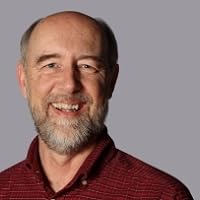
Start by following Jim Wilder.
Showing 1-30 of 46
“Another culprit that leaks joy is unresolved trauma. From the brain’s perspective, trauma happens anytime we suffer alone. Suffering turns into trauma when we are unable to process our suffering with God and other people. Trauma is stored in our brain, in circuits of flesh, kind of like an armed mousetrap.”
― The Other Half of Church: Christian Community, Brain Science, and Overcoming Spiritual Stagnation
― The Other Half of Church: Christian Community, Brain Science, and Overcoming Spiritual Stagnation
“Western Christianity has long taught that we are changed by what we believe and what we choose—that is, by the human will responding to God. Attachment to God would functionally replace the will as the mechanism of salvation and transformation.”
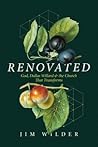
― Renovated: God, Dallas Willard, and the Church That Transforms
― Renovated: God, Dallas Willard, and the Church That Transforms
“A focus on attachment would have profound implications for our understanding of human character, fellowship, and spiritual formation.”
― Renovated: God, Dallas Willard, and the Church That Transforms
― Renovated: God, Dallas Willard, and the Church That Transforms
“Many of us have a habit of bonding with the food itself instead of the One who provided the food or the person who prepared it. Bonding with food leads to food addictions and unhealthy eating habits. When we bond with the food, we do not build our attachment with others at the table and God who provided the meal. For food to act as a bonding agent, we need good teaching and training in the community. Learning how to use food and drink to build our love for each other should be part of every church’s discipleship program.”
― The Other Half of Church: Christian Community, Brain Science, and Overcoming Spiritual Stagnation
― The Other Half of Church: Christian Community, Brain Science, and Overcoming Spiritual Stagnation
“The Bible often includes the phrase “Fear not” because even when we’re met by God or an angel, our initial response is “Aaaugggghh!” Our lives are based on fear, and we must confront that fact.”
― Renovated: God, Dallas Willard, and the Church That Transforms
― Renovated: God, Dallas Willard, and the Church That Transforms
“And having received love, you will be transformed into a person who loves.”
― Renovated: God, Dallas Willard, and the Church That Transforms
― Renovated: God, Dallas Willard, and the Church That Transforms
“Having no plan for transformation produces Christians with poor character who try to do good ministry. Jesus did the opposite. He started His ministry by preaching about a transformed inner life that drives the outer life. A transformed inner life then drives everything we do.”
― The Other Half of Church: Christian Community, Brain Science, and Overcoming Spiritual Stagnation
― The Other Half of Church: Christian Community, Brain Science, and Overcoming Spiritual Stagnation
“Dallas saw in attachment love a possible remedy.”
― Renovated: God, Dallas Willard, and the Church That Transforms
― Renovated: God, Dallas Willard, and the Church That Transforms
“Contrary to the popular misconception that people are left-brain or right-brain dominant, both sides are created to operate in harmony”
― The Other Half of Church: Christian Community, Brain Science, and Overcoming Spiritual Stagnation
― The Other Half of Church: Christian Community, Brain Science, and Overcoming Spiritual Stagnation
“Being a disciple of Jesus means reacting to the world as He would react. One author describes Christian discipleship as the “way to become the kind of person who does, easily and routinely, what Jesus said—does it without having to think much about it.”3 I like that explanation, but how do we train ourselves to spontaneously act and think like Jesus if this happens faster than conscious thought?”
― The Other Half of Church: Christian Community, Brain Science, and Overcoming Spiritual Stagnation
― The Other Half of Church: Christian Community, Brain Science, and Overcoming Spiritual Stagnation
“of our brain. Joy lays the foundation for how well we will handle relationships, emotions, pain and pleasure throughout our lifetime. Joy creates an identity that is stable and consistent over time. Joy gives us the freedom to share our hearts with God and others. Expressing our joyful identity creates space for others to belong. Joy gives us the freedom to live without masks because, in spite of our weaknesses, we know we are loved. We are not afraid of our vulnerabilities or exposure. Joy gives us the freedom from fear to live from the heart Jesus gave us. We discover increasing delight in becoming the people God knew we could be.5”
― The Other Half of Church: Christian Community, Brain Science, and Overcoming Spiritual Stagnation
― The Other Half of Church: Christian Community, Brain Science, and Overcoming Spiritual Stagnation
“When Christian leaders do not train people in love, relational skills, and identity, this neglect produces a half-baked discipleship. Most leaders, like me, have never developed their own maturity skills. Churches are filled with leaders who are gifted at theology, preaching, and vision-casting, but may not have relational and emotional skills.”
― The Other Half of Church: Christian Community, Brain Science, and Overcoming Spiritual Stagnation
― The Other Half of Church: Christian Community, Brain Science, and Overcoming Spiritual Stagnation
“Salvation through a new, loving attachment to God that changes our identities would be a very relational way to understand our salvation: We would be both saved and transformed through attachment love from, to, and with God.”
― Renovated: God, Dallas Willard, and the Church That Transforms
― Renovated: God, Dallas Willard, and the Church That Transforms
“Notice the order. Judas wonders why Jesus doesn’t reveal Himself to everyone. Jesus says that He reveals Himself only to those who love Him. Love is the first step. We love Jesus, and we will obey. When we do not love Jesus, we will not obey Him. We will see in later chapters that our loving attachment to Jesus forms our character. A left-brain view of Jesus’ teaching would conclude that we need to choose to obey, and this will prove that we love Him. This is exactly backwards. If I want to obey Jesus, I need to focus on right-brain skills that help me love Him and receive His love. My behavior will then take care of itself. Our brains are designed to change us through love.”
― The Other Half of Church: Christian Community, Brain Science, and Overcoming Spiritual Stagnation
― The Other Half of Church: Christian Community, Brain Science, and Overcoming Spiritual Stagnation
“The right brain processes these questions: Who is happy to see me here? What do I feel right now? Is there anyone here who understands me? How do I act like myself right now? What do my people do in this situation? The answers to these questions drive our character development.”
― The Other Half of Church: Christian Community, Brain Science, and Overcoming Spiritual Stagnation
― The Other Half of Church: Christian Community, Brain Science, and Overcoming Spiritual Stagnation
“(1) Joy is primarily transmitted through the face (especially the eyes) and secondarily through voice. (2) Joy is relational. It is what we feel when we are with someone who is happy to be with us. Joy does not exist outside of a relationship. (3) Joy is important to God and to us.”
― The Other Half of Church: Christian Community, Brain Science, and Overcoming Spiritual Stagnation
― The Other Half of Church: Christian Community, Brain Science, and Overcoming Spiritual Stagnation
“Our right brain governs our emotions and awareness of our bodies. In times of distress, low joy, or general left-brained dominant living, this integration dims or breaks down. We will often feel “outside our bodies” or “in our minds.” In left-brained Christianity, we tend to lose our sense of feeling God’s presence in our body. The right brain governs this ability, so as we gravitate toward a full-brained discipleship, we grow to experience God in our bodies.”
― The Other Half of Church: Christian Community, Brain Science, and Overcoming Spiritual Stagnation
― The Other Half of Church: Christian Community, Brain Science, and Overcoming Spiritual Stagnation
“What was the relationship of spiritual maturity to emotional maturity?”
― Renovated: God, Dallas Willard, and the Church That Transforms
― Renovated: God, Dallas Willard, and the Church That Transforms
“When our churches or communities have fear-based attachments to each other and to God, this creates a chaotic environment for growth.7 If attachments are weak or transitory instead of secure, development will be stunted. The neurological circuits that Jesus designed to build us into His image are running on empty. The soil is depleted.”
― The Other Half of Church: Christian Community, Brain Science, and Overcoming Spiritual Stagnation
― The Other Half of Church: Christian Community, Brain Science, and Overcoming Spiritual Stagnation
“God. As I searched for what it meant to believe in Jesus, three elements of the Christian life came into sharp focus: (1) dialogue with God about everything, (2) do nothing out of fear, and (3) love people deeply. Dallas was precipitating a collision between my professional training and the very spiritual life that initiated my counseling education”
― Renovated: God, Dallas Willard, and the Church That Transforms
― Renovated: God, Dallas Willard, and the Church That Transforms
“Traumatized people were not achieving the degree of transformation they expected. She noticed that commonly proposed solutions worked for some people but not as well for others. Good-hearted people were working very hard using both theological and psychological approaches and still not seeing their desired change into the character of Christ.”
― Renovated: God, Dallas Willard, and the Church That Transforms
― Renovated: God, Dallas Willard, and the Church That Transforms
“Even healthy seeds will not grow well in depleted soil.”
― The Other Half of Church: Christian Community, Brain Science, and Overcoming Spiritual Stagnation
― The Other Half of Church: Christian Community, Brain Science, and Overcoming Spiritual Stagnation
“Unfortunately, when he looked at churches, he noted a pattern of neglect. Spiritual formation was pushed to the side by leaders who focused on other priorities and projects. When this happened, character formation became ineffective, watered down, or dropped altogether. Christian leaders often did not take character transformation seriously. Poor character was the elephant in the church no one wanted to acknowledge.4 Willard believed that obedience comes from inner character transformation, what he called “the renovation of the heart.” In his opinion, disappointingly few hearts were being renovated.”
― The Other Half of Church: Christian Community, Brain Science, and Overcoming Spiritual Stagnation
― The Other Half of Church: Christian Community, Brain Science, and Overcoming Spiritual Stagnation
“Joy gives us the freedom to live without masks because, in spite of our weaknesses, we know we are loved. We are not afraid of our vulnerabilities or exposure. Joy gives us the freedom from fear to live from the heart Jesus gave us. We discover increasing delight in becoming the people God knew we could be.5”
― The Other Half of Church: Christian Community, Brain Science, and Overcoming Spiritual Stagnation
― The Other Half of Church: Christian Community, Brain Science, and Overcoming Spiritual Stagnation
“The spiritually mature person is someone who has chosen the Kingdom of God—God’s reign over them—as their guide to what is good. And not only that, but the Kingdom is understood as what will enable them to achieve and live for what is good. They have developed the knowledge and habits that keep them constantly turned toward and expectant of God and God’s action in their life. This is the primary source of direction and empowerment for all that concerns them and their world.”
― Renovated: God, Dallas Willard, and the Church That Transforms
― Renovated: God, Dallas Willard, and the Church That Transforms
“Handling a narcissist who is already rooted in your community, possibly as a leader, is beyond the scope of this book. Jim Wilder has written at length on this topic in The Pandora Problem. (See Further Resources for This Chapter”
― The Other Half of Church: Christian Community, Brain Science, and Overcoming Spiritual Stagnation
― The Other Half of Church: Christian Community, Brain Science, and Overcoming Spiritual Stagnation
“This is a natural result of left-brained Christianity, which gravitates toward strategies that are measurable—number of dollars, number of people, number of campuses, number of small groups. The slow, messy work of character formation, which is hard to measure, is displaced by quantifiable goals.”
― The Other Half of Church: Christian Community, Brain Science, and Overcoming Spiritual Stagnation
― The Other Half of Church: Christian Community, Brain Science, and Overcoming Spiritual Stagnation
“Joy helps us regulate our emotions and endure suffering. Jesus refused to relinquish joy in the midst of His suffering on the cross. When we are able to stay relationally connected to others and God, we experience joy while we suffer. Joy does not remove our pain, but it gives us the strength to endure. Remember that joy is relational, so “joy in suffering” means that God and our community are glad to be with us in our distress. They do not allow us to suffer alone. We are able to bear our suffering like Jesus, “who for the joy set before Him endured the cross” (Heb. 12:2 NASB).”
― The Other Half of Church: Christian Community, Brain Science, and Overcoming Spiritual Stagnation
― The Other Half of Church: Christian Community, Brain Science, and Overcoming Spiritual Stagnation
“See, most people who remain emotionally immature are hung up on a lot of really bad stuff. And that often expresses itself in a secret life that they have to hide from others. But healthy people—people who are spiritually and emotionally mature, people who are following Jesus—don’t live there. So Paul can say in verse 9 of Philippians 4, “The things you have learned and received and heard and seen in me, practice these things, and the God of peace will be with you.”
― Renovated: God, Dallas Willard, and the Church That Transforms
― Renovated: God, Dallas Willard, and the Church That Transforms
“His first talk addresses the question of how spiritual wholeness and emotional maturity are related.”
― Renovated: God, Dallas Willard, and the Church That Transforms
― Renovated: God, Dallas Willard, and the Church That Transforms