Goodreads helps you follow your favorite authors. Be the first to learn about new releases!
Start by following Drew G. I. Hart.

Showing 1-30 of 87
“Colorblind ideology is the twenty-first-century continuation of white Christian silence to racism.”
― Trouble I've Seen: Changing the Way the Church Views Racism
― Trouble I've Seen: Changing the Way the Church Views Racism
“The whole church desperately needs to renounce all forms of lording over others and all forms of centralizing white normativity. We need to make sure that the whole church can be seated around the table of God together as equals, where only Jesus is centralized and Lord over all.”
― Trouble I've Seen: Changing the Way the Church Views Racism
― Trouble I've Seen: Changing the Way the Church Views Racism
“Taking for granted that God is with them, most people grow up always presuming what God is like. Many intuitively believe that God blesses America and thinks of it as a divine vehicle in the world. God’s America is (or was) mostly an innocent Christian nation. We can throw out clichés like “God is sovereign,” “God is all-knowing,” “God is [fill in the blank]” because we have God in our doctrinal box. Unfortunately, dominant cultural reflections on God rarely adhere with the revelation of Jesus as specifically attested to in Scripture.”
― Trouble I've Seen: Changing the Way the Church Views Racism
― Trouble I've Seen: Changing the Way the Church Views Racism
“The disproportionate policing, stop-and-frisk encounters, arrests, and incarceration of racial minorities ought to awaken the church, because Jesus himself called for us to visit the imprisoned (Matthew 25:34-46) and to bring release to the captives (Luke 4:18-19).”
― Trouble I've Seen: Changing the Way the Church Views Racism
― Trouble I've Seen: Changing the Way the Church Views Racism
“What we imagine a God could and should do—the God of Jesus Christ has nothing to do with all that.”
― Trouble I've Seen: Changing the Way the Church Views Racism
― Trouble I've Seen: Changing the Way the Church Views Racism
“Subdominant groups need not depend merely on stereotypes created from a distance about “the other” when they are able to share personal stories and experiences within their communities that, when collected, reveal troubling widespread realities. Altogether, the oppressed have an epistemological advantage that allows them to see things more clearly than those whose vision is blocked by denial and distorted by faulty claims of objectivity.”
― Trouble I've Seen: Changing the Way the Church Views Racism
― Trouble I've Seen: Changing the Way the Church Views Racism
“Jesus may be our answer, but our projections of Jesus may also be our problem.”
― Trouble I've Seen: Changing the Way the Church Views Racism
― Trouble I've Seen: Changing the Way the Church Views Racism
“Jesus does not make lording over others an option for his disciples. Unfortunately, most churchgoers today don’t appear to know that. People have found a way to call themselves Christian, which means to be Jesus–shaped, and still chase after power without thinking twice about it. We disregard Jesus’ teaching on power and how we ought not to use it to dominate others. Our practice, though, doesn’t change the fact: Jesus says that it must not be so!”
― Trouble I've Seen: Changing the Way the Church Views Racism
― Trouble I've Seen: Changing the Way the Church Views Racism
“He wouldn’t be identified as Messiah because of some royal procession; he wouldn’t be identified as Christ for being born in a palace; he wouldn’t be identified as God’s Son because of a royal announcement given from Rome. No. Instead, he would be recognized for being born in some little town out in the country, lying in a humble feeding trough. None of this divine activity was accidental. The very location and circumstance of Christ’s birth was a symbol and sign of God’s solidarity with the socially oppressed and outcast.”
― Trouble I've Seen: Changing the Way the Church Views Racism
― Trouble I've Seen: Changing the Way the Church Views Racism
“Jesus’ own experience of being arrested at night, put through an unfair trial, and then given a state-sanctioned execution should be the interpretive key for Christians in understanding the inability of empires to dispense true justice.”
― Trouble I've Seen: Changing the Way the Church Views Racism
― Trouble I've Seen: Changing the Way the Church Views Racism
“Portions of the African American community, like most ethnic minority groups in America, still espouse a doctrine of respectability. Today, when we discuss issues around mass incarceration and police brutality, too often the conversation turns toward how black people should act: pulling up pants, taking out earrings, and speaking “properly,” as if such behavior merits being treated as less than human. In the early twenty–first century, Bill Cosby went on tour to critique black people for not living up to the standards of white dominant culture. While some of his points were about personal responsibility, much of it was about dominant cultural respectability. He even at times made fun of African Americans’ names. As we’ve seen, this mind–set, as deeply colonized as it was, has a long history.”
― Trouble I've Seen: Changing the Way the Church Views Racism
― Trouble I've Seen: Changing the Way the Church Views Racism
“Black life as despised humanity runs parallel to the life of Christ, who entered into socially rejected and scandalized life. The question about this poor Jew from Nazareth living under Roman oppression—“Can anything good come out of Nazareth?” (John 1:46)—demonstrates the extent to which Jesus was seen as an insignificant and punishable body. His body was one that could be grabbed at night without recourse and then run through an unjust judicial process. Like the thousands of black bodies that hung from trees, having been executed by the hands of white mobs, Jesus’ body was hung on that old rugged tree as a public spectacle of Rome. It was a death reserved for bandits and revolutionaries. That Jesus identified so intimately with “the wretched of the earth,” even to the point of death, should result in God’s church daring to see humanity from the perspective of God. To follow Jesus every day demands that we also must dare to interpret vulnerable and outcast bodies through the lens of the crucified Christ, through whom God’s wisdom and power is revealed.”
― Trouble I've Seen: Changing the Way the Church Views Racism
― Trouble I've Seen: Changing the Way the Church Views Racism
“Merely focusing on obeying the law is an intentionally shortsighted and irresponsible posture for disciples of Jesus. With that logic, a Christian who lived in 1850 would have had to fully endorse slavery. I believe that Augustine was right when he said, more than fifteen hundred years ago, that “an unjust law is no law at all.”
― Trouble I've Seen: Changing the Way the Church Views Racism
― Trouble I've Seen: Changing the Way the Church Views Racism
“The kingdom of God has become visible right under the surveillance of those who claim supremacy over others through control and domination. These contrasting ways of life offer different promises, different ways of life, and different end goals. The old order is passing away, and the kingdom of God is the future that God has for us that has been ushered into the present. The kingdom of God is already being experienced, in part, right now, for those who are willing to follow and cling to the delivering presence of the living Jesus.”
― Trouble I've Seen: Changing the Way the Church Views Racism
― Trouble I've Seen: Changing the Way the Church Views Racism
“The church must be a place where we take seriously the call to nonconformity in the way of Jesus. In doing so, we are drawn into further solidarity with the poor, oppressed, and “lowly,” as Paul talked about. We refuse to participate in the death–dealing patterns of violence, but from below we experience God’s goodness. Enjoying God’s goodness in subversive, kingdom–manifesting communities of Christ provides the unexpected joy and blessing that is veiled from the awareness of Caesar. The value of encountering Jesus’ presence in the world is still hidden from most.”
― Trouble I've Seen: Changing the Way the Church Views Racism
― Trouble I've Seen: Changing the Way the Church Views Racism
“We should never separate race from its ideological and political work. The global practices of European domination, colonization, and conquest in the Americas and Africa in the sixteenth century required ideological justification. Otherwise, such brutal and inhumane practices against indigenous communities would undermine Anglo-Saxon Protestants’ image of themselves as an innocent Christian nation. Drawing from an older, preexisting myth of Anglo-Saxon superiority, white supremacy and racism constructed a white-dominated understanding of the world rooted in racial hierarchy.”
― Trouble I've Seen: Changing the Way the Church Views Racism
― Trouble I've Seen: Changing the Way the Church Views Racism
“The church urgently needs to understand the realities of racism better than it has previously. Christians must do a better job of thinking, analyzing, discussing, and ultimately transforming our racialized lives into antiracist and antihierarchical ways of life that conform to the way of Jesus. We must learn to see and understand the racism all around us so that we can faithfully resist being complicit in its patterns. Once we are able to see it, we must engage in initiatives of deep metanoia, or repentance—initiatives that change us from racialized accommodation to resistance.”
― Trouble I've Seen: Changing the Way the Church Views Racism
― Trouble I've Seen: Changing the Way the Church Views Racism
“What do you do when another people group with proven military strength dominates you? What do you do when its cultural hegemony erodes one’s own culture and values? What do you do when you are being drawn into the very systems and societal patterns that are also taxing, exploiting, humiliating, and executing you on a regular basis? The uncritical or despair–filled stance is to adopt an “if you can’t beat them, join them” mentality. Paul, however, takes a more subversive posture: “I exhort you, brothers and sisters, by the mercies of God, to present your bodies as a sacrifice—alive, holy, and pleasing to God—which is your reasonable service. Do not be conformed to this present world, but be transformed by the renewing of your mind, so that you may test and approve what is the will of God—what is good and well–pleasing and perfect” (Romans 12:1–2). These two verses challenge us with an embodied, decolonizing way of life that refuses to join the oppressive systems that manage and puppet most people’s lives. First, we are told that we must put our very bodies, through action, on the line. Our bodies must become living sacrifices. Our bodies, and what we do with them, actually matter. We are not disembodied souls, and God cares about more than our spiritual lives. God says, Put your body on the line! What kind of bodily life will you engage in? Will your body be aligned with the rituals of American civil religion? Or will you vulnerably place your body in confrontation with the establishment, as Jesus did with his own body when he flipped tables in judgment of the injustice and idolatry in the temple? Apparently such bodily involvement is our reasonable service to God.”
― Trouble I've Seen: Changing the Way the Church Views Racism
― Trouble I've Seen: Changing the Way the Church Views Racism
“America to talk extensively about reverse racism. Reverse racism is the term developed by white dominant culture to suggest that the real problem of racism today is that white people experience prejudice and discrimination by people of color. According to this framing, white men have it the hardest right now in our society. Despite the fact that white men are overrepresented and predominant in the state, economic, religious, political, and media sectors, within the reverse racism framework, they are the true victims in the American story.”
― Trouble I've Seen: Changing the Way the Church Views Racism
― Trouble I've Seen: Changing the Way the Church Views Racism
“With a sociological framework, we can begin to see that the average white person lives a highly racialized life, though he or she is often unaware of it. Patterns of self-segregation become clear. One lives mostly among those of the same race. The same thing goes for one’s church, intimate relational networks, phone contacts, and guests at the dinner table. You can even see the racial distinctiveness of most people’s bookshelves, social media contacts, and music. Through these social patterns, sociologists are able to reveal high levels of self-segregation among white Americans (more so, on average, than among black Americans).”
― Trouble I've Seen: Changing the Way the Church Views Racism
― Trouble I've Seen: Changing the Way the Church Views Racism
“Immersion in and understanding of the black community have never been routinely expected or necessary for employees, politicians, scholars, doctors, teachers, or pastors. This is even more so the case for most white Christian communities, which willfully ignore the diverse gifts of the black church tradition. Black faith and tradition are rarely looked to as worthy sources for learning about how to practice spiritual disciplines, embody daily discipleship, and share in Christian community.”
― Trouble I've Seen: Changing the Way the Church Views Racism
― Trouble I've Seen: Changing the Way the Church Views Racism
“White Christians, especially, seem incapable of recognizing the contradictions of their utopian language and their distinctly and deeply racialized lifestyles and daily choices. Colorblind rhetoric prevents people from evaluating the majority of their social relationships, the places they feel they either belong or do not belong, and the kinds of cultural, intellectual, and artistic influences that are worthy of engagement. With such contradictions, I can only assume that it is not color that they are not seeing; rather, it is racism that is being missed.”
― Trouble I've Seen: Changing the Way the Church Views Racism
― Trouble I've Seen: Changing the Way the Church Views Racism
“The white dominant standard of racial discernment rarely finds white racism, while simultaneously deciding that the specific card played was falsely made into a “race card.”An individual moment, event, or action is judged by looking for KKK rhetoric, or maybe the N-word, or some cross burning in the yard. If such overt hate crimes prominent in the early and mid-twentieth century are not currently present or visible, then the racial component of the complaint is quickly dismissed.”
― Trouble I've Seen: Changing the Way the Church Views Racism
― Trouble I've Seen: Changing the Way the Church Views Racism
“This perspective on racism requires that people in the dominant culture have deep and wide conversations with the black community. Typically, many white people search for the one black person who holds the same positions and perspectives as they do, and then prop that person up as verification of their own beliefs. Taking a riskier and more teachable posture—allowing an entire community to speak into their lives—would ultimately result in changing their operating definitions. White people must learn to define individual incidents in light of the larger pattern of society.”
― Trouble I've Seen: Changing the Way the Church Views Racism
― Trouble I've Seen: Changing the Way the Church Views Racism
“In fact, the only time that American dominant culture accepts accusations of racism is in cases of so-called reverse discrimination.”
― Trouble I've Seen: Changing the Way the Church Views Racism
― Trouble I've Seen: Changing the Way the Church Views Racism
“The issue before us is the epistemological divide that exists between the dominant group and those living on the underside of the social hierarchy. Those oppressed by dominating and controlling powers tend to hold a different view of the situation than those benefiting from life in a culture and community that violates other people (whether directly or indirectly).”
― Trouble I've Seen: Changing the Way the Church Views Racism
― Trouble I've Seen: Changing the Way the Church Views Racism
“White intuition, perception, assumptions, and experience—limited by homogeneous networks and socialized in dominant society—claim one thing, while black experience claims an alternative and diverging reality. This epistemological divide—that is, the partition between our different ways of knowing and perceiving—is an even greater reality in the church than among the rest of society.”
― Trouble I've Seen: Changing the Way the Church Views Racism
― Trouble I've Seen: Changing the Way the Church Views Racism
“Race and racism are commonly misunderstood terms. Despite its common usage, race is not a natural biological category for human beings, though physical features certainly create boundaries of difference. The language of race obscures rather than clarifies human similarity and difference. It is smoke and mirrors. Instead of being a biological fact, race is a social construct. Racial categories are not inevitable; they were created—and not very long ago, given the length of human history. And while human prejudice between competing people groups is ancient in practice, race and racism are not.”
― Trouble I've Seen: Changing the Way the Church Views Racism
― Trouble I've Seen: Changing the Way the Church Views Racism
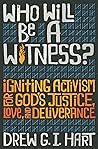
“We remain as innocent as doves by employing strategies of peacemaking and nonviolence, by overcoming evil with good, through radical love and prophetic intervention, and through vulnerable noncooperation with anything that clashes with the reign of the Messiah.”
― Who Will Be A Witness: Igniting Activism for God's Justice, Love, and Deliverance
― Who Will Be A Witness: Igniting Activism for God's Justice, Love, and Deliverance
“There is another definition of racism, however, and it comes from the sociology department rather than English dictionaries. Specifically, in a field of study called critical race theory, racism is explored and analyzed as a social phenomenon. Critical race theory asks a particular set of questions: What is the meaning of race in a society? How is society organized by race? What are the origins of racism, and how does it operate in and affect our daily lives?”
― Trouble I've Seen: Changing the Way the Church Views Racism
― Trouble I've Seen: Changing the Way the Church Views Racism