Goodreads helps you follow your favorite authors. Be the first to learn about new releases!
Start by following Charles Moore.
Showing 1-30 of 34
“That July, on a flight to the Republican convention in Detroit which nominated him as the party’s presidential candidate, Ronald Reagan had chatted with his political guru, Stuart Spencer: ‘Spencer asked the question all political pros learn to ask their candidates early on. “Why are you doing this, Ron? Why do you want to be President?” Without a moment’s hesitation Reagan answered, “To end the Cold War.”
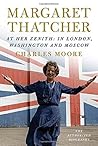
― Margaret Thatcher: The Authorized Biography, Volume 1: From Grantham to the Falklands
― Margaret Thatcher: The Authorized Biography, Volume 1: From Grantham to the Falklands
“She had a way, as Alan Clark once noted, of ‘jumping the rails’ in conversation. This was fascinating to experience, but not easy for the historian.”
― Margaret Thatcher: The Authorized Biography, Volume 1: From Grantham to the Falklands
― Margaret Thatcher: The Authorized Biography, Volume 1: From Grantham to the Falklands
“Developing the theory of the Robertses’ marital unhappiness, Nellie Towers declared: ‘I see where the fault was. It was Beaty that was cold.’58 Jean Farmer saw Mrs Roberts as ‘anxious to do her best for her girls’ and also emphasized the pains she took in making up their clothes so well, including their school uniform. Like so many, she was struck by the huge amount of effort the Robertses put into everything, and the care they took with the results: ‘Her parents had to work hard for their money and they valued every penny.’59 All surviving impressions of Beatrice Roberts, even those from her daughters, are somehow exterior ones, as if no one really knew her.”
― Margaret Thatcher: The Authorized Biography, Volume 1: From Grantham to the Falklands
― Margaret Thatcher: The Authorized Biography, Volume 1: From Grantham to the Falklands
“Jean’s parents were particularly fond of Margaret too, and it was Jean’s father, Jack, who chaired the Conservative Party meeting in Fulbeck in the general election campaign of 1945 at which Margaret did the warm-up for the Tory candidate.”
― Margaret Thatcher: The Authorized Biography, Volume 1: From Grantham to the Falklands
― Margaret Thatcher: The Authorized Biography, Volume 1: From Grantham to the Falklands
“What marked Margaret out, though, was her sense of purpose. As Shirley Ellis put it, ‘She always stood out because teenage girls don’t know where they’re going. She did.”
― Margaret Thatcher: The Authorized Biography, Volume 1: From Grantham to the Falklands
― Margaret Thatcher: The Authorized Biography, Volume 1: From Grantham to the Falklands
“Something similar applies to many of Somerville’s dons, particularly those under the influence of Janet Vaughan, the Principal of Somerville from 1945, and one of those progressives who regard being a Conservative as a sort of mental defect. ‘She stood out,’ she told a pair of biographers. ‘Somerville had always been a radical establishment and there weren’t many Conservatives about then…she was so set as steel as a Conservative…We used to entertain a good deal at weekends, but she didn’t get invited.”
― Margaret Thatcher: The Authorized Biography, Volume 1: From Grantham to the Falklands
― Margaret Thatcher: The Authorized Biography, Volume 1: From Grantham to the Falklands
“Members of the team recall how difficult it was to persuade Lady Thatcher to come up with the telling anecdotes, personal touches and clear narrative on which good memoirs depend.”
― Margaret Thatcher: The Authorized Biography, Volume 1: From Grantham to the Falklands
― Margaret Thatcher: The Authorized Biography, Volume 1: From Grantham to the Falklands
“The act of charity had to be obscured before it could be accepted: Margaret would hand over a loaf saying, ‘Mother’s had a big bake and she wondered whether you would like this. It is home-made, and it’s better than bought…You had to be very careful. People…are very proud.”
― Margaret Thatcher: The Authorized Biography, Volume 1: From Grantham to the Falklands
― Margaret Thatcher: The Authorized Biography, Volume 1: From Grantham to the Falklands
“The shop stood on a corner between the richer and poorer districts of the town, and served both of them.”
― Margaret Thatcher: The Authorized Biography, Volume 1: From Grantham to the Falklands
― Margaret Thatcher: The Authorized Biography, Volume 1: From Grantham to the Falklands
“When Margaret was chosen as prospective parliamentary candidate for Dartford in 1949, her father broke the habit of a lifetime by speaking at a party political meeting, in her support. In justifying his position, he told the meeting that the Conservative Party now stood for ‘very much the same things as the Liberal Party did in his younger days’ (see Chapter 5). Margaret offered her own explanation for his views in her memoirs: ‘Like many other business people he had…been left behind by the Liberal Party’s acceptance of collectivism.”
― Margaret Thatcher: The Authorized Biography, Volume 1: From Grantham to the Falklands
― Margaret Thatcher: The Authorized Biography, Volume 1: From Grantham to the Falklands
“The war, which was to play so important a part in forming her beliefs and her idea of her country, was treated by her at the time only as a backdrop against which the life of school was played out.”
― Margaret Thatcher: The Authorized Biography, Volume 1: From Grantham to the Falklands
― Margaret Thatcher: The Authorized Biography, Volume 1: From Grantham to the Falklands
“union boss. There is a widespread feeling in the country that the Conservative Party has not defended these ideals explicitly and toughly enough, so that Britain is set on a course towards inevitable Socialist mediocrity.”
― Margaret Thatcher: The Authorized Biography, Volume 1: From Grantham to the Falklands
― Margaret Thatcher: The Authorized Biography, Volume 1: From Grantham to the Falklands
“There is only one direction in which the Conservative party can proceed if it is to find itself. It must stand for all the things for which Conservatism, in its best times, has stood — for the family and the individual; against the state and against bureaucracy; against monopolies and against cartels; for people and against collectives. It must resist the temptation to expect the state to behave as a nanny, and strive for recognition for citizens.”
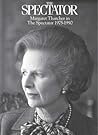
― Margaret Thatcher in The Spectator: 1975-1990
― Margaret Thatcher in The Spectator: 1975-1990
“Indeed, her fussing round people was her favoured way of showing affection and concern: she loved to be practical, to feel that she had helped in a tangible way. She might leave her husband each morning to go and run the country, but not before she had cooked his breakfast. All this was the legacy of Beatrice Roberts.”
― Margaret Thatcher: The Authorized Biography, Volume 1: From Grantham to the Falklands
― Margaret Thatcher: The Authorized Biography, Volume 1: From Grantham to the Falklands
“This absence of political controversy characterizes Margaret’s correspondence with her sister throughout her time at Oxford. Admittedly, Muriel was not a highly political person, but it is still striking that Margaret’s letters to her contain scarcely a single expression of political views and next to nothing about current political events. Politics, when it occurs, is presented as an activity requiring a great deal of work but also opening up social opportunities and giving pleasure. It is something to be done, not something to be debated.”
― Margaret Thatcher: The Authorized Biography, Volume 1: From Grantham to the Falklands
― Margaret Thatcher: The Authorized Biography, Volume 1: From Grantham to the Falklands
“And she dwelt on the theme which, at that time, most fired her imagination: ‘Miss Roberts was very fervent in her determination to stand by the Empire. It was the most important community of peoples the world has ever known. It was so bound with loyalty that it brought people half way across the world to help each other in times of stress. The Empire must never be liquidated.”
― Margaret Thatcher: The Authorized Biography, Volume 1: From Grantham to the Falklands
― Margaret Thatcher: The Authorized Biography, Volume 1: From Grantham to the Falklands
“In her memoirs, she notes that she first learnt to play on a piano which was inscribed with the name of the maker John Roberts, her great-uncle, who also made church organs.”
― Margaret Thatcher: The Authorized Biography, Volume 1: From Grantham to the Falklands
― Margaret Thatcher: The Authorized Biography, Volume 1: From Grantham to the Falklands
“One of Margaret’s problems was money. Without a scholarship, she had to depend on what her father could manage and on what various small college bursaries could provide. In those days, it was possible to have most of your fees paid if you promised, on going down, to become a teacher, but this Margaret refused to do, believing that it was a vocation she did not have.”
― Margaret Thatcher: The Authorized Biography, Volume 1: From Grantham to the Falklands
― Margaret Thatcher: The Authorized Biography, Volume 1: From Grantham to the Falklands
“For most of her career, Margaret Thatcher showed the same lack of interest in her own papers as in her life story. She was one of those tidy people who get a positive pleasure from throwing things away. She saw it as one of the housewifely virtues of which she was proud. Before any general election, she made a point of clearing her desk in case she did not return to it. Whenever she moved house or office, which was fairly often, she threw away great piles of documents. She kept almost nothing from her childhood, and allowed a large number of family papers to be destroyed after her father died in 1970. Very little was retained from Oxford, or from early married life.”
― Margaret Thatcher: The Authorized Biography, Volume 1: From Grantham to the Falklands
― Margaret Thatcher: The Authorized Biography, Volume 1: From Grantham to the Falklands
“Apart from films, the other way to bring glamour to unexciting Grantham was through clothes. Margaret would never have wanted to be trendy, even if the word had existed at the time, but she constantly sought elegance and quality in what she wore. It was a time, because of the war and later the post-war rationing, as well as her parents’ careful budgeting, when these were not easily attained. Her correspondence with Muriel includes a constant series of requests for bits of material or nylons or buttons and so on, and a detailed discussion of fashion and beauty, of where it is possible to obtain the right things, and at what price.”
― Margaret Thatcher: The Authorized Biography, Volume 1: From Grantham to the Falklands
― Margaret Thatcher: The Authorized Biography, Volume 1: From Grantham to the Falklands
“Margaret Thatcher, of course, became famous for her dislike of appeasing dictators (she compared Western weakness towards Saddam Hussein in 1990 with that shown to Hitler, for example)77 and for her admiration of Churchill. For this reason, perhaps, she did not like directly to admit that her father had been a supporter of Chamberlain, but approached the subject rather more obliquely. Chamberlain, she later insisted, ‘was a very honourable man…I often thought he knew that in 1938 he must gain time to get us ready. I believe he gained more in that last year than Hitler…it may be that we owe Chamberlain a great debt of gratitude for his judgment for what happened during those years. And it brought Winston forward that much more.’78 She said that honourable men try to find honour in other, foreign governments: ‘perhaps it has been one of the faults of British politicians that we look at other politicians through slightly rose-tinted spectacles thinking they are as we are.”
― Margaret Thatcher: The Authorized Biography, Volume 1: From Grantham to the Falklands
― Margaret Thatcher: The Authorized Biography, Volume 1: From Grantham to the Falklands
“In Muriel’s view, Beatrice Roberts was ‘a bigoted Methodist…Margaret and I weren’t close to her…We just didn’t click with her.’ As a result, Muriel believed, Margaret grew apart from her mother as quickly as she could: ‘Mother didn’t exist in Margaret’s mind.”
― Margaret Thatcher: The Authorized Biography, Volume 1: From Grantham to the Falklands
― Margaret Thatcher: The Authorized Biography, Volume 1: From Grantham to the Falklands
“Both men appealed more to Margaret than she did to them. Roger, apparently, ‘found her rather hard work’ and sometimes, after a few drinks, would poke her chest and say, ‘Is it marble, Margaret?’88 It was not. Margaret was smitten with Neil, a fact of which he was half aware. According to Neil, Margaret felt attracted towards people with a greater social presence than her own, and they didn’t always respond. He felt a little sorry for her.”
― Margaret Thatcher: The Authorized Biography, Volume 1: From Grantham to the Falklands
― Margaret Thatcher: The Authorized Biography, Volume 1: From Grantham to the Falklands
“loved her dearly, but after I was fifteen we had nothing more to say to each other.’ Before the age of twenty, Margaret was leaving her mother behind.”
― Margaret Thatcher: The Authorized Biography, Volume 1: From Grantham to the Falklands
― Margaret Thatcher: The Authorized Biography, Volume 1: From Grantham to the Falklands
“Part of Margaret’s relative isolation at Somerville derives from the fact that she was a scientist. As a chemist, she was one of only five women in her year in the entire university. Long hours in the labs, and at lectures which, unlike those in the arts, were more or less compulsory, kept her away from much of the society of her fellow Somervillians.”
― Margaret Thatcher: The Authorized Biography, Volume 1: From Grantham to the Falklands
― Margaret Thatcher: The Authorized Biography, Volume 1: From Grantham to the Falklands
“One victim of Margaret’s shortage of money was her own mother, who almost always appears in the correspondence as a faintly disapproving and embarrassing figure: ‘I shan’t be able to afford a birthday present for Mummy so shall just send a card.”
― Margaret Thatcher: The Authorized Biography, Volume 1: From Grantham to the Falklands
― Margaret Thatcher: The Authorized Biography, Volume 1: From Grantham to the Falklands
“It is described as the ‘authorized’ biography, because Mrs Thatcher asked me to write it, but our agreement also stipulated that Lady Thatcher was not permitted to read my manuscript and the book could not appear in her lifetime.”
― Margaret Thatcher: The Authorized Biography, Volume 1: From Grantham to the Falklands
― Margaret Thatcher: The Authorized Biography, Volume 1: From Grantham to the Falklands
“The rank and file attacked the leadership for not putting forward clear Tory policies and beliefs. She was ‘entranced’, she wrote.76 This is perhaps the only recorded occasion when anyone has used that word about a Conservative conference, and yet it is probably an apt one in Margaret’s case. She identified with the feelings of the body of the Tory hall, and felt liberated and uplifted by them. Such identification would one day help make her leadership so secure for so long when more senior figures in the party hoped to undermine her. In 1946, those senior figures felt a little beleaguered.”
― Margaret Thatcher: The Authorized Biography, Volume 1: From Grantham to the Falklands
― Margaret Thatcher: The Authorized Biography, Volume 1: From Grantham to the Falklands
“When Margaret was chosen as prospective parliamentary candidate for Dartford in 1949, her father broke the habit of a lifetime by speaking at a party political meeting, in her support.”
― Margaret Thatcher: The Authorized Biography, Volume 1: From Grantham to the Falklands
― Margaret Thatcher: The Authorized Biography, Volume 1: From Grantham to the Falklands
“Margaret Thatcher said that her family first realized that there was something wrong with Hitler ‘when we heard that he had suppressed Rotary’.73 She saw the wider world through Rotarian eyes.”
― Margaret Thatcher: The Authorized Biography, Volume 1: From Grantham to the Falklands
― Margaret Thatcher: The Authorized Biography, Volume 1: From Grantham to the Falklands