Goodreads helps you follow your favorite authors. Be the first to learn about new releases!
Start by following Charlene Spretnak.

Showing 1-8 of 8
“He also noted, in explaining his methodology for the workshop, that when he had reflected and meditated on the pre-Hellenic myths until he 'became filled with a myth', the ways in which he thought about natural phenomena and even the entire universe were qualitatively different from the perceptions that woud have arisen if he had been immersed in, say, the patriarchal, industrialized, competitive, Victorian world that was Darwin's frame of reference. Swimme concluded that the myth's have a very deep biological basis and that by allowing ourselves to be filled with a myth, the universe itself is altered because our relationship to the universe is altered in a very real sense.”
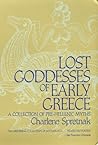
― Lost Goddesses of Early Greece: A Collection of Pre-Hellenic Myths
― Lost Goddesses of Early Greece: A Collection of Pre-Hellenic Myths
“A third aspect of Goddess spirituality is the perceptual shift from the death-based sense of existence that underlies patriarchal culture to a regeneration-based awareness, an embrace of life as a cycle of creative rebirths, a dynamic participation in the processes of infinity.”
―
―
“It is important to note that we did not emerge into patriarchal religion from a dark, chaotic, immature period of primitivism; Goddess-centered cultures, including Minoan Crete, were highly evolved.”
― Lost Goddesses of Early Greece: A Collection of Pre-Hellenic Myths
― Lost Goddesses of Early Greece: A Collection of Pre-Hellenic Myths
“As the search continues for an understanding of the archetypal images, Jung would probably have us remember that an archetype is a hypothetical model, something like the 'pattern of behaviour' in biology. The portraits of the Goddesses in patriarchal mythology are, indeed, patterns of behaviour: They are stories told by men of how women react under patriarchy.”
― Lost Goddesses of Early Greece: A Collection of Pre-Hellenic Myths
― Lost Goddesses of Early Greece: A Collection of Pre-Hellenic Myths
“As Hera crowned the youngest winner, the girl addressed the crowd:
I am the new moon, swelling with magic, pure in my maidenhood, ever growing stronger. The second winner spoke:
I am the full moon, complete in my powers, making people with my rhythms, bathing them in light.
The third said: I am the waning moon, easing into peace, knowing all that went before, I am the wise one.”
― Lost Goddesses of Early Greece: A Collection of Pre-Hellenic Myths
I am the new moon, swelling with magic, pure in my maidenhood, ever growing stronger. The second winner spoke:
I am the full moon, complete in my powers, making people with my rhythms, bathing them in light.
The third said: I am the waning moon, easing into peace, knowing all that went before, I am the wise one.”
― Lost Goddesses of Early Greece: A Collection of Pre-Hellenic Myths
“When a woman raised in patriarchal culture … immerses herself in sacred space where various manifestations of the Goddess bring forth the Earthbody from the spinning void … She will body the myth with her own totemic being. She is the cosmic form of waxing, fullness, waning: virgin, mature creator, wise crone. She cannot be negated ever again. Her roots are too deep – and they are everywhere.”
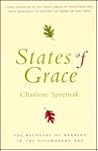
― States of Grace: The Recovery of Meaning in the Postmodern Age
― States of Grace: The Recovery of Meaning in the Postmodern Age
“As Elizabeth Fisher pointed out in Woman's Creation, human history's first and longest reigning social unit was the mother and child, not the husband and wife.”
― Lost Goddesses of Early Greece: A Collection of Pre-Hellenic Myths
― Lost Goddesses of Early Greece: A Collection of Pre-Hellenic Myths
“Mother, sometimes in my wanderings I have met spirits of the dead hovering around their earthly homes and sometimes the mortals, too, can see them in the dark of the moon by the light of their fires and torches.
There are those spirits who drift about restlessly but they mean no harm.
I spoke to them, Mother. They seem confused and many do not even understand their own state. Is there no one in the netherworld who receives the newly dead?”
― Lost Goddesses of Early Greece: A Collection of Pre-Hellenic Myths
There are those spirits who drift about restlessly but they mean no harm.
I spoke to them, Mother. They seem confused and many do not even understand their own state. Is there no one in the netherworld who receives the newly dead?”
― Lost Goddesses of Early Greece: A Collection of Pre-Hellenic Myths