Goodreads helps you follow your favorite authors. Be the first to learn about new releases!
Start by following Neil Woods.

Showing 1-19 of 19
“No one seemed to be drawing the blindingly obvious conclusion – why not take the narcotics trade out of the gangsters’ hands, and actually deprive them of all that money?”
― Good Cop, Bad War
― Good Cop, Bad War
“The first casualty of any war is the truth, and the War on Drugs is no exception.”
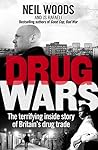
― Drug Wars: The terrifying inside story of Britain’s drug trade
― Drug Wars: The terrifying inside story of Britain’s drug trade
“It made no sense. I’d joined the police to protect the weak and vulnerable – and to fight against those who victimised them. Yet the most vulnerable people I had ever met were now being turned into criminals and sent to prison. If we were fighting a war, then these were the exact people we should be fighting to protect. And if we weren’t, then what were we fighting for at all?”
― Good Cop, Bad War
― Good Cop, Bad War
“The War on Drugs is actually many different wars. There is the war between the police and the drug dealers. There is the war between different drug gangs. There is the war between the dealers and their own customers. And there’s the war between the community and addicts driven to crime to pay for their fix.”
― Drug Wars: The terrifying inside story of Britain’s drug trade
― Drug Wars: The terrifying inside story of Britain’s drug trade
“There is a mythology common in police circles that some people are just ‘bad’ – that if drugs were legalised they would simply find other forms of criminality. It's drivel.”
― Good Cop, Bad War
― Good Cop, Bad War
“In 1930s America, it was the stories of police corruption that really destroyed public support for Prohibition. My instinct is that if the public were to ever learn just how often current police forces are forced to shrug and say well, how can this not happen? then support for drug prohibition would disappear just as quickly.”
― Good Cop, Bad War
― Good Cop, Bad War
“It was the drug war that spurred the growth of intelligence-led policing, leading to a massive expansion in the use of informants. It was also the drug war that sowed corruption into this very process.”
― Drug Wars: The terrifying inside story of Britain’s drug trade
― Drug Wars: The terrifying inside story of Britain’s drug trade
“Legalise and regulate the supply of narcotics and at a stroke you deprive the most vicious gangsters in the world of the £375 billion annual income that enables all their operations. At a stroke you allow some of the most vulnerable people in society to seek help for their addictions, instead of being shoved into prison cells.”
― Good Cop, Bad War
― Good Cop, Bad War
“For the police of the 1960s, drugs were considered deeply uninteresting. Chasing drugs simply wasn’t seen as ‘real police work’. Being a proper copper meant going out and catching burglars and robbers.”
― Drug Wars: The terrifying inside story of Britain’s drug trade
― Drug Wars: The terrifying inside story of Britain’s drug trade
“People talk about the War on Drugs as if it was like the Second World War; one army against another – the dealers and the cops, the good guys and the bad guys, the defenders of society and the criminals. But that was bullshit. If the War on Drugs was a war at all, it was the Cold War. And, like the Cold War, it was a fucking arms race.”
― Good Cop, Bad War
― Good Cop, Bad War
“Every day that politicians continue the War on Drugs, it is not only a choice to make the vulnerable suffer for political convenience – it is also a direct betrayal of the police themselves.”
― Good Cop, Bad War
― Good Cop, Bad War
“The next nine months were a whirl of hospital appointments and DIY to get the house ready for a child – interspersed with the odd undercover crack deal.”
― Good Cop, Bad War
― Good Cop, Bad War
“The story of the War on Drugs is a story of the law of unintended consequences.”
― Drug Wars: The terrifying inside story of Britain’s drug trade
― Drug Wars: The terrifying inside story of Britain’s drug trade
“The idea that cannabis, heroin, amphetamines, etc. are completely different chemicals, and might require completely different laws, is one of the great what-might-have-beens of the War on Drugs. Lumping them all together was itself an encroachment of American-style drug policy.”
― Drug Wars: The terrifying inside story of Britain’s drug trade
― Drug Wars: The terrifying inside story of Britain’s drug trade
“Imagine if we stopped handing gangsters a £7 billion annual war chest with which to terrorise our communities and corrupt our enforcement agencies.”
― Good Cop, Bad War
― Good Cop, Bad War
“As much as the police like to take the credit, what really ended the hooligan era was the rise of acid house in the early 90s.”
― Good Cop, Bad War
― Good Cop, Bad War
“We need to take a moment and just consider the possibility of not confronting the issue of drugs as a war. Legalise and regulate the supply of narcotics and at a stroke you deprive the most vicious gangsters in the world of the £375 billion annual income that enables all their operations. At a stroke you allow some of the most vulnerable people in society to seek help for their addictions, instead of being shoved into prison cells.”
― Good Cop, Bad War
― Good Cop, Bad War
“Under the British System, drug addicts were not stigmatised or seen as moral failures. They often lived otherwise ‘normal’ lives, with jobs and families, and were simply helped to manage their condition in the least harmful way possible.”
― Drug Wars: The terrifying inside story of Britain’s drug trade
― Drug Wars: The terrifying inside story of Britain’s drug trade
“Crime is driven by opportunity. Cartoonish visions of ‘inherent evil’, or inevitable reactions to social conditions, are far too reductive.”
― Drug Wars: The terrifying inside story of Britain’s drug trade
― Drug Wars: The terrifying inside story of Britain’s drug trade