Goodreads helps you follow your favorite authors. Be the first to learn about new releases!
Start by following Brian Ward.

Showing 1-10 of 10
“To see an input stream at work, enter cat (with no filenames) and press ENTER. This time, you won’t get your shell prompt back because cat is still running. Now type anything and press ENTER at the end of each line. The cat command repeats any line that you type. Once you’re sufficiently bored, press CTRL-D on an empty line to terminate cat and return to the shell prompt.”
― How Linux Works: What Every Superuser Should Know
― How Linux Works: What Every Superuser Should Know
“Unified Extensible Firmware Interface (UEFI)”
― How Linux Works: What Every Superuser Should Know
― How Linux Works: What Every Superuser Should Know
“Another shell glob character, the question mark (?), instructs the shell to match exactly one arbitrary character. For example, b?at matches boat and brat.”
― How Linux Works: What Every Superuser Should Know
― How Linux Works: What Every Superuser Should Know
“at* expands to all filenames that start with at. *at expands to all filenames that end with at. *at* expands to all filenames that contain at.”
― How Linux Works: What Every Superuser Should Know
― How Linux Works: What Every Superuser Should Know
“You can use rm -rf dir to delete a directory and its contents, but be careful! This is one of the few commands that can do serious damage, especially if you run it as the superuser. The -r option specifies recursive delete to repeatedly delete everything inside dir, and -f forces the delete operation.”
― How Linux Works: What Every Superuser Should Know
― How Linux Works: What Every Superuser Should Know
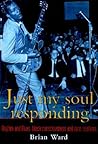
“What’s more, whenever inspiration, taste, marketing, and the economy aligned, they sold enormous quantities of these musical recordings to audiences they helped create. This is their story.”
― A&R Pioneers: Architects of American Roots Music on Record
― A&R Pioneers: Architects of American Roots Music on Record
“Substitute “Hillbilly” for “Blues” and this regionally inflected nostalgia remains much the same. Bear down on the word “real” in Paramount’s advertising copy, and it is possible to see how recorded roots music, with its claims to authenticity, could help counter a sense of social and cultural dislocation, a deep anxiety about the increasing superficiality and transitory nature of a modern America characterized by disconcerting changes.”
― A&R Pioneers: Architects of American Roots Music on Record
― A&R Pioneers: Architects of American Roots Music on Record
“A&R officials helped fashion and disseminate music that often evoked older, highly romanticized and reassuring visions of a simpler, less frenetic, and more communal past.”
― A&R Pioneers: Architects of American Roots Music on Record
― A&R Pioneers: Architects of American Roots Music on Record
“There are many different Unix shells, but all derive several of their features from the Bourne shell (/bin/sh), a standard shell developed at Bell Labs for early versions of Unix. Every Unix system needs the Bourne shell in order to function correctly, as you will see throughout this book. Linux uses an enhanced version of the Bourne shell called bash or the “Bourne-again” shell. The bash shell is the default shell on most Linux distributions, and /bin/sh is normally a link to bash on a Linux system.”
― How Linux Works: What Every Superuser Should Know
― How Linux Works: What Every Superuser Should Know
“You can use rm -rf dir to delete a directory and its contents, but be careful! This is one of the few commands that can do serious damage, especially if you run it as the superuser. The -r option specifies recursive delete to repeatedly delete everything inside dir, and -f forces the delete operation. Don’t use the -rf flags with globs such as a star (*). And above all, always double-check your command before you run it.”
― How Linux Works: What Every Superuser Should Know
― How Linux Works: What Every Superuser Should Know