Goodreads helps you follow your favorite authors. Be the first to learn about new releases!
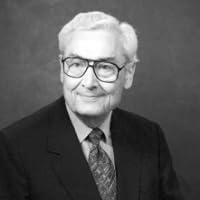
Start by following Robert M. Utley.
Showing 1-6 of 6
“Late in November, he suddenly appeared at Fort Lyon with the 3rd Colorado and other units and announced his intention to attack Black Kettle. Several officers remonstrated, declaring that the Cheyennes had been led to understand that they were prisoners of war. Chivington responded, as one of the protesters recalled, that “he believed it to be right and honorable to use any means under God’s heaven to kill Indians that would kill women and children, and ‘damn any man that was in sympathy with Indians.’“ On November 29, 1864, Chivington methodically deployed his command, about 700 strong with four howitzers, around Black Kettle’s village. The chief, shouting reassurances to his alarmed people, ran up an American flag and a white flag over his tepee. Then the troops opened fire and charged. The Indians fled in panic in all directions. Only one pocket of resistance formed, and that was speedily eliminated. Chivington had made clear his wish that prisoners not be taken, and a massacre followed as the soldiers indiscriminately shot down men, women, and children. Interpreter John Smith later testified: “They were scalped, their brains knocked out; the men used their knives, ripped open women, clubbed little children, knocked them in the head with their guns, beat their brains out, mutilated their bodies in every sense of the word.” Two hundred Cheyennes, two-thirds of them women and children, perished. Nine chiefs died, but Black Kettle made good his escape. As”
― American Heritage History of the Indian Wars
― American Heritage History of the Indian Wars
“The Cherokees had 1,200 miles to go before they reached eastern Oklahoma, the end of the trek they would forever be remembered as the Trail of Tears. As their homeland disappeared behind them, the cold autumn rains continued to fall, bringing disease and death. Four thousand shallow graves marked the trail. Marauding parties of white men appeared, seized Cherokee horses in payment for imaginary debts, and rode off. The Indians pressed on, the sullen troopers riding beside them. They”
― American Heritage History of the Indian Wars
― American Heritage History of the Indian Wars
“White men like to dig in the ground for their food. My people prefer to hunt the buffalo as their fathers did. White men like to stay in one place. My people want to move their tepees here and there to the different hunting grounds. The life of white men is slavery. They are prisoners in towns or farms. The life my people want is a life of freedom. I have seen nothing that a white man has, houses or railways or clothing or food, that is as good as the right to move in the open country, and live in our own fashion.”
― Sitting Bull: The Life and Times of an American Patriot
― Sitting Bull: The Life and Times of an American Patriot
“As the struggle continued, Mason abandoned his plan to seize the camp intact for its booty, grabbed a firebrand, and set it aflame. As the eighty closely packed huts, which housed 800 Indians, went up in smoke, the Pequots poured out of the stockade to meet death from English and Narraganset swords and muskets. Others - hundreds of them - remained huddled inside the huts and were burned, women and children, old and young, “in promiscuous ruin.” The”
― American Heritage History of the Indian Wars
― American Heritage History of the Indian Wars
“The farther my people keep away from the whites,” he told her, “the better I shall be satisfied. The white people are wicked and I don’t want my women to become as the white women I have seen have lived. I want you to teach my people to read and write but they must not become white people in their ways; it is too bad a life, I could not let them do it.” Prophetically he concluded, “I would rather die an Indian than live a white man.”
― Sitting Bull: The Life and Times of an American Patriot
― Sitting Bull: The Life and Times of an American Patriot
“The tactics used by the English in their warfare with the Indians crossed the foggy dividing line between strategic deception and outright immorality.”
― American Heritage History of the Indian Wars
― American Heritage History of the Indian Wars