Goodreads helps you follow your favorite authors. Be the first to learn about new releases!
Start by following Stephen Charnock.
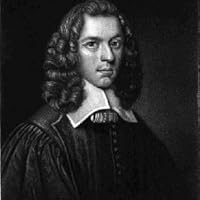
Showing 1-30 of 31
“We may be truly said to worship God, though we lack perfection; but we cannot be said to worship Him if we lack sincerity.”
―
―
“Since nothing but God is eternal, nothing but God is worth the loving.”
―
―
“Frequently renew settled and holy resolutions. A soldier unresolved to fight may be easily defeated...The weakness of our graces, the strength of our temptations, and the diligence of our spiritual enemies, require strong resolutions.”
―
―
“Man's wisdom detracts from the glory of God, who is more honoured by the simplicity of the gospel, than luxuriance of wit.”
― Christ Crucified: The once-for-all sacrifice
― Christ Crucified: The once-for-all sacrifice
“The great objection of a penitent is, I have sinned, and I know not whether God will receive me: consider, God knows your sin better than you do, yet he kindly calls to you, and promises you as good a reception as if you had never sinned.”
― The Chief Sinners Objects of the Choicest Mercies
― The Chief Sinners Objects of the Choicest Mercies
“Great sinners are most easily convinced of the notorious wickedness of their lives; and reflecting upon themselves because of their horrid crimes against the light of nature, are more inclinable to endeavour an escape from the devil’s slavery, and are frighted and shaken by their consciences into a compliance with the doctrine of redemption; whereas those that do by nature the things contained in the law, are so much a law to themselves, that it is difficult to persuade them of the necessity of conforming to another law, and to part with this self-law in regard to justification. As”
― The Chief Sinners Objects of the Choicest Mercies
― The Chief Sinners Objects of the Choicest Mercies
“A man may be theologically knowing and spiritually ignorant.”
―
―
“All the world, every creature. He put no difference between men in this respect, though you meet with them in the likeness of beasts, and devils never so wicked, never so abominable; as long as they are creatures, reach out the cup of salvation to them, if they will drink; open the treasures of grace to them, if they will receive them; agree with them for nothing but faith for justification, and profession of it for their salvation.”
― The Chief Sinners Objects of the Choicest Mercies
― The Chief Sinners Objects of the Choicest Mercies
“Did not God know what would be created by him, before it was created by him? Did he create he knew not what, and knew not beforehand what he should create? Was he ignorant before he acted, and in his acting, what his operation would tend to? Or did he not know the nature of things, and the ends of them, till he had produced them, and saw them in being ? Creatures must be known by God before they were made, and not known because they were made; he knew them to make them, and did not make them to know them. By the same reason that he knew what creatures should be before they were, he knew still what creatures shall be before they are.”
―
―
“Some rude and rough stones were taken out of Nero’s palace; some that were servants to the most abominable tyrant, and the greatest monster of mankind; one that set Rome on fire, and played on his harp while the flames were crackling about the city; ripped up his mother’s belly to see the place where he lay; would any of the civiller sort of mankind be attendants upon such a devil? Yet some of this monster’s servants became saints. Phil. 4:22. "All the saints salute you, chiefly they that are of Caesar’s household.” To hear of saints in Nero’s family, is as great a prodigy as to hear of saints in hell.”
― The Chief Sinners Objects of the Choicest Mercies
― The Chief Sinners Objects of the Choicest Mercies
“Without the heart it’s not worship, it’s a stage play.”
―
―
“Antiquity hath, too, too often bewitched the minds of men, and drawn them from the revealed will of God. Men are more willing to imitate the outward actions of their famous ancestors, than conform themselves to the revealed will of their Creator.”
― The Existence and Attributes of God
― The Existence and Attributes of God
“Those that deny the providence of God, do in effect deny the being of God; for they strip him of that wisdom, goodness, tenderness, mercy, justice, righteousness, which are the glory of the Deity.”
― The Existence and Attributes of God
― The Existence and Attributes of God
“For God is a Spirit: and those that worship him must worship him in spirit and in truth.’ The design of our Saviour is to declare that God is not taken with external worship invented by men, no, nor commanded by himself; and that upon this reason, because he is a spiritual essence, infinitely above gross and corporeal matter, and is not taken with that pomp which is a pleasure to our earthly imaginations.”
― The Existence and Attributes of God: Volumes 1 & 2 Complete & Unabridged
― The Existence and Attributes of God: Volumes 1 & 2 Complete & Unabridged
“We must first believe that he is, and that he is what he declares himself to be, before we can seek him, adore him, and devote our affections to him.13 We cannot pay God a due and regular homage, unless we understand him in his perfections, what he is; and we can pay him no homage at all, unless we believe that he is.”
― The Existence and Attributes of God
― The Existence and Attributes of God
“Spiritual worship is that, therefore, which is exercised with a spiritual and heavenly affection proper to the gospel. The heart should be enlarged, according to the liberty the gospel gives of drawing near to God as a father; as he gives us the nobler relation of children, we are to act the nobler qualities of children. Love should act according to its nature, which is desire of union, desire of a moral union by affections, as well as a mystical union by faith, as flame aspires to reach flame and become one with it.”
― The Existence and Attributes of God: Volumes 1 & 2 Complete & Unabridged
― The Existence and Attributes of God: Volumes 1 & 2 Complete & Unabridged
“Worship is an act of the understanding, applying itself to the knowledge of the excellency of God, and actual thoughts of his majesty, recognising him as the supreme Lord and governor of the world, which is natural knowledge; beholding the glory of his attributes in the Redeemer, which is evangelical knowledge; this is the sole act of the spirit of man. The same reason is for all our worship as for our thanksgiving. This must be done with understanding: Ps. 47:7, ‘Sing ye praise with understanding,’ with a knowledge and sense of his greatness, goodness, and wisdom. It is also an act of the will, whereby the soul adores and reverenceth his majesty, is ravished with his amiableness, embraceth his goodness, enters itself into an intimate communion with this most lovely object, and pitcheth all his affections upon him.”
― The Existence and Attributes of God: Volumes 1 & 2 Complete & Unabridged
― The Existence and Attributes of God: Volumes 1 & 2 Complete & Unabridged
“A carnal worshipper is taken with the beauty and magnificence of the temple; a spiritual worshipper desires to see the glory of God in the sanctuary (Psalm lxiii. 2), he pants after God: as he came to worship, to find God, he boils up in desires for God, and is loth to go from it without God, “the living God” (Psalm xlii. 2).”
― The Existence and Attributes of God
― The Existence and Attributes of God
“Adversity is not always an absolute evil, nor is prosperity always an absolute good. Rather both are indifferent, and either may be used for the honour or the dishonour of God. Both are good when used for His honour; both are evil when used for His dishonour.
Sin is the only thing that is absolutely evil, as it is always dishonouring to God.
Holiness - and a likeness to God, for His glory alone - is the only thing in the world that is absolutely good.”
― Divine Providence: A Classic Work for Modern Readers - Library Edition
Sin is the only thing that is absolutely evil, as it is always dishonouring to God.
Holiness - and a likeness to God, for His glory alone - is the only thing in the world that is absolutely good.”
― Divine Providence: A Classic Work for Modern Readers - Library Edition
“To serve other things, or to serve ourselves, is to waste a service upon that which is nothing. In devoting ourselves to God, we serve him that is; that was, so as that he never began; is to come, so as that he never shall end; by whom all things are what they are; who hath both eternal knowledge to remember our service, and eternal goodness to reward it.”
― The Existence and Attributes of God: Volumes 1 & 2 Complete & Unabridged
― The Existence and Attributes of God: Volumes 1 & 2 Complete & Unabridged
“The legal ceremonies were not a fit means to bring the heart into a spiritual frame. They had a spiritual intent; the rock and manna prefigured the salvation and spiritual nourishment by the Redeemer. The sacrifices were to point them to the justice of God in the punishment of sin, and the mercy of God in substituting them in their steads, as types of the Redeemer and the ransom by his blood. The circumcision of the flesh was to instruct them in the circumcision of the heart: they were flesh in regard of their matter, weakness and cloudiness, spiritual in regard of their intent and signification; they did instruct, but not efficaciously work strong spiritual affections in the soul of the worshipper. They were weak and beggarly elements; had neither wealth to enrich nor strength to nourish the soul: they could not perfect the comers to them, or put them into a frame agreeable to the nature of God...And therefore God never intended that sort of worship to be durable, and had often mentioned the change of it for one more spiritual. It was not good or evil in itself; whatsoever goodness it had was solely derived to it by institution, and therefore it was mutable. It had no conformity with the spiritual nature of God who was to be worshipped, nor with the rational nature of man who was to worship; and therefore he often speaks of taking away the new moons, and feasts, and sacrifices, and all the ceremonial worship, as things he took no pleasure in, to have a worship more suited to his excellent nature; but he never speaks of removing the gospel administration, and the worship prescribed there, as being more agreeable to the nature and perfections of God, and displaying them more illustriously to the world. The apostle tells us, it was to be 'disannulled because of its weakness;' a determinate time was fixed for its duration, till the accomplishment of the truth figured under that pedagogy.”
― The Existance and Attributes of God Volumes 1 and 2
― The Existance and Attributes of God Volumes 1 and 2
“Nothing can make itself or bring itself into being. Therefore there must be some being that has no cause, that depends upon no other, never was produced by any other, but was what he is from eternity, cannot be otherwise, and is what he is, not by will but by nature, necessarily existing and always existing without any capacity or possibility ever not to be.”
―
―
“To desire worship as an end is carnal; to desire it as a means, and act desires in it for communion with God in it, is spiritual, and the fruit of a spiritual life.”
― The Existence and Attributes of God
― The Existence and Attributes of God
“God's providence is designed to do good for his people. God takes meticulous care to ensure our ultimate blessing. His scrupulous care in the unfolding of providence, despite any appearance to the contrary, is calculated to achieve the redemption of his people. All things work together for their good (Rom 8:28) - good things and evil things.”
―
―
“And truly, since nothing but God is eternal, nothing but God is worth the loving; and we do but a just right to our love, to pitch it upon that which can always possess us and be possessed by us, upon an object that cannot deceive our affection, and put it out of countenance by a dissolution.”
― The Existence and Attributes of God: Volumes 1 & 2 Complete & Unabridged
― The Existence and Attributes of God: Volumes 1 & 2 Complete & Unabridged
“the faith of Abel testified in his sacrifice, and the faith of Enoch testified in his walking with God, was not simply a faith of the existence of God. Cain in the time of Abel, other men in the world in the time of Enoch, believed this as well as they: but it was a faith joined with the worship of God, and desires to please him in the way of his own appointment; so that they believed that God was such as he had declared himself to be in his promise to Adam, such an one as would be as good as his word, and bruise the serpent’s head.”
― The Existence and Attributes of God
― The Existence and Attributes of God
“Every plant, every atom, as well as every star, at the first meeting whispers this in our ears, "I have a Creator, I am witness to a deity.”
― The Existence and Attributes of God
― The Existence and Attributes of God
“The more we act love upon God, as amiable and gracious, the more we should exercise grief in ourselves, as we are vile and offending. Spiritual worship is a melting worship, as well as an elevating worship; it exalts God, and debaseth the creature.”
― The Existence and Attributes of God
― The Existence and Attributes of God
“Our forgetfulness is, at the least, a secret denial of God's power in the works of creation and providence. It ushers in distrust of Him and introduces the fear of man”
― Divine Providence: A Classic Work for Modern Readers
― Divine Providence: A Classic Work for Modern Readers
“if God should create millions of worlds he would be in them all, not by stretching out his being, but by the infiniteness of his being; not by a new growth of his being, but by the same essence he had from eternity,”
―
―