Goodreads helps you follow your favorite authors. Be the first to learn about new releases!
Start by following Jonathan Blitzer.

Showing 1-30 of 44
“Politics is a form of selective amnesia. The people who survive it are our only insurance against forgetting.”
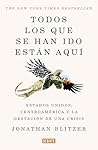
― Everyone Who Is Gone Is Here: The United States, Central America, and the Making of a Crisis
― Everyone Who Is Gone Is Here: The United States, Central America, and the Making of a Crisis
“In the 1980s, administrations in Washington saw Central America through the totalizing prism of the Cold War. Over the next few decades, the fear of the spread of leftism morphed into a fear of the spread of people. A straight line extends between the two, pulled taut during the intervening years of forced emigration, mass deportation, and political expediency. Immigration laws draw sharp boundaries around citizenship and identity, casting this history aside. Politics is a form of selective amnesia. The people who survive it are our only insurance against forgetting.”
― Everyone Who Is Gone Is Here: The United States, Central America, and the Making of a Crisis
― Everyone Who Is Gone Is Here: The United States, Central America, and the Making of a Crisis
“There were two powers running Guatemala after the Second World War, and only one of them was the government. The other was an American corporation called the United Fruit Company, known inside the country as the Octopus because it had tentacles everywhere. It was Guatemala’s largest employer and landowner, controlling the country’s only Atlantic port, almost every mile of the railroads, and the nation’s sole telephone and telegraph facilities. US State Department officials had siblings in the upper ranks of the company.”
― Everyone Who Is Gone Is Here: The United States, Central America, and the Making of a Crisis
― Everyone Who Is Gone Is Here: The United States, Central America, and the Making of a Crisis
“All of them received training and weapons from the United States. Throughout the late 1950s and 1960s, American military advisers helped restructure the Salvadoran police academy. They also wrote a manual for the Treasury Police, and trained members of the National Guard and National Police in riot control.”
― Everyone Who Is Gone Is Here: The United States, Central America, and the Making of a Crisis
― Everyone Who Is Gone Is Here: The United States, Central America, and the Making of a Crisis
“The capital of the world” is what Juan called Washington; or, more emphatically, “the capital of the empire that drove me from my home.”
― Everyone Who Is Gone Is Here: The United States, Central America, and the Making of a Crisis
― Everyone Who Is Gone Is Here: The United States, Central America, and the Making of a Crisis
“What she said next sounded barbed, but she meant it as a concession to the enormity of the president’s responsibility, rather than as a reprimand. “I don’t know how you can sleep at night,” she said. Obama replied, “You know what? I don’t really sleep at night, but let me tell you why. It’s not just that I worry about these kids from El Salvador. I also worry about kids in Sudan, and in Yemen, and in other parts of the world. And here’s my problem: we live in a world with nation states. I have borders. You may believe that it’s inherently unfair that a child born in El Salvador has a completely different set of opportunities available and a completely different set of dangers than a child born in the US. And that’s because it is unfair. I can’t fix that for you.”
― Everyone Who Is Gone Is Here: The United States, Central America, and the Making of a Crisis
― Everyone Who Is Gone Is Here: The United States, Central America, and the Making of a Crisis
“A sense of community pervaded his body. The dead were alive and with him. “So many scars in El Salvador, and we have the privilege to show ours,” he thought. “Everyone who is gone is here.”
― Everyone Who Is Gone Is Here: The United States, Central America, and the Making of a Crisis
― Everyone Who Is Gone Is Here: The United States, Central America, and the Making of a Crisis
“The Texas facilities were to be run by private prison companies—the GEO Group and CoreCivic—which had been involved in immigration detention since the mid-1980s and were profiting from an ever-larger share of DHS contracts.”
― Everyone Who Is Gone Is Here: The United States, Central America, and the Making of a Crisis
― Everyone Who Is Gone Is Here: The United States, Central America, and the Making of a Crisis
“In the fall of 2015, I was researching a strange incident that was making me doubt whether the line between past and present even existed at all.”
― Everyone Who Is Gone Is Here: The United States, Central America, and the Making of a Crisis
― Everyone Who Is Gone Is Here: The United States, Central America, and the Making of a Crisis
“The US was propping up a war machine in El Salvador, she told them; it had long treated the region as a geopolitical laboratory. The CIA had overthrown the Guatemalan government in 1954 at the behest of an American corporation that, among other things, wanted bigger tax breaks abroad. Honduras had come to be known in the region as the USS Honduras, a de facto American military installation. For years, the US’s man in Nicaragua was a dictator. In Castillo’s circles, as the saying went, El Salvador is Spanish for Vietnam.”
― Everyone Who Is Gone Is Here: The United States, Central America, and the Making of a Crisis
― Everyone Who Is Gone Is Here: The United States, Central America, and the Making of a Crisis
“We should regard Guatemala as a prototype area for testing means and methods of combating Communism,” a member of Dwight Eisenhower’s National Security Council said, in 1953.”
― Everyone Who Is Gone Is Here: The United States, Central America, and the Making of a Crisis
― Everyone Who Is Gone Is Here: The United States, Central America, and the Making of a Crisis
“For decades, doctors and nurses trained in Western medicine had been dismissive of whole categories of diagnoses that predominated among the Indigenous population. Villagers would often visit healers and shamans who treated ailments such as mal de ojo (evil eye), pérdida del alma (loss of the soul), and el susto (the fright). Some of these afflictions dated to pre-Columbian times and went by a range of different names. El susto, the anthropologist Linda Green wrote, was “understood by its victims to be the loss of the essential life force as a result of fright.” In more conventional terms, its symptoms included depression, lethargy, insomnia, nightmares, diarrhea, and vomiting. To anyone mindful of La Violencia of the war years, the connection to post-traumatic stress was unavoidable. These conditions were, as Green put it, “social memory embodied.” In the summer of 2016, the Health Ministry announced that it would open clinics and hire personnel to treat seven different types of “ancestral maladies” that were contributing to high mortality rates in the countryside. “Independently of whether you believe it or don’t believe in this, we have seen that it’s necessary to be vigilant,” Lucrecia told one newspaper.”
― Everyone Who Is Gone Is Here: The United States, Central America, and the Making of a Crisis
― Everyone Who Is Gone Is Here: The United States, Central America, and the Making of a Crisis
“theologian Reinhold Niebuhr: “The sad duty of politics is to establish justice in a sinful world.”
― Everyone Who Is Gone Is Here: The United States, Central America, and the Making of a Crisis
― Everyone Who Is Gone Is Here: The United States, Central America, and the Making of a Crisis
“The more established Latino communities—in East Los Angeles, for instance—had tried to keep their distance from the mayhem, giving rise to other anxieties and resentments. In the Los Angeles Times, a Chicano journalist wrote, “Yes, Central American immigrants and Chicanos might both be termed ‘Latino.’ But the ethnic link between the two groups is thin.” The article ran with the headline, “Should Latinos Support Curbs on Immigrants? A Question Left by the Riots Is Whether New Arrivals Threaten Second- and Third-Generation Mexican-Americans.”
― Everyone Who Is Gone Is Here: The United States, Central America, and the Making of a Crisis
― Everyone Who Is Gone Is Here: The United States, Central America, and the Making of a Crisis
“I came to regard the knowing, unrushed voice on the other end of the line as the sound of history itself—following its own course, patient with my questions but not always responsive to them.”
― Everyone Who Is Gone Is Here: The United States, Central America, and the Making of a Crisis
― Everyone Who Is Gone Is Here: The United States, Central America, and the Making of a Crisis
“if liberal-democratic governments across the world fail to address the situation, it will continue to fuel the rise of populist authoritarianism.”
― Everyone Who Is Gone Is Here: The United States, Central America, and the Making of a Crisis
― Everyone Who Is Gone Is Here: The United States, Central America, and the Making of a Crisis
“There’s enough money to go around as long as no one steals”
― Everyone Who Is Gone Is Here: The United States, Central America, and the Making of a Crisis
― Everyone Who Is Gone Is Here: The United States, Central America, and the Making of a Crisis
“On August 22, 1996, Clinton signed the bill into law, but at a press conference several days earlier he had promised to find some way to eventually undo the damage. “I am deeply disappointed that the congressional leadership insisted on attaching to this extraordinarily important bill a provision that will hurt legal immigrants in America,” he had said from a dais at the White House. “This provision has nothing to do with welfare reform; it is simply a budget-saving measure, and it is not right.”
― Everyone Who Is Gone Is Here: The United States, Central America, and the Making of a Crisis
― Everyone Who Is Gone Is Here: The United States, Central America, and the Making of a Crisis
“The major immediate threat to the existence of this government is the right wing violence.”
― Everyone Who Is Gone Is Here: The United States, Central America, and the Making of a Crisis
― Everyone Who Is Gone Is Here: The United States, Central America, and the Making of a Crisis
“Insurgency,” the US Joint Chiefs of Staff wrote in 1962, was defined as any “illegal opposition to an existing government.” In El Salvador, that included worker strikes, unionization efforts, and public demonstrations.”
― Everyone Who Is Gone Is Here: The United States, Central America, and the Making of a Crisis
― Everyone Who Is Gone Is Here: The United States, Central America, and the Making of a Crisis
“Thousands of people, most of them Mexican, were crossing the border between San Diego and Tijuana on foot. At dusk each day, hundreds would line up together and run across; onlookers on the Mexican side cheered them on and shouted “goal” each time someone eluded a Border Patrol agent and made it through.”
― Everyone Who Is Gone Is Here: The United States, Central America, and the Making of a Crisis
― Everyone Who Is Gone Is Here: The United States, Central America, and the Making of a Crisis
“Over the following year, the CIA and the United Fruit Company auditioned figures to lead a “Liberation” force against the government.”
― Everyone Who Is Gone Is Here: The United States, Central America, and the Making of a Crisis
― Everyone Who Is Gone Is Here: The United States, Central America, and the Making of a Crisis
“The White House, meanwhile, was stuck in a holding pattern caused by Republican gamesmanship.”
― Everyone Who Is Gone Is Here: The United States, Central America, and the Making of a Crisis
― Everyone Who Is Gone Is Here: The United States, Central America, and the Making of a Crisis
“But of all the refugees Juan observed at La Clínica, the ex-soldiers tended to be in the worst shape. Most of them had become addicts. They lived on the streets and kept to themselves. As a doctor, Juan took an analytic view of their profiles. Many lower-level soldiers had been conscripted and were often tortured if they were caught absconding or disobeying orders. Some of them were campesinos themselves, not so much sadists as cowed conformists who’d been indoctrinated during their military service. Juan wasn’t naive about the savagery of their past acts. He just felt that the war had victimized everyone in different ways.”
― Everyone Who Is Gone Is Here: The United States, Central America, and the Making of a Crisis
― Everyone Who Is Gone Is Here: The United States, Central America, and the Making of a Crisis
“In the center of Climentoro, a town in Huehuetenango, a dozen large white houses rose above the village’s traditional wooden huts like giant monuments. The structures were made of concrete and fashioned with archways, colonnaded porches, and elaborate moldings; some even boasted facades decorated with paintings of American flags. Their owners, who lived in the US, had sent money home to build American-inspired houses for when they returned, but few did. One three-story house with a faux-brick chimney was empty. The family of twelve had migrated a few years ago, leaving the vacant construction behind. Vecinos fantasmas, Feliciano Pérez, a local farmer, called them—ghost neighbors.”
― Everyone Who Is Gone Is Here: The United States, Central America, and the Making of a Crisis
― Everyone Who Is Gone Is Here: The United States, Central America, and the Making of a Crisis
“President Ronald Reagan’s top foreign policy advisers. After the assassination of the FDR leaders, she quipped to journalists that their slaying was a “reminder that people who choose to live by the sword die by the sword.” When asked the views of the incoming administration on the brutal murder of the American churchwomen, she replied, “The nuns were clearly not just nuns. The nuns were also political activists.”
― Everyone Who Is Gone Is Here: The United States, Central America, and the Making of a Crisis
― Everyone Who Is Gone Is Here: The United States, Central America, and the Making of a Crisis
“This is a book about home”
― Everyone Who Is Gone Is Here: The United States, Central America, and the Making of a Crisis
― Everyone Who Is Gone Is Here: The United States, Central America, and the Making of a Crisis
“Six years later, the welfare reform bill reminded Muñoz of what had first pushed her into organizing. Millions of legal immigrants spent years of their lives paying taxes and starting families, only to see the political debate suddenly shift.”
― Everyone Who Is Gone Is Here: The United States, Central America, and the Making of a Crisis
― Everyone Who Is Gone Is Here: The United States, Central America, and the Making of a Crisis
“The fires of insurrection fed by the Soviets and fanned by their surrogates, the Cubans, spread unchecked in Central America,” he said. The region was a “strategic choke point” in the wider war with the Soviet Union, a “hinge area for vital American interests.” The two countries of greatest concern to Haig were Nicaragua and El Salvador. In Managua, it had been more than a year since the leftist Sandinistas had overthrown the dictator. The White House wanted to dislodge them from power. Three hundred miles west, in San Salvador, American allies were in charge, but at war.”
― Everyone Who Is Gone Is Here: The United States, Central America, and the Making of a Crisis
― Everyone Who Is Gone Is Here: The United States, Central America, and the Making of a Crisis