Goodreads helps you follow your favorite authors. Be the first to learn about new releases!
Start by following R. Robert Creech.

Showing 1-8 of 8
“Friedman popularized the concept of a “nonanxious presence.” He wrote, “What is vital to changing any kind of ‘family’ is not knowledge of technique or even of pathology but, rather, the capacity of the family leader to define his or her own goals and values while trying to maintain a nonanxious presence within the system.”
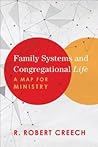
― Family Systems and Congregational Life: A Map for Ministry
― Family Systems and Congregational Life: A Map for Ministry
“Having the capacity to stay in relationship with the people we serve while resisting the pressure they unconsciously exert on us requires a level of differentiation sufficient to cope with the force of the system. Knowing the right thing to do is different from having the ability to do the right thing under pressure.”
― Family Systems and Congregational Life: A Map for Ministry
― Family Systems and Congregational Life: A Map for Ministry
“When we feel stressed, anxious, or threatened, we automatically revert to reactions that thousands of years of experience have deeply embedded in our brains. Our repertoire is small: we fight, we flee, we overfunction or underfunction, or we engage emotional triangles. That is it. Bowen called this concept in his theory “the family emotional process” or the “nuclear family emotional system.”
― Family Systems and Congregational Life: A Map for Ministry
― Family Systems and Congregational Life: A Map for Ministry
“Bowen used the term “detriangling” to describe the effort to avoid becoming involved in the emotional process and anxiety of two others. The goal in detriangling is to remain in good emotional contact with each of the others without taking sides on the issue between them. It is the attempt to control “one’s own automatic emotional participation in the emotional process.”
― Family Systems and Congregational Life: A Map for Ministry
― Family Systems and Congregational Life: A Map for Ministry
“Sometimes people respond to rising anxiety by fleeing. Bowen called this reaction “distancing.” Although this behavior is quieter, it is an anxious response and generates further anxiety as well. People withdraw from relationships, responsibilities, and communication. Conversations become superficial. People avoid topics that might produce conflict. People “walk on eggshells” to avoid upsetting others. Although emotional systems characterized by distance may appear harmonious, they are anxious systems too.”
― Family Systems and Congregational Life: A Map for Ministry
― Family Systems and Congregational Life: A Map for Ministry
“each child leaves home slightly more or slightly less well-differentiated than the parents. If that child marries, the spouse will be someone at the same level of emotional maturity. If the couple has children, those children will leave home slightly more or slightly less emotionally mature than their parents and marry people at their same level of differentiation. Over generations, these differences magnify, producing nuclear families with considerably different levels of differentiation of self, and consequently families that function in life at very different levels.”
― Family Systems and Congregational Life: A Map for Ministry
― Family Systems and Congregational Life: A Map for Ministry
“The adage is true: the system is perfectly designed for the present results. If we like the results we are getting, we ought not consider changing a thing. If we want different results, however, something must change. But we humans do not much like suggestions of change. It makes us break out in an anxious sweat.”
― Family Systems and Congregational Life: A Map for Ministry
― Family Systems and Congregational Life: A Map for Ministry
“The impact of a leader who can stay calm around others became clear for me one Sunday morning. I was halfway through the sermon when the fire alarm went off in the building. Because I have diminished hearing, especially at high frequencies, I could not hear the alarm at all. I noticed people in the congregation squirming about nervously but had no idea what was stirring them. I kept on preaching. The text that morning was Mark 4:35–41, the story of Jesus’s stilling of the storm on the Sea of Galilee. I was focused on his question to the disciples in verse 40: “Why are you so afraid? Have you still no faith?” (ESV). Gradually the congregation calmed down, some thinking I might have been playing a trick on them with the alarm. They went from being “alarmed” to being “unalarmed” in a brief span of time in the presence of a less anxious leader. Fortunately, a person from outside the sanctuary came in and approached me with the information that someone had triggered the fire alarm and we needed to calmly evacuate the building, which we did. Had there actually been a fire, this less anxious leader could have seen his flock go up in smoke.”
― Family Systems and Congregational Life: A Map for Ministry
― Family Systems and Congregational Life: A Map for Ministry