Goodreads helps you follow your favorite authors. Be the first to learn about new releases!
Start by following Indu Sundaresan.

Showing 1-16 of 16
“No, no, don’t touch your mother just before the baby is born. Now it will be a girl child, because you are one. Run along now. Take your evil eye with you.”
“Ghias, we must be careful not to teach the girls too much. How will they ever find husbands if they are too learned? The less they know, the less they will want of the outside world.”
― The Twentieth Wife
“Ghias, we must be careful not to teach the girls too much. How will they ever find husbands if they are too learned? The less they know, the less they will want of the outside world.”
― The Twentieth Wife
“But Mehrunnisa did not know then, would never know, by giving her blessings to this marriage she had set into progress a chain of events that would eventually erase her name from history's pages. Or that Arjumand would become the only Mughal woman posterity would easily recognize. Docile, seemingly tractable and troublesome Arjumand would eclipse even Mehrunnisa, cast her in a shadow...because of the monument Khurram would build in Arjumand's memory - the Taj Mahal.”
― The Feast of Roses
― The Feast of Roses
“This great Mughal Emperor [Akbar] was illiterate; he could neither read nor write. However, that had not stopped Akbar from cultivating the acquaintance of the most learned and cultured poets, authors, musicians, and architects of the time - relying solely on his remarkable memory during conversations with them.”
― The Twentieth Wife
― The Twentieth Wife
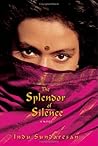
“But nothing could be held true for the rest of one's life, every coveted thing in the end was maya, illusion, a myth, and this the great sages of India had always understood --- little was real. We were put on this earth transitorily; we deposited our genes in offspring; deluded ourselves that we would be missed when we were gone; pretended that money, wealth, titles, and land were to be desired. But every such thing was ephemeral, prone to change. The only reason to live was love.”
― The Splendor of Silence
― The Splendor of Silence
“She thought she could see the lines on his forehead even in this darkness, she thought she could hear his heart beat with this colossal pain that had descended upon them all. She did not pity herself, or them, or wonder what they had done to deserve all of this, or even think that perhaps they were all paying their dues for some sin they had committed in a previous life. This was life, such as it was, and it had to be borne, it had to be lived.”
― The Splendor of Silence
― The Splendor of Silence
“Una vez lanzada una acusación, por muy infundada que sea, la duda empieza a teñir la mente de quien la escucha.”
― The Twentieth Wife
― The Twentieth Wife
“Jei įžeidžiau jus, Jūsų Šviesybe, vadinasi, nusipelnėte kiekvieno priekaišto.”
― Shadow Princess
― Shadow Princess
“As he left, Jahangir turned back for a moment. "Wait for me, Mehrunnisa?"
She laughed again in happiness. He might not remember, but she did. He had used those very words that day in the zenana gardens when he had asked her to wait for him. And she had not waited then.
"I will be here, your Majesty," she said softly. "I will be here when you return.”
― The Twentieth Wife
She laughed again in happiness. He might not remember, but she did. He had used those very words that day in the zenana gardens when he had asked her to wait for him. And she had not waited then.
"I will be here, your Majesty," she said softly. "I will be here when you return.”
― The Twentieth Wife
“Emperor would need a wife who was a companion, one with whom he could converse knowledgeably, one who would excite not only his passions, but also his mind.”
― The Twentieth Wife
― The Twentieth Wife
“The months of June and July passed. The monsoons were tardy this year—the nights hinted rain constantly with an aroma in the air, a cooling on the skin, soundless lightning across skies. But when morning came, the sun rose strong again, mocking Agra and its inhabitants. And the days crawled by, brazenly hot, when every breath was an effort, every movement a struggle, every night sweat-stewed. In temples, incantations were offered, the muezzins called the faithful to prayers, their voices melodious and pleading, and the bells of the Jesuit churches chimed. But the gods seemed indifferent. The rice paddies lay ploughed after the pre-monsoon rains, awaiting the seedlings; too long a wait and the ground would grow hard again. A few people moved torpidly in the streets of Agra; only the direst of emergencies had called them from their cool, stone-flagged homes. Even the normally frantic pariah dogs lay panting on doorsteps, too exhausted to yelp when passing urchins pelted them with stones. The bazaars were barren too, shopfronts pulled down, shopkeepers too tired to haggle with buyers. Custom could wait for cooler times. The whole city seemed to have slowed to a halt. The imperial palaces and courtyards were hushed in the night, the corridors empty of footsteps. Slaves and eunuchs plied iridescent peacock feather fans, wiping their perspiring faces with one hand. The ladies of the harem slept under the intermittent breeze of the fans, goblets of cold sherbets flavoured with khus and ginger resting by their sides. Every now and then, a slave would refresh the goblet, bringing in another one filled with new shards of ice. When her mistress awoke, and wake she would many times during the night, her drink would be ready. The ice, carved in huge chunks from the Himalayan mountains, covered with gunnysacks and brought down to the plains in bullock carts, was a blessing for everyone, nobles and commoners alike. But in this heat, ice melted all too soon, disappearing into a puddle of warm water under sawdust and jute. In Emperor Jahangir’s apartments, music floated through the courtyard, stopping and tripping in the still night air as the musicians’ slick fingers slipped on the strings of the sitar.”
― The Feast of Roses
― The Feast of Roses
“front courtyard of his house. In an inner courtyard,”
― The Twentieth Wife
― The Twentieth Wife
“This history of wanting, Mahabat,” Sharif said slowly. “I have learned this much. It is better to want than to have a desire fulfilled. Once it is . . . it has little importance. So it will be for the Emperor.”
― The Feast of Roses
― The Feast of Roses
“Troubles when voiced are carried away on the wind; they have no place uopn which to perch.”
― The Mountain of Light
― The Mountain of Light
“With a heart that suddenly raced, the Emperor opened the note. In it was one word. He put his lips to the paper; her hands had touched the same spot not long before. "Come.”
― The Twentieth Wife
― The Twentieth Wife
“He sent her the keys to the imperial library; to thank him she roamed the vast rooms looking for a book to send to him. She found a Persian translation of the Jataka tales. He came furtively to visit that night, and they sat on either side of a silk screen, delighted like children breaking a rule, obeying the spirit of the law if not the law itself. They took turns reading from the book, growling like the lion and squeaking like the monkey in the stories. As they passed the book under the screen, their hands touched, and they kissed with the cloth between them.”
― The Twentieth Wife
― The Twentieth Wife
“If one did not know how to follow orders, one would not know how to give them.”
― The Twentieth Wife
― The Twentieth Wife