Goodreads helps you follow your favorite authors. Be the first to learn about new releases!
Start by following Elizabeth Grosz.

Showing 1-6 of 6
“History produces not only the forces of domination but also the forces of resistance that press up against and are often the objects of such domination. Which is another way of saying that history, the past, is larger than the present, and is the ever-growing and ongoing possibility of resistance to the present’s imposed values, the possibility of futures not unlike the present, futures that resist and transform what dominates the present.”
― The Nick of Time: Politics, Evolution, and the Untimely
― The Nick of Time: Politics, Evolution, and the Untimely
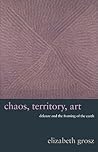
“Art proper, in other words, emerges when sensation can detach itself and gain an autonomy from its creator and its perceiver when something of the chaos from which it is drawn can breathe and have a life of its own”
― Chaos, Territory, Art: Deleuze and the Framing of the Earth
― Chaos, Territory, Art: Deleuze and the Framing of the Earth
“The concept of substance is the central tenet of Spinoza’s metaphysics. All things exist and are conceived through substance, or God, or nature, which exists and is conceived only through itself. Substance represents the singular binding force that connects things, no matter how small or disconnected in space and time they might be, for every thing participates in and is a part of a complex totality.”
― The Incorporeal: Ontology, Ethics, and the Limits of Materialism
― The Incorporeal: Ontology, Ethics, and the Limits of Materialism
“For Spinoza, an ethics and a politics follow directly from and are immanent in metaphysics; the better one understands the universe in its complexity, in the connections that link each thing to every other, the more adequate is one’s ethical relation in and to it. An ethics does not spring directly from our understanding of the world. Rather, it comes from our affective bonds to and connections with other things in the world, relations that enable us to enhance or diminish forms of life.”
― The Incorporeal: Ontology, Ethics, and the Limits of Materialism
― The Incorporeal: Ontology, Ethics, and the Limits of Materialism
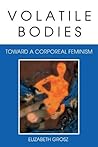
“The problematic of sexual difference entails a certain failure of knowledge to bridge the gap, the interval, between the sexes. There remains something ungraspable, something outside, unpredictable, and uncontainable, about the other sex for each sex. This irreducible difference under the best conditions evokes awe and surprise; under less favorable conditions it evinces horror, fear, struggle, resistance.”
― Volatile Bodies: Toward a Corporeal Feminism
― Volatile Bodies: Toward a Corporeal Feminism
“Nothing of this world is not in God. Substance is not the despised materiality of bodies that must be separated from God; it is God, God under the attribute of extension or materiality. Descartes is thus mistaken, according to Spinoza, in defining matter as extension, for matter must necessarily have a conceptual equivalent, an idea, not in opposition to extension but as one of the attributes of substance.”
― The Incorporeal: Ontology, Ethics, and the Limits of Materialism
― The Incorporeal: Ontology, Ethics, and the Limits of Materialism