Goodreads helps you follow your favorite authors. Be the first to learn about new releases!
Start by following Lawrence M. Principe.

Showing 1-12 of 12
“In order to understand early modern natural philosophy, it is necessary to break free of several common modern assumptions and prejudices. First, virtually everyone in Europe, certainly every scientific thinker mentioned in this book, was a believing and practising Christian. The notion that scientific study, modern or otherwise, requires an atheistic – or what is euphemistically called a ‘sceptical’ – viewpoint is a 20th-century myth proposed by those who wish science itself to be a religion (usually with themselves as its priestly hierarchy).”
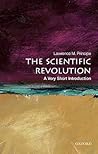
― The Scientific Revolution: A Very Short Introduction
― The Scientific Revolution: A Very Short Introduction
“Many people today acquiesce in the widespread myth, devised in the late 19th century, of an epic battle between ‘scientists’ and ‘religionists’. Despite the unfortunate fact that some members of both parties perpetuate the myth by their actions today, this ‘conflict’ model has been rejected by every modern historian of science; it does not portray the historical situation. During the 16th and 17th centuries and during the Middle Ages, there was not a camp of ‘scientists’ struggling to break free of the repression of ‘religionists’; such separate camps simply did not exist as such. Popular tales of repression and conflict are at best oversimplified or exaggerated, and at worst folkloristic fabrications (see Chapter 3 on Galileo). Rather, the investigators of nature were themselves religious people, and many ecclesiastics were themselves investigators of nature.”
― The Scientific Revolution: A Very Short Introduction
― The Scientific Revolution: A Very Short Introduction
“Many people today acquiesce in the widespread myth, devised in the late 19th century, of an epic battle between ‘scientists’ and ‘religionists’. Despite de unfortunate fact that some members of both parties perpetuate the myth by their actions today, this ‘conflict’ model has been rejected by every modern historian of science; it does not portray the historical situation. During the 16th and 17th centuries and during the Middle Ages, there was not a camp of ‘scientists’ struggling to break free of the repression of ‘religionists’; such separate camps simply did not exist as such. Popular tales of repression and conflict are at best oversimplified or exaggerated, and at worst folkloristic fabrications. Rather, the investigators of nature were themselves religious people, and many ecclesiastics were themselves investigators of nature. The connection between theological and scientific study rested in part upon the idea of the Two Books. Enunciated by St. Augustine and other early Christian writers, the concept states that God reveals Himself to human beings in two different ways – by inspiring the sacred writers to pen the Book of Scripture, and by creating the world, the Book of Nature. The world around us, no less than the Bible, is a divine message intended to be read; the perceptive reader can learn much about the Creator by studying the creation. This idea, deeply ingrained in orthodox Christianity, means that the study of the world can itself be a religious act. Robert Boyle, for example, considered his scientific inquiries to be a type of religious devotion (and thus particularly appropriate to do on Sundays) that heightens the natural philosopher’s knowledge and awareness of God through the contemplation of His creation. He described the natural philosopher as a ‘priest of nature’ whose duty it was to expound and interpret the messages written in the Book of Nature, and to gather together and give voice to all creation’s silent praise of its Creator.”
― Scientific Revolution: A Very Short Introduction
― Scientific Revolution: A Very Short Introduction
“the history of science cannot be written by pulling scientific ‘firsts’ out of their historical context, but only by seeing with eyes and minds of our historical characters.”
― The Scientific Revolution: A Very Short Introduction
― The Scientific Revolution: A Very Short Introduction
“The same concern about the coming of the Antichrist lay behind much of what Roger Bacon—also a Franciscan friar—wrote to the pope about sixty years earlier: the church will need mathematical, scientific, technological, medical, and other knowledge to resist and survive the assault of the Antichrist.”
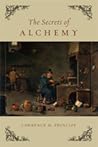
― The Secrets of Alchemy
― The Secrets of Alchemy
“The author concealed behind the pseudonym of Geber is probably an Italian Franciscan friar and lecturer named Paul of Taranto.”
― The Secrets of Alchemy
― The Secrets of Alchemy
“Truth! Certainty! That in which there is no doubt! That which is above is from that which is below, and that which is below is from that which is above, working the miracles of one thing. As all things were from one. Its father is the Sun and its mother the Moon. The Earth carried it in her belly, and the wind nourished it in her belly, as Earth which shall become fire. Feed the Earth from that which is subtle, with the greatest power. It ascends from the Earth to the heaven and becomes ruler over that which is above and that which is below.”
― The Secrets of Alchemy
― The Secrets of Alchemy
“The connection between theological and scientific study rested in part upon the idea of the Two Books. Enunciated by St. Augustine and other early Christian writers, the concept states that God reveals Himself to human beings in two different ways – by inspiring the sacred writers to pen the Book of Scripture, and by creating the world, the Book of Nature. The world around us, no less than the Bible, is a divine message intended to be read; the perceptive reader can learn much about the Creator by studying the creation. This idea, deeply ingrained in orthodox Christianity, means that the study of the world can itself be a religious act. Robert Boyle, for example, considered his scientific inquiries to be a type of religious devotion (and thus particularly appropriate to do on Sundays) that heightens the natural philosopher’s knowledge and awareness of God through the contemplation of His creation. He described the natural philosopher as a ‘priest of nature’ whose duty it was to expound and interpret the messages written in the Book of Nature, and to gather together and give voice to all creation’s silent praise of its Creator.”
― Scientific Revolution: A Very Short Introduction
― Scientific Revolution: A Very Short Introduction
“Indeed, an entire generation became acquainted with the stone and one of its supposed possessors, the medieval Parisian notary Nicolas Flamel, by means of the first of J. K. Rowling’s wildly successful books: Harry Potter and the Philosopher’s Stone. (Regrettably, American publishers corrupted the substance’s ancient name into the meaningless “Sorcerer’s Stone.”
― The Secrets of Alchemy
― The Secrets of Alchemy
“One of the most prominent authorities is named Maria—sometimes called Maria Judaea or Mary the Jew—and Zosimos credits her with the development of a broad range of apparatus and techniques. Maria’s techniques include a method of gentle, even heating using a bath of hot water rather than an open flame. This simple but useful invention preserved the legacy of Maria the ancient alchemist, not only for the rest of alchemy’s history, but even down to the present day. It is her name that remains attached to the bain-marie or bagno maria of French and Italian cookery.”
― The Secrets of Alchemy
― The Secrets of Alchemy
“But the word more likely has a Greek origin, given that Greek was the language both of the earliest alchemical texts and of literate Greco-Roman Egypt. The “chem” of alchemy and chemistry very probably derives from the Greek cheō, which means “to melt or fuse.” Cheō also gives rise to the Greek word chuma, which signifies an ingot of metal.”
― The Secrets of Alchemy
― The Secrets of Alchemy
“Analyzing the name of a thing can thus reveal something about the thing itself. The same thinking forms the basis of that branch of Jewish Kabbalah known as gematria, and its Christian versions that were explored in the Middle Ages and Renaissance.”
― The Secrets of Alchemy
― The Secrets of Alchemy