Goodreads helps you follow your favorite authors. Be the first to learn about new releases!
Start by following Philip Sheldrake.

Showing 1-8 of 8
“The word 'spirituality' originated in Christianity with the Latin adjective spiritualis, or 'spiritual', which translated the Greek adjective pneumatikos as it appears in the New Testament. Importantly, 'the spiritual' was originally not the opposite of 'bodily' or 'physical'. Rather, it was contrasted with 'fleshly' which meant worldly or contrary to God's spirit. So the distinction was basically between two approaches to life. A 'spiritual person' (for example, in 1 Corinthians 2:14-15) was simply someone who sought to live under the influence of God whereas a 'fleshly' (or worldly) person was concerned primarily with personal satisfaction, comfort, or success.”
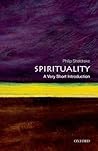
― Spirituality: A Very Short Introduction
― Spirituality: A Very Short Introduction
“For most people, whether religious or not, spirituality involves values and a principled lifestyle both of which are supported by specific spiritual practices including prayer or meditation.”
― Spirituality: A Very Short Introduction
― Spirituality: A Very Short Introduction
“It is interesting that we instinctively make this connection when we talk of “being sensible” about taking wise actions or making wise choices. We also speak of arriving at a more healthy way of seeing and doing as “coming to our senses.”
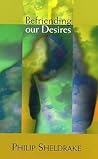
― Befriending Our Desires
― Befriending Our Desires
“The actual word 'spirituality' was first used in Christianity before it extended to other world religions where it is now used quite general.”
― Spirituality: A Very Short Introduction
― Spirituality: A Very Short Introduction
“How is 'spirituality' defined today? The answer is not simple because the word is used in such different contexts. However, contemporary literature on 'spirituality' regularly includes the following. Spirituality concerns what is holistic-that is, a fully integrated approach to life. This fits with the fact that historically 'the spiritual' relates to 'the holy from the Greek word holos, "the whole'. Thus, rather than being simply one element among others in human existence, "the spiritual' is best understood as the integrating factor—'life as a whole'. Then spirituality is also understood to be engaged with a quest for the
'sacred'. This includes beliefs about God but also refers more broadly to the numinous, the depths of human existence, or the boundless mysteries of the cosmos. Further, spirituality is frequently understood to involve a quest for meaning (including the purpose of life as a response to the decline of traditional religious or social authorities.
Further, spirituality is frequently understood to involve a quest for meaning (including the purpose of life) as a response to the decline of traditional religious or social authorities.”
― Spirituality: A Very Short Introduction
'sacred'. This includes beliefs about God but also refers more broadly to the numinous, the depths of human existence, or the boundless mysteries of the cosmos. Further, spirituality is frequently understood to involve a quest for meaning (including the purpose of life as a response to the decline of traditional religious or social authorities.
Further, spirituality is frequently understood to involve a quest for meaning (including the purpose of life) as a response to the decline of traditional religious or social authorities.”
― Spirituality: A Very Short Introduction
“As human beings, we are naturally driven by goals beyond physical satisfaction or mental supremacy to seek a deeper level of meaning and fulfilment.”
― Spirituality: A Very Short Introduction
― Spirituality: A Very Short Introduction
“The noun 'spirituality' in the Middle Ages simply meant the clergy. Subsequently it first appeared in reference to 'the spiritual life' during the 17th century. It disappeared for a time but re-established itself at the end of the 19th century in French, of which the modern English word 'spirituality' is a translation.”
― Spirituality: A Very Short Introduction
― Spirituality: A Very Short Introduction
“Spirituality' is a word that, in broad terms, stands for lifestyles and practices that embody a vision of human existence and of how the human spirit is to achieve its full potential. In that sense, 'spirituality' embraces an aspirational approach, whether religious or secular, to the meaning and conduct of human life.”
― Spirituality: A Very Short Introduction
― Spirituality: A Very Short Introduction