Goodreads helps you follow your favorite authors. Be the first to learn about new releases!
Start by following Jeffrey Toobin.

Showing 1-30 of 160
“The result always mattered more than the rhetoric.”
― The Nine: Inside the Secret World of the Supreme Court
― The Nine: Inside the Secret World of the Supreme Court
“The study of law can be disappointing at times, a matter of applying narrow rules and arcane procedure to an uncooperative reality; a sort of glorified accounting that serves to regulate the affairs of those who have power—and that all too often seeks to explain, to those who do not, the ultimate wisdom and justness of their condition.”
― The Oath: The Obama White House and The Supreme Court
― The Oath: The Obama White House and The Supreme Court
“He did what good lawyers always do. He shifted his argument in the direction his audience was already going.”
― The Nine: Inside the Secret World of the Supreme Court
― The Nine: Inside the Secret World of the Supreme Court
“In one respect, though, the Court received unfair criticism for Bush v. Gore—from those who said the justices in the majority "stole the election" for Bush. Rather, what the Court did was remove any uncertainty about the outcome. It is possible that if the Court had ruled fairly—or better yet, not taken the case at all—Gore would have won the election. A recount might have led to a Gore victory in Florida. It is also entirely possible that, had the Court acted properly and left the resolution of the election to the Florida courts, Bush would have won anyway. The recount of the 60,000 undervotes might have resulted in Bush's preserving his lead. The Florida legislature, which was controlled by Republicans, might have stepped in and awarded the state's electoral votes to Bush. And if the dispute had wound up in the House of Representatives, which has the constitutional duty to resolve controversies involving the Electoral College, Bush might have won there, too. The tragedy of the Court's performance in the election of 2000 was not that it led to Bush's victory but the inept and unsavory manner with which the justices exercised their power.”
― The Nine: Inside the Secret World of the Supreme Court
― The Nine: Inside the Secret World of the Supreme Court
“In the end, notwithstanding a surreal detour in the 1970s, Patricia led the life she for which she was destined back in Hillsborough. The story of Patricia Hearst, as extraordinary as it once was, had a familiar, even predictable ending. She did not turn into a revolutionary. She turned into her mother.”
― American Heiress: The Wild Saga of the Kidnapping, Crimes and Trial of Patty Hearst
― American Heiress: The Wild Saga of the Kidnapping, Crimes and Trial of Patty Hearst
“In public at least, Roberts himself purports to have a different view of the Court than his conservative sponsors. "Judges are like umpires," he said at his confirmation hearing. "Umpires don't make the rules; they apply them." Elsewhere, Roberts has often said, "Judges are not politicians." None of this is true. Supreme Court justices are nothing at all like baseball umpires. It is folly to pretend that the awesome work of interpreting the Constitution, and thus defining the rights and obligations of American citizenship, is akin to performing the rote […] task of calling balls and strikes. When it comes to the core of the Court's work, determining the contemporary meaning of the Constitution, it is ideology, not craft or skill, that controls the outcome of cases.”
― The Nine: Inside the Secret World of the Supreme Court
― The Nine: Inside the Secret World of the Supreme Court
“Random chance—a freakishly close vote in the single decisive state—gave the Supreme Court the chance to resolve the 2000 presidential election. The character of the justices themselves turned that opportunity into one of the lowest moments in the Court's history. The struggle following the election of 2000 took thirty-six days, and the Court was directly involved for twenty-one of them. Yet over this brief period, the justices displayed all of their worst traits—among them vanity, overconfidence, impatience, arrogance, and simple political partisanship. These three weeks taint an otherwise largely admirable legacy. The justices did almost everything wrong. They embarrassed themselves and the Supreme Court.”
― The Nine: Inside the Secret World of the Supreme Court
― The Nine: Inside the Secret World of the Supreme Court
“That day was also the first time a case of COVID-19 was diagnosed in South Korea, which promptly began an orderly regime of testing that limited the immediate impact of the virus. In contrast, Trump that night addressed the growing threat with his customary salesman’s patter. “We have it totally under control,” he said. No, they didn’t, and Trump’s feckless indifference in those early days cost thousands of American lives.”
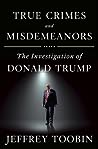
― True Crimes and Misdemeanors: The Investigation of Donald Trump
― True Crimes and Misdemeanors: The Investigation of Donald Trump
“There were two kinds of cases before the Supreme Court. There were abortion cases—and there were all the others.
Abortion was (and is) the central legal issue before the Court. It defined the judicial philosophies of the justices. It dominated the nomination and confirmation process. It nearly delineated the difference between the national Democratic and Republican parties.”
― The Nine: Inside the Secret World of the Supreme Court
Abortion was (and is) the central legal issue before the Court. It defined the judicial philosophies of the justices. It dominated the nomination and confirmation process. It nearly delineated the difference between the national Democratic and Republican parties.”
― The Nine: Inside the Secret World of the Supreme Court
“Toughened or coarsened by their worldly lives, the other dissenters could shrug and move on, but Souter couldn't. His whole life was being a judge.”
― The Nine: Inside the Secret World of the Supreme Court
― The Nine: Inside the Secret World of the Supreme Court
“The dilemma facing Bush and the Republicans was clear. If Marshall left, they could not leave the Supreme Court an all-white institution; at the same time, they had to choose a nominee who would stay true to the conservative cause. The list of plausible candidates who fit both qualifications pretty much began and ended with Clarence Thomas.
… There was awkwardness about the selection from the start. "The fact that he is black and a minority has nothing to do with this," Bush said. "He is the best qualified at this time." The statement was self-evidently preposterous; Thomas had served as a judge for only a year and, before that, displayed few of the customary signs of professional distinction that are the rule for future justices. For example, he had never argued a single case in any federal appeals court, much less in the Supreme Court; he had never written a book, an article, or even a legal brief of any consequence. Worse, Bush's endorsement raised themes that would haunt not only Thomas's confirmation hearings but also his tenure as a justice. Like the contemporary Republican Party as a whole, Bush and Thomas opposed preferential treatment on account of race—and Bush had chosen Thomas in large part because of his race. The contradiction rankled.”
― The Nine: Inside the Secret World of the Supreme Court
… There was awkwardness about the selection from the start. "The fact that he is black and a minority has nothing to do with this," Bush said. "He is the best qualified at this time." The statement was self-evidently preposterous; Thomas had served as a judge for only a year and, before that, displayed few of the customary signs of professional distinction that are the rule for future justices. For example, he had never argued a single case in any federal appeals court, much less in the Supreme Court; he had never written a book, an article, or even a legal brief of any consequence. Worse, Bush's endorsement raised themes that would haunt not only Thomas's confirmation hearings but also his tenure as a justice. Like the contemporary Republican Party as a whole, Bush and Thomas opposed preferential treatment on account of race—and Bush had chosen Thomas in large part because of his race. The contradiction rankled.”
― The Nine: Inside the Secret World of the Supreme Court
“Indeed, according to one study, right-wing extremism was responsible for 76 percent of all extremist murders in the United States from 2009 to 2019. (Islamic extremists were responsible for 20 percent, and left-wing and Black nationalists 3 percent.) A comprehensive study of the years 2000 to 2018 by Rachel”
― Homegrown: Timothy McVeigh and the Rise of Right-Wing Extremism
― Homegrown: Timothy McVeigh and the Rise of Right-Wing Extremism
“To a degree that can scarcely be imagined today, the bomb became a common mode of American political expression. In 1972, there were 1,962 actual and attempted bombings in the United States, with twenty-five people killed; in 1973, 1,955 bombings, with twenty-two killed; in 1974, 2,044 bombings, with twenty-four killed. The”
― American Heiress: The Wild Saga of the Kidnapping, Crimes and Trial of Patty Hearst
― American Heiress: The Wild Saga of the Kidnapping, Crimes and Trial of Patty Hearst
“He saw the Constitution as the vehicle to keep ecumenical passions in check.”
― The Nine: Inside the Secret World of the Supreme Court
― The Nine: Inside the Secret World of the Supreme Court
“Purple prose attracts attention more than converts.”
― The Nine: Inside the Secret World of the Supreme Court
― The Nine: Inside the Secret World of the Supreme Court
“To be sure, following her arrest in 1975, she was unlikely to commit these kinds of crimes again. If the United States were a country that routinely forgave the trespasses of such people, there would be little remarkable about the mercy she received following her conviction. But the United States is not such a country; the prisons teem with convicts who were also led astray and who committed lesser crimes than Patricia. These unfortunate souls have no chance at even a single act of clemency, much less an unprecedented two. Rarely have the benefits of wealth, power, and renown been as clear as they were in the aftermath of Patricia’s conviction.”
― American Heiress: The Wild Saga of the Kidnapping, Crimes and Trial of Patty Hearst
― American Heiress: The Wild Saga of the Kidnapping, Crimes and Trial of Patty Hearst
“Patricia Hearst was a woman who, through no fault of her own, fell in with bad people but then did bad things; she committed crimes, lots of them. Patricia participated in three bank robberies, one in which a woman was killed; she fired a machine gun (and another weapon) in the middle of a busy city street to help free one of her partners in crime; she joined in a conspiracy to set off bombs designed to terrorize and kill. To be sure, following her arrest in 1975, she was unlikely to commit these kinds of crimes again. If the United States were a country that routinely forgave the trespasses of such people, there would be little remarkable about the mercy she received following her conviction. But the United States is not such a country; the prisons teem with convicts who were also led astray and who committed lesser crimes than Patricia. These unfortunate souls have no chance at even a single act of clemency, much less an unprecedented two. Rarely have the benefits of wealth, power, and renown been as clear as they were in the aftermath of Patricia’s conviction.”
― American Heiress: The Wild Saga of the Kidnapping, Crimes and Trial of Patty Hearst
― American Heiress: The Wild Saga of the Kidnapping, Crimes and Trial of Patty Hearst
“The biggest police gun battle ever to take place on American soil had begun, and it was on live television. —”
― American Heiress: The Wild Saga of the Kidnapping, Crimes and Trial of Patty Hearst
― American Heiress: The Wild Saga of the Kidnapping, Crimes and Trial of Patty Hearst
“I just fired the head of the F.B.I. He was crazy, a real nut job,” Trump told the Russians. “I faced great pressure because of Russia. That’s taken off.”
― True Crimes and Misdemeanors: The Investigation of Donald Trump
― True Crimes and Misdemeanors: The Investigation of Donald Trump
“The insurrection on January 6, and much else in the contemporary conservative movement, show how McVeigh’s values, views, and tactics have endured and even flourished in the decades since his death. That makes the story of Timothy McVeigh and the Oklahoma City bombing not just a glimpse of the past but also a warning about the future.”
― Homegrown: Timothy McVeigh and the Rise of Right-Wing Extremism
― Homegrown: Timothy McVeigh and the Rise of Right-Wing Extremism
“Trump did, in short, exactly what Mueller said he did. The two men—president and prosecutor—were like photo negatives of each other. Trump could not tell the truth, and Mueller could not tell a lie.”
― True Crimes and Misdemeanors: The Investigation of Donald Trump
― True Crimes and Misdemeanors: The Investigation of Donald Trump
“This was especially true in the months leading up to the 2016 election, when the FBI conducted two politically explosive investigations: the first, about Hillary Clinton’s email practices at the State Department, became widely known, while the second, about possible Russian infiltration of the Trump campaign, never became public before Election Day.”
― True Crimes and Misdemeanors: The Investigation of Donald Trump
― True Crimes and Misdemeanors: The Investigation of Donald Trump
“As a presidential candidate, Trump continued working on a plan to build in Russia.”
― True Crimes and Misdemeanors: The Investigation of Donald Trump
― True Crimes and Misdemeanors: The Investigation of Donald Trump
“Trump received his first four deferments from the Vietnam-era draft because he was a college student. In 1968, after he graduated from Penn and thus became ineligible for more educational deferments, he received a fifth—a medical deferment because of bone spurs.”
― True Crimes and Misdemeanors: The Investigation of Donald Trump
― True Crimes and Misdemeanors: The Investigation of Donald Trump
“Certainly, Mueller found abundant evidence that Trump and his campaign wanted to collude and conspire with Russia, but they hadn’t been able to close the deal.”
― True Crimes and Misdemeanors: The Investigation of Donald Trump
― True Crimes and Misdemeanors: The Investigation of Donald Trump
“As usual with Trump, he and his supporters (and later his lawyers) could parse his words with enough precision to argue that he did not explicitly encourage the carnage on January 6—which included five deaths, countless injuries, and hundreds of arrests of people who thought they were doing what Trump wanted them to do.”
― Homegrown: Timothy McVeigh and the Rise of Right-Wing Extremism
― Homegrown: Timothy McVeigh and the Rise of Right-Wing Extremism
“As to the central fact in the case, it is my view that Simpson murdered his ex-wife and her friend on June 12. Any rational analysis of the events and evidence in question leads to that conclusion. This is true whether one considers evidence not presented to the jury—such as the results of Simpson’s polygraph examination and his flight with Al Cowlings on June 17—or just the evidence established in court. Notwithstanding the prosecution’s many errors, the evidence against Simpson at the trial was overwhelming. Simpson had a violent relationship with his ex-wife, and tensions between them were growing in the weeks leading up to the murders. Simpson had no alibi for the time of the murders, nor was his Bronco parked at his home during that time. Simpson had a cut on his left hand on the day after the murders, and DNA tests showed conclusively that it was Simpson’s blood to the left of the shoe prints leaving the scene. Nicole’s blood was found on a sock in his bedroom, and Goldman’s blood—as well as Simpson’s—was found in the Bronco. Hair consistent with Simpson’s was found on the killer’s cap and on Goldman’s shirt. The gloves that Nicole bought for Simpson in 1990 were almost certainly the ones used by her killer.”
― The Run of His Life: The People v. O.J. Simpson
― The Run of His Life: The People v. O.J. Simpson
“The White House released the military aid to Ukraine after allegations of the link to the Biden investigation became public. In other words, the Trump administration released the aid only because it was caught linking the aid to the quest for political dirt.”
― True Crimes and Misdemeanors: The Investigation of Donald Trump
― True Crimes and Misdemeanors: The Investigation of Donald Trump
“McVeigh failed to find his army because he had no efficient way to locate and mobilize potential allies; in other words, McVeigh didn’t have the internet, in particular social media. As it turned out, there was an army of McVeigh’s heirs out there, but it took the invention of cyberspace for the soldiers to find one another.”
― Homegrown: Timothy McVeigh and the Rise of Right-Wing Extremism
― Homegrown: Timothy McVeigh and the Rise of Right-Wing Extremism
“Trump had been lying for his entire adult life, and far from being brought down by this pervasive dishonesty, he had been elected president of the United States. Why change what was working so well? And in any event, what man in his eighth decade changes such a fundamental aspect of his character? Not Trump.”
― True Crimes and Misdemeanors: The Investigation of Donald Trump
― True Crimes and Misdemeanors: The Investigation of Donald Trump